
Kathirikai Rasavangi is a Tamil curry that sits somewhere between a sambar and a thick kootu. Toor dal is cooked separately and stirred in towards the end, while the brinjals simmer in a tamarind and tomato gravy until just tender. What sets this rasavangi recipe apart from an everyday sambar is the freshly ground paste of roasted coriander seeds, dry red chillies, asafoetida and grated coconut, which gives the curry a fuller, slightly coarser texture. A small measure of jaggery rounds out the sourness without making the dish sweet.
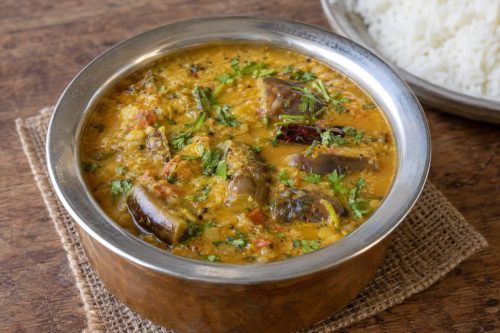
About the Recipe
The recipe has two main components prepared separately before being combined. The toor dal is pressure-cooked and kept aside, and a spice paste is made by frying coriander seeds, dry red chillies and asafoetida in a little oil, then grinding them with fresh coconut.
The brinjals cook in the tamarind and tomato base until soft, then the dal and paste are stirred in and simmered briefly. Keep this final simmer short so the coconut stays smooth and the brinjals hold their shape.
Why You Will Love This Recipe
The freshly ground spice paste is what makes this rasavangi recipe taste noticeably different from a sambar made with store-bought powder alone. Roasting the coriander seeds and red chillies before grinding brings out a depth that a ready-made blend cannot quite match, and the grated coconut gives the gravy a slightly thicker body.
The jaggery is not optional here. It does a real job of softening the sharpness of the tamarind, and the result is a curry that is sour, mildly spiced and just faintly sweet all at once. That balance makes it very easy to eat with plain steamed rice.
Cooking Tips
The most common beginner mistake is adding the coconut spice paste too early. Coconut can turn grainy if it cooks for too long, so stir the paste in only after the dal has been added and the heat is low.
Do not over-cook the brinjals in the tamarind gravy. They need to be tender but still holding their shape. If the dal is too thick after pressure cooking, loosen it with a little warm water before stirring it into the curry so it blends in evenly.
Top Tips
- Quarter the brinjals just before cooking and keep them in salted water until needed to prevent discolouration.
- Fry the coriander seeds, dry red chillies and asafoetida on medium heat until fragrant before grinding. Under-roasting leaves a raw taste in the paste.
- Use only a very small amount of water when grinding the spice paste. A drier paste blends into the curry more evenly than a watery one.
- Add the jaggery along with the tamarind juice so it dissolves fully during cooking. Stirring it in at the end can leave uneven sweet spots.
- Simmer on low heat for no more than two to three minutes after adding the dal and spice paste. Longer cooking dulls the flavour of the fresh coconut.
Serving and Storing Suggestions
Serve Kathirikai Rasavangi hot with steamed rice. A small drizzle of ghee over the rice alongside the curry is a common pairing. It also works well with Murungai Keerai Adai as a side.
Leftovers keep in the refrigerator for up to two days. Reheat gently on the stovetop with a splash of water, as the dal thickens considerably once cold. The flavour often improves the next day after the spices have had time to settle.
Similar Recipes
- Ennai Kathirikkai Kuzhambu
- Chinna Kathirikai Kuzhambu (Small Brinjal Sambar)
- Bhagara Baigan
- Vangi Bath
Nutrient Benefits
Toor dal is a good source of plant protein and dietary fibre, which makes this curry more filling than a brinjal dish cooked without a lentil base. Brinjals contribute potassium and some B vitamins. Fresh coconut adds a small amount of fat, and tamarind provides iron alongside some vitamin C.

Kathirikai Rasavangi (Brinjal Rasavangi)
Ingredients
- 1/2 cup Toor Dal
- Tamarind (marble sized ball)
- 2 Green Chillies (slit lengthwise)
- 1 Tomato (small, chopped)
- 150 gms Brinjals (quartered)
- Salt to taste
- 1/2 tsp Turmeric Powder
- 1/2 tsp Sambar Powder
- 1 tbsp Jaggery (powdered)
- Coriander Leaves (small bunch, chopped fine for garnishing)
For the Spice Paste:
- 1 tsp Oil - 1 tsp
- 1 1/2 tbsp Coriander Seeds
- 2 Dry Red Chillies
- 1/2 tsp Asafoetida Powder
- 4 tbsp Fresh Coconut (grated)
For Tempering:
- 2 tsp Ghee - 2 tsp
- 1 tsp Mustard Seeds - 1 tsp
- 1 Dry Red Chilli (halved)
- Curry Leaves (few)
Instructions
- Pressure cook the dal and set aside.
- Soak the tamarind in 1 cup water and extract the juice.
- Fry in 1 tsp oil the coriander seeds, red chillies and asafoetida.
- Combine with the coconut and grind to a fine paste with very little water.
- Heat 2 tsp ghee and add the ingredients for tempering.
- When the mustard seeds splutter, add the green chillies, chopped tomato and brinjals.
- Saute for a minute.
- Mix in the salt, turmeric powder, sambar powder, tamarind juice and jaggery and cook on low heat till the vegetables are tender.
- Stir in the cooked dal and the spice paste.
- Simmer for a couple of minutes for the flavours to blend.
- Garnish with chopped coriander leaves.
- Serve hot with rice.
Sign up for our newsletter
Add Awesome Cuisine as a Preferred Source

Frequently Asked Questions
What is the difference between rasavangi and sambar?
Both are Tamil dishes made with toor dal and tamarind, but rasavangi is thicker than a standard sambar and relies on a freshly ground coconut and spice paste rather than sambar powder alone. The texture is closer to a kootu in some versions. This rasavangi recipe uses a small measure of sambar powder alongside the fresh paste, which keeps the preparation straightforward while still giving the dish its characteristic body.
Can I use any variety of brinjal for this recipe?
Small to medium purple or green brinjals work best because they hold their shape after cooking in the tamarind gravy. Large brinjals tend to break down too quickly and can make the curry mushy. If you can find the small round variety often used in South Indian cooking, those are ideal. Whichever variety you use, quarter them just before cooking and keep them in salted water to prevent browning.
Can I skip the fresh coconut in the spice paste?
The fresh coconut is central to the texture and flavour of this rasavangi, so skipping it will change the dish noticeably. If fresh coconut is not available, frozen grated coconut that has been fully thawed is a reasonable substitute. Desiccated coconut can be used in a smaller quantity but will produce a drier paste and a slightly different flavour. Coconut milk is not a suitable replacement here as it changes the consistency of the curry.
My rasavangi turned out too sour. How do I fix it?
The sourness comes from the tamarind. If the curry is too sharp, add a little more jaggery and stir it in while the curry is still on low heat. Taste after each addition. You can also balance the sourness by stirring in a small amount of extra cooked dal, which dilutes the tamarind without altering the overall character of the dish. Going forward, start with slightly less tamarind juice and adjust once the curry has simmered for a few minutes.
Is it necessary to use ghee for the tempering, or can I use oil?
The recipe uses ghee for the tempering, which gives the mustard seeds and curry leaves a richer base. You can substitute with neutral cooking oil if needed and the curry will still taste good, but the ghee does add a distinct quality to the finished dish that is noticeable when you serve it. If you are cooking for someone who avoids dairy, refined coconut oil is a closer substitute in terms of flavour than a plain vegetable oil.

itz very nice