
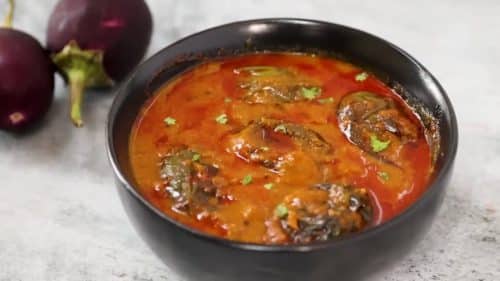
Ennai Kathirikkai Kuzhambu took me three attempts before I stopped overcrowding the kadhai. The first time I made it, I added all twenty brinjals at once, turned up the heat because I was impatient, and ended up with broken, mushy skins and masala powder leaking into the oil. Nothing held together. The second attempt was better but the gravy tasted flat because I had rushed the tamarind simmer.
By the third time, I understood that this dish is built on restraint – low heat, enough oil, and time. What makes this version feel like mine is the jaggery. I add a full two tablespoons, which balances the sourness of the tamarind in a way that does not read as sweet, just rounded. Once you get that balance right, the kuzhambu tastes genuinely complete.
About the Recipe
Most of the ingredients here are pantry staples in any South Indian kitchen – tamarind, dals, dried red chillies, and sesame oil. The masala paste requires a short frying and grinding session, which takes about fifteen minutes on its own, so factor that in before you begin. Total time from start to finish runs roughly forty-five minutes to an hour.
I make this on Sunday afternoons when I have time to stand at the stove and watch the brinjals properly, rather than rushing through a weeknight dinner. Served with plain steamed rice and a spoon of ghee, it needs nothing else on the plate.
Why you will love this recipe
The house-ground masala powder is what separates this kuzhambu from anything you can put together with store-bought curry mixes. Frying the coriander seeds, four types of dal, and dried chillies together before grinding fills the kitchen with a warm, nutty aroma that sets the tone for the whole dish.
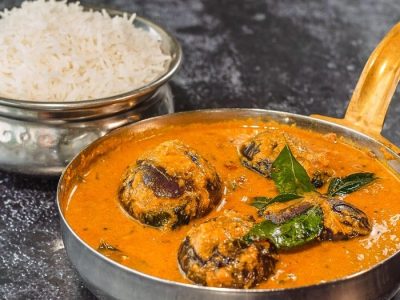
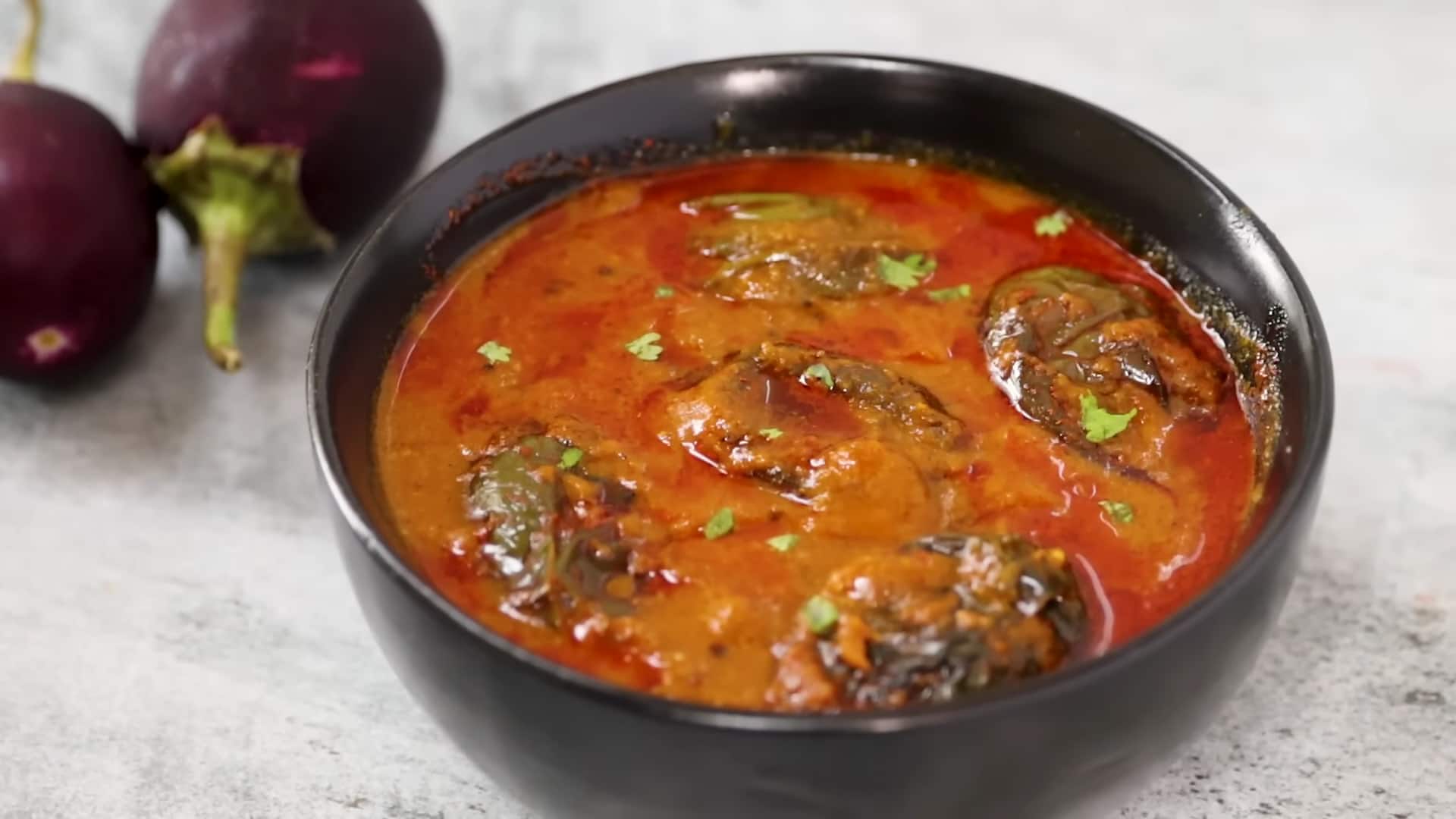
Because the powder is stuffed directly into the brinjals, every bite carries the masala all the way through rather than just on the surface. The sesame oil adds a richness that coats the brinjals without feeling heavy. And the tamarind-jaggery gravy has a sharpness that keeps the richness in check, so the dish stays interesting across a full serving of rice.
Cooking Tips
The most common mistake is splitting the brinjals. Cut the cross at the base no deeper than two-thirds of the way up, and handle them gently when turning in the oil. If they break, the stuffing falls out and the gravy becomes muddy. Keep the heat moderate throughout the frying stage – high heat causes the skin to burst before the inside cooks.
Another thing beginners miss: do not skip the full ten to twelve minutes of simmering the tamarind gravy before adding the brinjals. Raw tamarind tastes sharp and unpleasant; it needs that time to mellow properly.
Top Tips
- Choose small, firm brinjals of roughly equal size so they cook evenly in the kadhai. Soft or overgrown ones will split before they are cooked through.
- Make the masala powder a day ahead and store it in an airtight container. It saves time and the flavour actually settles better overnight.
- Use only sesame oil (gingelly oil) for this recipe – refined sunflower or coconut oil will not give the same depth to the gravy. This is one of those times where the oil genuinely matters.
- When stuffing the brinjals, press the masala powder in gently with your fingers. A light press is enough; packing it too tightly causes them to split when they hit the hot oil.
- Keep a close eye on the brinjals during the frying stage. Turn them every couple of minutes using tongs rather than a spoon, which gives you more control without breaking the skin.
Serving and Storing Suggestions
Serves four people as a main alongside plain steamed rice. Prep time is around twenty minutes if you count soaking the tamarind and grinding the masala; cooking time is thirty to forty minutes. Leftovers keep well in the refrigerator for up to two days in a sealed container. Reheat gently in a small pan over low heat with a splash of water, because the gravy thickens quite a bit once chilled. I do not recommend freezing the brinjals as the texture softens considerably on thawing.
Similar Recipes
- Chettinad Kathirikai Masala
- Gutti Vankaya Koora (Andhra style stuffed brinjal curry)
- Puli Kuzhambu (plain tamarind gravy without vegetables)
- Vatha Kuzhambu
- Stuffed Baingan Masala (North Indian version)
Nutrient Benefits
Brinjals are low in calories and carry a decent amount of fibre, which makes them filling without being heavy. The four types of dal in the masala powder add a small but real contribution of plant protein to what is otherwise a vegetable-forward dish.
Sesame oil contains natural antioxidants and has been used in traditional South Indian cooking for generations, partly because of its stability at moderate cooking temperatures. Tamarind provides iron and vitamin C, and the jaggery here is used in small enough quantities to function as a flavour balancer rather than a sweetener.
Ennai Kathirikkai Kuzhambu
Ingredients
- 1 cup Tamarind Extract
- 20 Small Brinjals (Kathirikai)
- 1/3 cup Sesame Seeds Oil
- Salt as per taste
- 2 tbsp Jaggery (powdered)
For Masala Paste:
- 2 tbsp Oil
- 2 tbsp Coriander Seeds
- 1 tsp Asafoetida Powder
- 10 Dry Red Chillies
- 2 tbsp Bengal Gram Dal
- 2 tbsp Toovar Dal
- 2 tbsp Moong Dal
- 2 tbsp Urad Dal
- Salt as per taste
For Tempering:
- 2 tbsp Oil
- 1/2 tsp Mustard Seeds
- 1 Dry Red Chilli (halved)
- 10 to 15 Curry Leaves
Instructions
- Heat oil in a frying pan over moderate heat.
- Add all the masala ingredients, except salt, and fry till dals turn golden.
- Remove from heat and add salt.
- Grind to a fine powder.
- Cut a cross in the base of brinjals taking care to keep them intact.
- Stuff the masala powder into the brinjals.
- Sprinkle with a few drops of tamarind extract.
- Heat oil in a large kadhai.
- Add the brinjals and fry gently till cooked thoroughly.
- make sure the brinjals do not break.
- Drain and set aside.
- Heat oil in an another pan.
- Add the tempering ingredients and fry.
- When mustard seeds start spluttering, add the tamarind extract, salt, jaggery and 3 to 4 tblsp of masala powder.
- Simmer for about 10 to 12 minutes.
- Add the brinjals and simmer for another 5 minutes.
- Serve hot with plain rice.
Sign up for our newsletter
Add Awesome Cuisine as a Preferred Source

Frequently Asked Questions
My brinjals split open during frying and all the masala fell out. What went wrong?
Two things usually cause this. The cross cut at the base may have gone too deep, leaving very little flesh holding the brinjal together. Or the oil was too hot when you added them. Keep the heat at moderate throughout, and do not cut the cross more than two-thirds of the way up the brinjal.
Can I use regular cooking oil instead of sesame oil?
You can, but the kuzhambu will taste noticeably different. Sesame oil has a distinct nutty flavour that is a key part of this dish. If you cannot find it, a small amount of groundnut oil is the closest substitute, though the result will still be milder.
The tamarind gravy tastes very sour even after simmering. How do I fix it?
Add a little more jaggery, half a teaspoon at a time, and let it simmer for another two to three minutes before tasting again. Also check that you measured the tamarind extract correctly – one cup should be from a lemon-sized ball of tamarind soaked in water, not a concentrated extract, which would be far more sour.
I only have one type of dal at home. Can I still make the masala powder?
Yes. The combination of four dals gives the powder a layered, slightly complex nuttiness, but if you only have Bengal gram dal or toovar dal, use double the quantity of whichever one you have. The flavour will be simpler but still good.
How far in advance can I make the masala powder?
Up to a week ahead if stored in an airtight container at room temperature, away from moisture. After that it starts to lose its aroma. I usually make a double batch and use the leftover powder as a dry chutney with idli or dosa.
very nice recipe & easy to prepare