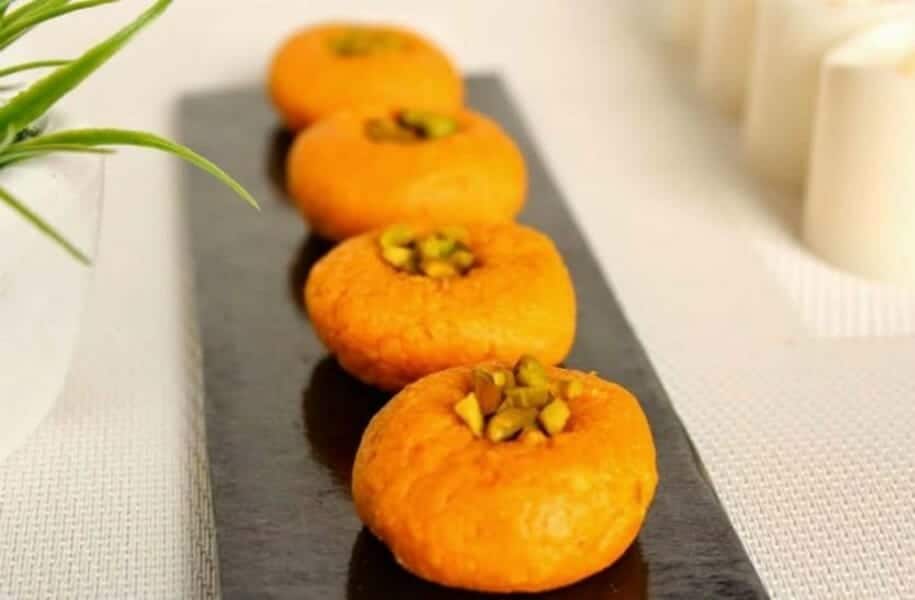
Mango Peda is a good choice when you want a homemade Indian sweet that does not require hours at the stove or hard-to-find ingredients. Mango pulp and paneer give the peda a soft, slightly dense texture with a natural fruit flavour that comes through clearly. Saffron adds colour and mild warmth, while the pistachios on top bring a little crunch against the smooth base. This recipe works well during mango season when fresh pulp is easy to source, but good quality canned pulp does the job just as well through the rest of the year.
About the Recipe
The recipe uses grated paneer rather than crumbled, which helps it blend evenly into the mango pulp without leaving lumps in the finished sweet. Milk powder is diluted with water before being added, so it incorporates smoothly rather than forming dry pockets in the mixture. The key stage is the final 10 minutes of cooking on medium flame, where constant stirring is necessary. You will know the mixture is ready when it pulls cleanly away from the sides and base of the pan. Ghee on the palms prevents sticking when shaping the balls.
Why You Will Love This Recipe
This recipe produces a genuinely soft peda without needing khoya or condensed milk, both of which require either long preparation or a trip to a speciality store. Paneer and milk powder together do the same job and are far easier to work with at home. The mango flavour runs throughout the sweet because the pulp is cooked directly into the mixture from the start. If you enjoy other saffron-based peda recipes, this one follows a similar method with the added brightness of fruit.
Cooking Tips
The most common mistake is removing the mixture from the flame too early. If it is still sticky when you try to shape it, the peda will not hold their shape and will flatten out. Keep stirring on a medium flame and test by pressing a small amount between your fingers. It should feel pliable and not wet. Avoid high flame at any stage, as the sugar and milk solids can catch and scorch quickly. Rub ghee generously on your palms before shaping each batch.
Top Tips
- Grate the paneer finely so it blends into the pulp evenly and does not leave visible chunks in the finished peda.
- Dilute the milk powder fully in water before adding it to the pan to prevent lumps forming in the mixture.
- Stir continuously once the milk powder goes in. Stepping away even briefly at this stage can cause the mixture to stick and burn at the base.
- Test the mixture before removing from the flame by pressing a small portion between your fingers. It should come away clean and hold a shape.
- Rub ghee on your palms before shaping each ball, not just at the start, to keep the mixture from sticking as it cools.
- Press the pistachio pieces gently into the top of each peda immediately after shaping while the surface is still soft enough to hold them.
Serving and Storing Suggestions
Serve the peda at room temperature on a plate or small tray. They suit festivals, small gatherings or an after-meal sweet well. Store leftovers in an airtight container in the refrigerator for up to three days. Bring them to room temperature for about 10 minutes before serving, as chilling firms them up considerably. Do not leave them uncovered at room temperature for extended periods, as the mango and paneer content makes them perishable.
Mango Peda
Ingredients
- 1 cup Mango Pulp
- 2 cup Paneer
- 2 cup Sugar
- 1/4 cup Milk Powder
- few Saffron Strands soaked in little milk
- 1 tsp Ghee
- 2 tsp Pistachios
- 1/4 cup Water
Instructions
- Dilute the milk powder with water.
- Grate the paneer and keep it.
- To a pan, and the mango pulp and and cook for 5 minutes.
- Add the grated paneer, sugar and mix thoroughly.
- Keep stirring until the sugar is dissolved.
- Add the saffron, diluted milk powder and cook for 10 minutes in medium flame.
- Keep stirring until the mixture is not sticking to the pan.
- Remove from flame and cool down.
- Add ghee to your palm, make small balls using the mixture.
- Decorate with pista and serve.
Sign up for our newsletter
Add Awesome Cuisine as a Preferred Source

Frequently Asked Questions
Can I use store-bought mango pulp instead of fresh mango?
Yes, store-bought mango pulp works well in this recipe. Look for pulp with no added sugar, or reduce the sugar in the recipe slightly to account for any sweetness already in the pulp. Alphonso pulp tends to give the strongest mango flavour, but any variety will work.
What should I do if the mixture is not coming away from the pan after 10 minutes?
Continue cooking on medium flame and keep stirring. The time can vary depending on the water content of your mango pulp and the moisture in the paneer. Some batches may need an extra 3 to 5 minutes. Do not increase the flame to speed things up, as this raises the risk of scorching the base.
Can I use store-bought paneer or does it need to be homemade?
Store-bought paneer works fine. Grate it directly from the block rather than crumbling it, as grating gives a finer texture that blends more evenly into the mango pulp during cooking. If the store-bought paneer feels very firm, grating it while cold is easier.
How do I know the right consistency before shaping the peda?
Take a small amount of the mixture on a spoon and let it cool for a minute. Press it between your fingers. It should hold together, feel slightly soft and not leave wet residue on your skin. If it is still sticky or wet, return the pan to the flame and continue stirring for a few more minutes.
Can I skip the saffron?
You can leave out the saffron if you do not have it. The peda will still taste of mango and will be slightly paler in colour. If you want to keep a similar colour, a very small pinch of turmeric can be used, though it will not add the same flavour that saffron does.