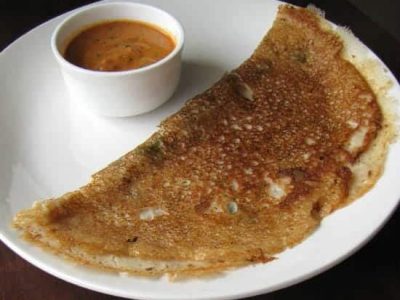
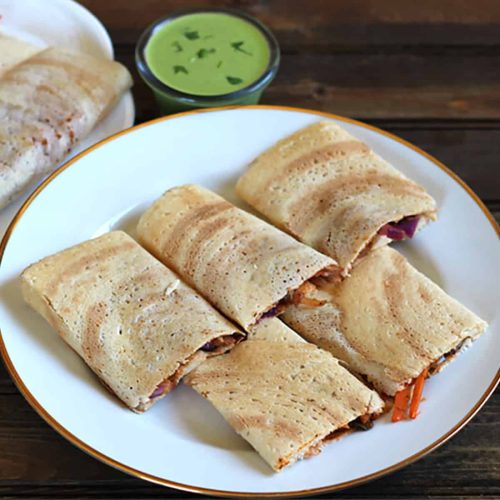
Oats Dosa Roll is a fun twist on the traditional dosa that brings together health and flavor in one easy to eat package. I started making this when I wanted something more filling than a plain dosa but lighter than a masala dosa. The batter uses both raw and par boiled rice along with urad dal for that classic fermented tang, while rolled oats and rice flakes add body and nutrition.
The rolling technique might seem fancy, but it merely involves stacking two dosas with chutneys and vegetables, then rolling them up like a wrap. You get crispy edges, soft layers, and a burst of flavor in every bite.
About the Recipe
This recipe takes a bit of planning because the batter needs to ferment overnight, but the actual cooking comes together quickly. The combination of different rice types with oats creates a batter that spreads easily and cooks into tender dosas without tearing. I appreciate how the vegetables stay crunchy even after rolling, adding freshness to each slice.
The double dosa layer might seem unusual, but it gives you enough structure to hold the filling without getting soggy. You can adjust the spice level in the vegetable stuffing based on what your family enjoys.
Why you will love this recipe
The fermented batter gives these dosas a subtle sour note that pairs beautifully with the Italian style seasoning in the vegetables. Oregano and chilli flakes might not be traditional South Indian flavors, but they work surprisingly well here. The texture contrast between the slightly crisp dosa exterior and the tender vegetable filling makes each bite interesting.
Because you cook the dosa on one side only with a lid, it stays soft enough to roll without cracking. The presentation looks impressive when you slice the rolls into rounds, showing off the colorful layers inside. You can make the batter ahead and cook fresh rolls whenever hunger strikes.
Cooking Tips
Soak the rice and dal for the full two hours so they grind smoothly without leaving grainy bits in your batter. When grinding, add water gradually to get a pouring consistency similar to pancake batter. The tawa needs to be at medium heat, not blazing hot, or the dosa will brown too quickly and become brittle.
I always keep a small bowl of water nearby to wipe the tawa between dosas, which helps maintain an even temperature. Let the vegetables retain some bite rather than cooking them until soft, as they taste better with a slight crunch.
Serving and Storing Suggestions
This recipe makes enough batter for about 12 to 14 dosas, which translates to 6 to 7 rolls serving 3 to 4 people. The soaking takes 2 hours, fermentation requires overnight rest, and active cooking time is around 30 minutes. Serve the rolls warm, sliced into thick rounds with extra chutney on the side. The batter stays fresh in the refrigerator for up to three days, though it tastes best within two. Store any leftover cooked dosas in an airtight container, but avoid rolling them until just before serving as they soften over time.
Similar Recipes
Nutrient Benefits
Oats bring soluble fiber that supports digestion and helps maintain steady energy levels throughout the morning. Urad dal provides plant based protein and essential amino acids that your body needs for repair and growth. The mix of raw and par boiled rice offers complex carbohydrates that release energy slowly rather than spiking blood sugar.
Fresh vegetables in the stuffing add vitamins, minerals, and additional fiber to make this a balanced meal. The fermentation process increases the bioavailability of nutrients and introduces beneficial probiotics that support gut health.

Oats Dosa Roll
Ingredients
- 1 cup Raw Rice
- 1 cup Par Boiled Ric
- 1/4 cup Urad Dal
- 1 cup Rolled Oats
- 1/2 cup Rice Flakes
- 1 1/2 cup Salt
- Oil for roasting
- Mint Chutney (as required)
- Tomato Chutney (as required)
For Stuffing:
- Thin sliced vegetables (onion, capsicum, cabbage, cauliflower, carrot)
- Salt as per taste
- 3/4 tsp Oregano
- 1/4 tsp Ajinomoto
- 1 to 2 tsp Chilli Flakes
- Grated Cheese (optional)
Instructions
- Soak raw rice, boiled rice and urad dal together in water for 2 hours.
- Soak rice flakes and oats separately in water for 15 minutes.
- Grind everything together to a smooth batter.
- Add salt at the end of grinding.
- Allow the batter to ferment until next day morning.
- To make the stuffing, heat oil in a pan and fry all the vegetables one by one.
- Add ajinomoto and saute.
- Sprinkle salt, chilli flakes and oregano.
- To make the dosa roll, heat a tawa and pour a ladle full of batter.
- Spread to from a thin dosa.
- Add little oil around the dosa.
- Close with a lid and cook on one side only.
- Prepare 2 dosas for one roll.
- Apply mint chutney to one dosa.
- Keep second dosa on top, apply tomato chutney and sprinkle grated cheese.
- Keep little vegetable stuffing at one end and roll up like a mat.
- Cut into slices and then serve.
Sign up for our newsletter
Add Awesome Cuisine as a Preferred Source

Frequently Asked Questions
Can I skip the fermentation step if I am short on time?
You can make instant dosas without fermentation, but they will lack the characteristic tangy flavor and soft texture. The fermented batter also digests more easily and has better nutritional value.
What can I use instead of ajinomoto in the vegetable stuffing?
Merely leave it out or add a pinch of sugar and extra salt to boost the savoury flavour. A small amount of soy sauce also works well as a replacement.
Why do you cook the dosa on one side only?
Cooking on one side with a lid keeps the dosa soft and pliable enough to roll without breaking. If you cook both sides, it becomes too crisp and will crack when you try to roll it.
Can I make the batter in a regular blender instead of a wet grinder?
Yes, a high powered blender works fine for this quantity. You may need to grind in batches and add a bit more water to help the blades move smoothly.
How do I know when the batter has fermented properly?
The batter should increase slightly in volume, develop tiny bubbles on the surface, and smell pleasantly sour. In warm weather this takes 8 to 10 hours, while colder conditions may need 12 to 14 hours.