
Mullu Murukku is one of the most recognised shapes in the murukku family. The name comes from the Tamil word for thorn or spike, which describes the ridged surface the mullu plate creates when you press the dough into hot oil. This recipe uses rice flour and dry-roasted moong dal ground to a fine powder, with butter added to keep the murukku short and crisp rather than hard. The seasoning is straightforward: red chilli powder, sesame seeds and asafoetida powder. The result is a snack that is light, crunchy and just spicy enough to keep you reaching for more.
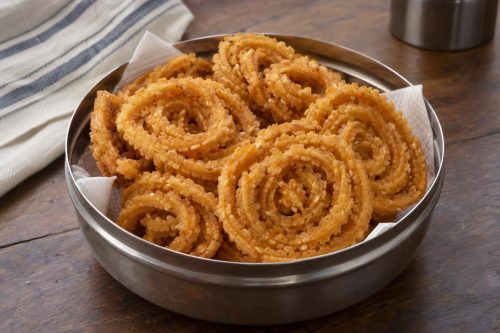
About the Recipe
The moong dal in this recipe does two things: it adds a mild, nutty flavour and it softens the texture of the finished murukku so it does not turn rock hard after frying. Dry roasting the dal before grinding is important because it removes moisture and makes grinding easier. Only half the dal powder goes into the dough; the rest can be stored for another batch. Butter is added at the mixing stage, not melted, so it coats the flour evenly and gives the murukku a slightly crumbly, short bite. The dough must be smooth and firm enough to hold its shape when pressed through the murukku maker.
Why You Will Love This Recipe
The biggest advantage of this mullu murukku recipe is that it fries consistently. Because the dough uses both rice flour and dal powder with butter worked in, the murukku holds its shape in the oil and colours evenly without breaking apart or turning oily. You do not need to make individual rings by hand the way you would with Kai Murukku. The murukku maker does the shaping for you, which means you can work through the dough quickly and fry several batches in one session. Once cooled, it stores well in an airtight container for days, making it a practical snack to prepare ahead.
Cooking Tips
The most common beginner mistake is making the dough too soft. A soft dough will spread and lose its spiky shape the moment it hits the oil. The dough should feel firm and smooth, not sticky. Keep the oil at a steady medium heat. If the oil is too hot, the outside colours before the inside cooks through. If it is too cool, the murukku absorbs oil and turns greasy. Fry only one or two at a time so the oil temperature does not drop sharply. Drain on absorbent paper and let the murukku cool fully before storing.
Top Tips
- Dry roast the moong dal on low heat, stirring often, until it turns lightly golden and smells nutty before grinding.
- Grind the roasted dal to a genuinely fine powder. Coarse dal powder makes the dough crack when pressed through the murukku maker.
- Add water a little at a time. The dough should be firm enough to hold its shape when pressed, not soft or sticky.
- Test the oil temperature by dropping a small piece of dough into it. If it rises to the surface steadily, the oil is ready.
- Do not overcrowd the pan. Fry one or two murukkus at a time to keep the oil temperature stable and the texture even.
- Cool the fried murukku completely before transferring to an airtight container, otherwise trapped steam will soften them.
Serving and Storing Suggestions
Mullu Murukku is best served at room temperature as a tea-time snack or as part of a Diwali or Navratri snack spread. It pairs well with a cup of strong South Indian filter coffee or plain chai. Once the murukku has cooled completely, store it in an airtight container at room temperature. It stays crisp for up to two weeks if the container is sealed properly after each use. Avoid storing it while still warm, as moisture will collect inside the container and soften the texture.
Similar Recipes
Nutrient Benefits
Rice flour is naturally gluten-free, which makes this murukku suitable for those who avoid wheat. Moong dal contributes protein and some dietary fibre to what is otherwise a fried snack. Sesame seeds add small amounts of calcium and iron. Asafoetida is used in very small quantities here, mainly for flavour. Because the murukku is deep-fried, it is an occasional snack rather than an everyday food, but the combination of rice flour and dal does make it more filling than a plain flour snack.

Mullu Murukku
Ingredients
- 2 cup Rice flour
- 1/4 cup Moong Dal
- 1 tbsp Butter
- 1 1/2 tsp Sesame Seeds
- 1 tsp Red Chilli Powder
- 1/2 tsp Asafoetida Powder
- as required Oil
Instructions
- Dry roast the dal and grind together to a fine powder.
- Mix 1 cup of the dal powder with the rice flour.
- Add butter, sesame seeds, red chilli powder and asafoetida powder.
- Add enough water and knead well to a smooth dough.
- Make balls of this dough and add them to a murukku maker with spiky (mullu) plate.
- Heat oil in a deep frying pan over medium flame.
- Carefully press the murukku maker over the hot oil, one or two at a time.
- Fry the prepared murukkus till light golden brown.
- Remove and drain excess oil.
- Store in an airtight container.
- Serve.
Recipe Video
Sign up for our newsletter
Add Awesome Cuisine as a Preferred Source

Frequently Asked Questions
Can I use store-bought rice flour instead of grinding my own?
Yes, store-bought fine rice flour works well in this recipe. Make sure it is the finely milled variety sold specifically for murukku or idiyappam, not the coarser type used for some other preparations. Coarse rice flour can cause the dough to crack when pressed through the murukku maker plate.
What is the mullu plate and where do I get one?
A murukku maker is a cylindrical press with interchangeable plates at one end. The mullu plate has small star-shaped or spiked openings that create the ridged, thorny surface that gives Mullu Murukku its name. Most Indian kitchen shops and online stores sell murukku makers that come with several plates, including the mullu plate. If your maker did not include one, replacement plates are sold separately.
My murukku is turning hard after frying. What went wrong?
Hard murukku usually means the butter was not enough or was not mixed in thoroughly, or the dough was too stiff. Make sure the butter is at room temperature before you add it so it coats the flour properly. Also check that you are using the correct ratio of dal powder to rice flour as given in the recipe. Too much rice flour relative to dal powder tends to produce a harder result.
Can I reduce the red chilli powder to make a milder version?
Yes, you can reduce the red chilli powder or leave it out entirely. The murukku will still hold together and fry well because the chilli powder is only a seasoning here, not a structural ingredient. If you want a little warmth without much heat, try using half the stated quantity.
How do I know when the murukku is cooked through and not just browned on the outside?
A reliable sign is the sound. When you first add the murukku to the oil, it will sizzle loudly. As the moisture cooks out and the murukku is nearly done, the sizzling quietens noticeably. At that point, the colour should also be a light golden brown. Remove one piece and let it cool for a minute. If it snaps cleanly and feels dry all the way through, the batch is ready. If it still feels slightly soft or chewy after cooling, it needs a little more time in the oil.

Very good source of receipe for various festivals. Thanks a lot