Khasta kachori is a deep-fried snack with a shell that shatters when you bite into it and a filling that carries real heat and tang. Khasta itself refers to that layered, crumbly texture that sets a well-made kachori apart from an ordinary fried pastry.
This recipe builds the filling from moong dal cooked with cumin, asafoetida, ginger, green chilli and a mix of dry spices. Mango powder gives the mixture its sharp, slightly sour edge. The dough is kept firm using ghee, which produces the flaky crust after frying.
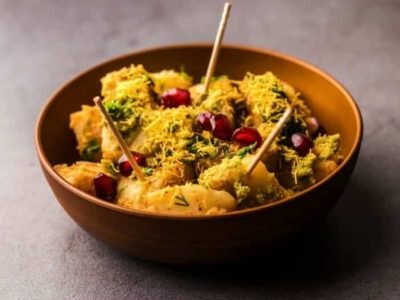
Once fried and cracked open, the kachori is loaded with curd, green chutney, tamarind chutney and sev for the full experience.

About the Recipe
The filling here is a dry moong dal mixture. The dal is not boiled but fried raw in oil with the spices until cooked through and fragrant. Gram flour is added to help bind the mixture and absorb any moisture, which keeps the kachori from bursting during frying.
The dough must be firm, not soft, so add water gradually. Rolling the filled kachori gently and sealing the edges tightly are the two steps that matter most before the kachoris go into the oil.
Why You Will Love This Recipe
Making this at home gives you full control over the filling. The combination of mango powder, garam masala and red chilli in the moong dal mixture produces a filling that is tangy, spiced and dry, which is exactly what keeps the shell from going soggy.
The serving style turns each kachori into a small chaat. You crack a hole in the centre, spoon in curd, green chutney and tamarind chutney, then finish with sev. The crunch of the shell, the cool curd, the heat of the chilli and the sour pull of the tamarind all come together in one bite.
Cooking Tips
The most common beginner mistake is making the dough too soft. A soft dough will not hold its shape and the kachori will not puff up properly. Keep it firm.
Fry on medium flame throughout. High heat browns the outside too fast and leaves the inside doughy.
The filling must be completely dry and cooled before you stuff the kachoris. Any moisture in the filling will cause the shell to crack open in the oil. Seal the edges firmly after stuffing and roll gently so the filling stays in place.
Top Tips
- Add water to the dough a little at a time. The dough should be firm and not sticky. Too much water makes the shell soft rather than crispy.
- Cook the moong dal filling until it is completely dry. Any moisture left in the filling will make the kachori burst while frying.
- Let the filling cool completely before stuffing. Warm filling makes the dough soft and harder to seal.
- Fry on medium flame from start to finish. The kachoris need time to cook through and puff up evenly without burning on the outside.
- Press the sealed edge firmly and roll the stuffed kachori gently. If the seal is weak, the filling will escape into the oil.
- Crack the kachori open just before serving and add the toppings at the last moment so the shell stays crispy.
Serving and Storing Suggestions
Serve khasta kachori immediately after adding the toppings. Once the curd and chutneys go in, the shell softens quickly, so assemble just before eating.
Fried kachoris without toppings can be stored at room temperature in an airtight container for a day or two and re-crisped in a dry pan or oven before serving. The dry filling can be made a day ahead and kept in the refrigerator. Do not store assembled kachoris as the shell will turn soft.
Similar Recipes
Nutrient Benefits
Moong dal is a reasonable source of plant protein and provides some iron and B vitamins. Gram flour in the filling adds a little extra protein from chickpea flour. Coriander leaves used as a garnish provide vitamin K. As this is a deep-fried snack, it is best enjoyed in moderate portions.

Khasta Kachori
Ingredients
- 1 cup Maida
- 2 tblsp, melted Ghee
- 1/4 cup Moong Dal
- 1/2 tsp Cumin Seeds
- Asafoetida Powder - a pinch
- 1/4 tsp, minced Ginger
- 1/4 tsp, minced Green Chillies
- 1/4 tsp Coriander Powder
- 1/2 tsp Garam Masala Powder
- 1/2 tsp Red Chilli Powder
- 2 tsp Mango Powder
- 1 tblsp Gram Flour
- Oil as required
- Salt as per taste
Instructions
- Mix maida and ghee in a bowl.
- Add 1/4 tsp salt and little water.
- Knead well to a firm dough.
- Make small balls of the dough and keep aside.
- Heat 1 to 2 tblsp oil in a frying pan over medium flame.
- Add cumin seeds and asafoetida powder.
- Fry for 30 seconds.
- Add the moong dal and fry for a minute.
- Now add the green chilli paste, ginger paste, garam masala powder, gram flour, red chilli powder, mango powder, coriander powder and salt.
- Mix well and cook for 5 to 6 minutes.
- Roll the dough into small/medium circle and add 1 or 2 tsp of the filling in the center.
- Fold well and roll again ensuring the filling does not come out.
- Heat oil in a deep frying pan over medium flame.
- Fry the prepared kachoris until golden brown on both sides and puffed up.
- Remove and drain excess oil.
- To serve, crack a hole in the centre of the kachori.
- Add 2 to 3 tblsp of beaten curd.
- Add green chutney, sweet tamarind chutney, red chilli powder, onions, cumin powder, coriander leaves and salt on top.
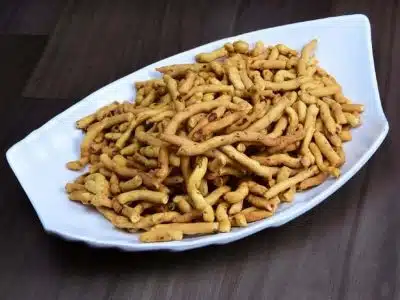
- Garnish with sev and serve.
Sign up for our newsletter
Add Awesome Cuisine as a Preferred Source

Frequently Asked Questions
What does khasta mean and why does it matter for this recipe?
Khasta refers to a flaky, crispy texture that crumbles slightly when you bite into it. In this recipe, that texture comes from using ghee in the dough and keeping the dough firm. Ghee coats the flour particles and creates layers during frying, giving the shell its characteristic crunch. If you substitute oil for ghee or make the dough too soft, you will get a harder shell rather than a flaky one.
Can I use whole moong dal instead of split moong dal for the filling?
The recipe uses moong dal, which is the split and hulled variety. Whole moong takes longer to cook through using the dry frying method here and gives a different texture in the filling. Split moong dal cooks faster in the pan and blends more evenly with the spices. If you only have whole moong, soak it for a few hours, drain it well and dry it before frying, but the result will not be identical.
Why did my kachoris not puff up during frying?
There are two common reasons. First, the dough may have been too soft. A firm dough traps steam inside and puffs up, while a soft dough does not hold the pressure. Second, the oil may have been too hot. If the outside sets too quickly, there is no time for steam to build inside and push the shell outward. Fry on medium flame and make sure the dough is firm before shaping.
How do I know when the filling is ready to use?
The filling is ready when the moong dal looks dry, slightly golden and fragrant and the mixture pulls away from the sides of the pan. The recipe calls for cooking it for 5 to 6 minutes after adding the spices. If there is any visible moisture or the mixture feels wet, cook for another minute or two. A wet filling will cause the kachori to crack open in the oil or make the shell soggy from the inside.
What chutneys work best when serving khasta kachori?
The recipe calls for green chutney and sweet tamarind chutney. A simple coriander and peanut chutney also works well as the green chutney component. The tamarind chutney provides sweetness and sourness that balances the heat of the filling. Add both chutneys along with the beaten curd, red chilli powder and sev just before serving so the shell stays crispy.