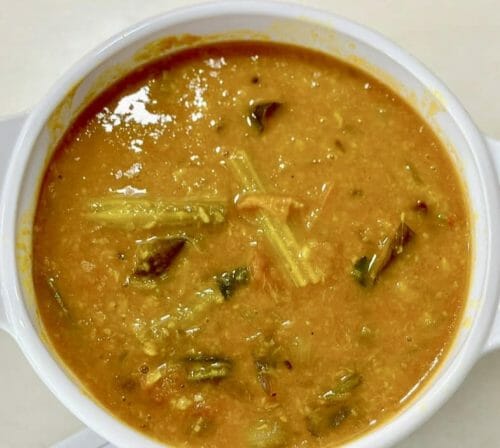
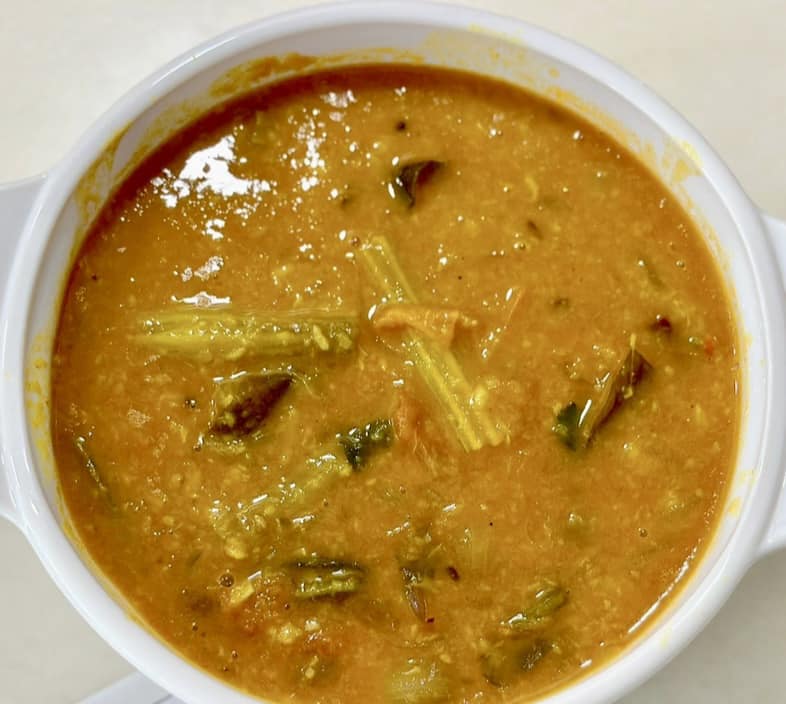
Drumstick Sambar is one of those comforting dishes that reminds me why South Indian cooking feels so grounding. The drumsticks cook until soft enough to scoop out with your fingers, while the toor dal adds a creamy base that blends perfectly with the tangy tamarind. What makes this version special is the freshly ground masala, which includes toasted coconut, fenugreek, and coriander seeds.
I usually make a bigger batch on weekends because it tastes even better the next day. The aroma of mustard seeds crackling in sesame oil right at the end is something I look forward to every time.
About the Recipe
This sambar recipe follows traditional methods, starting with toasting whole spices before grinding them into a fragrant paste. The drumsticks add a unique earthy sweetness that you cannot get from any other vegetable. Cooking them separately with turmeric before adding to the tamarind base keeps them tender without turning mushy.
The toor dal provides protein and a smooth, velvety texture that holds everything together. I like how the sesame seed oil gives a distinct nutty backdrop that feels and warming. This is the kind of dish that teaches you patience because each step builds flavor in layers.
Why you will love this recipe
The balance of tangy tamarind, earthy drumsticks, and warm spices makes this sambar deeply satisfying without being heavy. You get to control the heat by adjusting the number of dried red chillies, which means you can tailor it to your household. The freshly ground masala makes a real difference compared to store bought sambar powder, giving you a brighter, more aromatic flavor.
Sesame seed oil adds richness without overwhelming the other ingredients. Because the drumsticks cook separately, they stay intact and tender, making every spoonful a treat. The mustard seed tempering at the end brings a pop of flavor that ties everything together.
Cooking Tips
Do not skip toasting each spice separately because they each have different cooking times. Fenugreek seeds can turn bitter if overcooked, so watch them closely. When grinding the masala, add a splash of water to help the blender move smoothly and get a finer paste. I always mash the toor dal well so it blends into the sambar without lumps.
Use a wide, heavy bottomed pan for simmering so the sambar does not stick to the base. Let it simmer gently rather than boiling hard, which keeps the drumsticks from breaking apart.
Serving and Storing Suggestions
This recipe serves four people and takes about 45 minutes from start to finish. Serve it hot over steamed rice with a side of papad or vegetable fry. It also pairs well with idli or dosa for breakfast. Store leftovers in an airtight container in the refrigerator for up to three days.
Reheat gently on the stovetop, adding a splash of water if it thickens too much. The flavors deepen overnight, so day old sambar often tastes even better.
Similar Recipes
Nutrient Benefits
Toor dal provides plant based protein and fiber that keeps you full longer. Drumsticks are rich in vitamins A and C, which support immunity and skin health. Tamarind adds a dose of antioxidants along with its tangy flavor. The spices, especially turmeric and fenugreek, have anti inflammatory properties.
Sesame seed oil contains healthy fats that help your body absorb fat soluble vitamins. Coconut adds a small amount of healthy fat and gives the masala a creamy texture. This sambar delivers balanced nutrition along with comforting taste.
Drumstick Sambar
Ingredients
- 1 cup Toor Dal
- 1 tsp Turmeric Powder
- 4 to 5 Drumsticks
- 1 lemon-sized ball of tamarind
- 1 1/2 tsp Sesame Seed Oil
- as per taste Salt
For the Masala
- 1/4 tsp Asafoetida Powder
- 1/4 tsp Fenugreek Seeds
- 1 tbsp Gram Dal
- 3 to 4 Dried Red Chillies
- 2 tbsp Coriander Seeds
- 4 tbsp Coconut grated
For the Seasoning
- 1 tsp Mustard Seeds
- 2 sprigs Curry Leaves
Instructions
- Heat 1 tbsp of sesame seed oil in a kadai.
- Fry asafoetida and fenugreek seeds until they turn brown, and remove them from the kadai.
- Add gram dal and red chillies, and fry until the dal turns golden brown.
- Remove and add coriander seeds; fry for 1 to 2 minutes.
- Add coconut and fry until it turns golden brown. Remove.
- Add all these ingredients to a fine paste and set aside.
- Boil toor dal with 1/2 tsp of turmeric powder in a pressure cooker. Mash and set aside.
- Boil tamarind with sufficient water. Cool and extract the thick pulp.
- Boil drumsticks with salt and 1/2 tsp of turmeric powder. Cook until soft.
- To the cooked drumsticks, add tamarind extract, simmer for 1 to 2 minutes, and then add mashed dal, ground paste, and some water. Then, allow the mixture to simmer for 3 to 5 minutes.
- In a separate pan, heat sesame seed oil and add mustard seeds. Once they start to splutter, add curry leaves and remove them from the heat.
- Add this seasoning to the sambar mixture and mix well.
- Serve hot with rice.
Sign up for our newsletter
Add Awesome Cuisine as a Preferred Source

Frequently Asked Questions
Can I use sambar powder instead of grinding the masala fresh?
Yes, you can substitute two tablespoons of sambar powder for the ground masala. Add it directly to the simmering mixture, but the flavor will be less vibrant than freshly toasted and ground spices.
What if I cannot find drumsticks?
You can replace drumsticks with vegetables like okra, pumpkin, or eggplant. Cut them into similar sized pieces and adjust the cooking time so they turn tender without falling apart.
How thick should the sambar be?
The consistency should be like a thin soup that coats a spoon lightly. If it thickens too much while simmering, add half a cup of warm water and stir well.
Can I make this sambar ahead of time?
Surely. Make it a day ahead and store it covered in the refrigerator. Reheat gently on the stovetop and add the tempering fresh just before serving for the best aroma.
Why does my tamarind extract taste too sour?
The sourness depends on the tamarind quality and how much pulp you extract. Start with less extract, taste, and add more gradually until you reach the tangy balance you prefer.