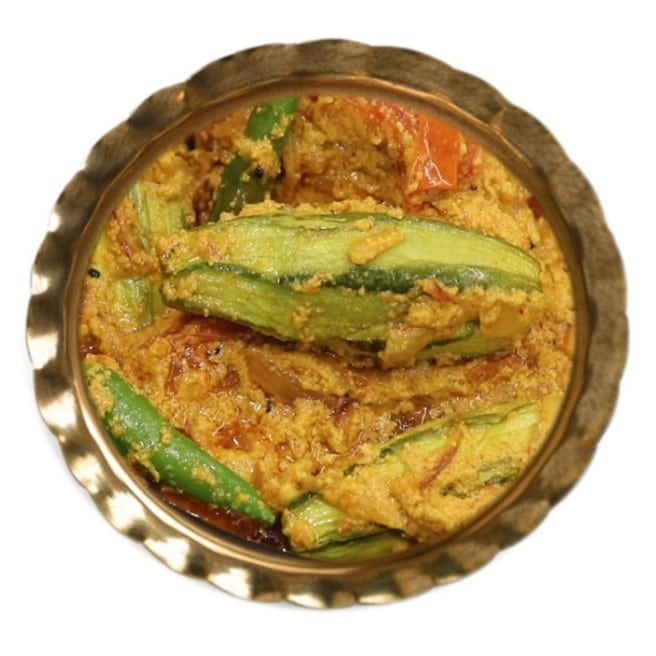
Potoler Dorma is one of those Bengali recipes that looks fancy but is actually quite manageable at home. You take pointed gourds, scoop out the insides, and fill them with a well-seasoned fish mixture. The whole thing gets served with a deeply caramelized onion-tomato gravy that brings everything together. I always appreciate how this dish makes simple ingredients into something that feels special.
The parwars turn tender in the hot oil, and the fish filling stays moist because it cooks gently on a low flame. If you have never tried stuffed vegetables before, this is a wonderful place to start.
About the Recipe
This recipe deserves a place in your kitchen because it shows you how to work with vegetables in a new way. Stuffing parwars might seem tricky at first, but once you get the hang of scooping out the flesh, the rest comes easily. The onion-tomato gravy is the backbone here. You cook the onions until they turn brown and sweet, which gives the sauce a deep flavor.
Meanwhile, the fish filling stays simple with just ginger, garlic, and red chilli powder. When you bring the two components together, the result feels complete and satisfying.
Why you will love this recipe
The combination of textures makes this dish enjoyable from start to finish. The parwar shells are slightly firm on the outside but soft enough to bite through, and the fish filling inside is tender and mildly spiced. The onion-tomato gravy adds moisture and a warm, slightly tangy note that balances the richness of the fish. I like how the gravy does not overpower the delicate flavor of the parwars.
Because the fish cooks on low heat, it stays flaky rather than rubbery. If you enjoy Bengali cuisine or want to try something different with pointed gourds, this recipe offers a rewarding experience. The prep takes a bit of time, but each step is straightforward and worth the effort.
Cooking Tips
When you blanch the parwar shells, keep the oil hot but not smoking. That way, the shells cook quickly without absorbing too much oil. For the onion-tomato gravy, patience is important. Let the onions brown properly before adding the spices, as this builds the flavor foundation.
Stir the gravy often during the final cooking stage to prevent sticking. For the fish filling, low heat is essential. High heat can make the fish dry and tough. I usually taste the filling before stuffing to check the salt and spice levels. If you find the fish mixture too dry, a spoonful of the cooked gravy can help moisten it.
Serving and Storing Suggestions
This recipe serves about four people. Total prep and cooking time is roughly one and a half hours. Serve the stuffed parwars hot, with one or two shells per plate, generously topped with the onion-tomato gravy. Steamed rice or roti makes a good accompaniment.
You can store the components separately in the refrigerator for up to two days. Keep the stuffed shells and gravy in airtight containers. Reheat gently on the stove, adding a splash of water to the gravy if it thickens too much.
Similar Recipes
- Bharwan Karela (Stuffed Bitter Gourd)
- Doi Potol (Pointed Gourd in Yogurt Gravy)
- Shorshe Ilish (Hilsa Fish in Mustard Sauce)
- Bhapa Chingri (Steamed Prawns with Coconut)
Nutrient Benefits
Pointed gourds are low in calories and provide dietary fiber, which supports digestion. They also contain vitamin C and small amounts of potassium. The fish in this recipe adds high-quality protein and omega-3 fatty acids, which are beneficial for heart health. Onions and tomatoes contribute antioxidants and vitamins A and C.
Ginger and garlic offer anti-inflammatory properties. Because the parwars are blanched rather than deep-fried for a long time, the dish remains relatively light. The balance of vegetables and lean protein makes this a nourishing choice.
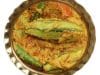
Potoler Dorma
Ingredients
- 500 gms Parwars
- 1/4 cup Oil
For the Onion-Tomato Gravy:
- 1 kg Onions - 800 gms to 1 kg chopped
- 1/2 tsp Coriander Powder
- 1/2 tsp Cumin Seed Powder
- 1/2 tsp Turmeric Powder
- 1 tsp Red Chilli Powder
- 2 tsp Ginger-Garlic Paste
- 200 gms Tomatoes (chopped)
- 2 tsp Salt
- 1 cup Water
For the Filling:
- 250 gms Fish (deboned)
- 6 tbsp Oil
- 1 tbsp Ginger Paste
- 2 tsp Garlic Paste
- 2 tsp Red Chilli Powder
- 1 tbsp Salt
Instructions
- Withough peeling the parwars, scoop out the inner fleshy portion and blanch the shells in hot oil.
- Drain the excess oil and keep aside.
- For the onion-tomato gravy, heat the oil and cook the onions till brown.
- Add all the dry spices, salt, ginger-garlic paste and cook for 2 minutes.
- Add the tomatoes and water.
- Cook for 12 to 15 minutes, stirring continously, till a smooth gravy is obtained.
- Remove from flame.
- For the filling, heat the oil in a pan.
- Add the ginger and garlic pastes, red chilli powder, fish and salt.
- Cook for 10 minutes over a low flame.
- Remove the pan from the flame.
- Spoon the fish mixture inside the parwar shells.
- When serving, place 1 to 2 stuffed shells in each serving dish.
- Top them with the onion-tomato gravy and serve immediately.
Sign up for our newsletter
Add Awesome Cuisine as a Preferred Source

Frequently Asked Questions
Can I use a different vegetable instead of parwars?
Yes, you can try this with small bell peppers or baby eggplants. Adjust the blanching time based on the vegetable you choose, as some may need less or more time to soften.
What type of fish works best for the filling?
Any firm white fish such as tilapia, catfish, or rohu works well. Make sure the fish is completely deboned so the filling has a smooth texture.
How do I prevent the parwar shells from breaking when I scoop them out?
Use a small spoon or a vegetable corer and work gently. Do not scoop too close to the skin. Leave a thin layer of flesh inside to keep the shell sturdy.
Can I make the onion-tomato gravy ahead of time?
Yes, the gravy stores well in the refrigerator for up to three days. You can also freeze it for a month. Reheat it on the stove and add a bit of water if it gets too thick.
Is it necessary to blanch the parwars before stuffing?
Blanching helps soften the shells and removes any bitterness. It also makes them easier to stuff and ensures they cook evenly when served with the hot gravy.