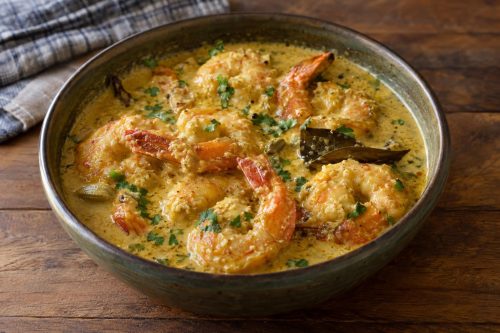
Chingri Malai Curry is a Bengali prawn curry with a lightly spiced, mildly sweet coconut milk gravy. The word malai here refers to the creamy texture that coconut milk brings to the dish, not dairy cream. The recipe uses a freshly ground wet masala of onion, ginger garlic paste, green chilli and grated coconut, which gives the sauce more body and a slightly coarser texture than a smooth tomato-based curry. Whole spices go into the oil first, and the mustard paste is stirred in right at the end so its flavour stays distinct. This prawn malai curry is straightforward enough for a weeknight and works well for guests too.
About the Recipe
The masala is ground fresh from onion, ginger garlic paste, green chilli and grated coconut, so it has more texture and natural sweetness than one made from dried spices alone. The prawns are parboiled with turmeric and salt first, then lightly fried before going back into the gravy. This two-step approach keeps them from turning rubbery during the final simmer.
The coconut milk is added with a small amount of water and simmered briefly, so the sauce stays light. The mustard paste goes in last, keeping its flavour present but not sharp.
Why You Will Love This Recipe
The gravy is mild and creamy without being heavy. Coconut milk and a fresh coconut masala do most of the work, so the dish does not need a long list of dried spices or a lengthy cooking time.
The tip about swapping mustard oil for regular oil and omitting the mustard paste is worth noting. It gives you two distinct flavour outcomes from the same recipe. If you enjoy other coconut-based seafood dishes such as Mussel Curry with Coconut or Crab Curry with Coconut, this chingri malai curry will sit comfortably alongside them.
Cooking Tips
The most common mistake is overcooking the prawns. They are parboiled, then fried, then simmered, so they go through heat three times. Keep each stage short and check them after a couple of minutes during the final simmer. Overcooked prawns turn firm and rubbery and no amount of sauce will fix that.
When adding coconut milk, keep the flame low. Boiling it hard can cause it to split and look grainy rather than smooth.
Top Tips
- Grind the masala with as little water as possible so it stays thick and fries properly without making the pan watery.
- Parboil the prawns only until they just begin to curl. They will cook further when fried and again when simmered in the gravy.
- If using mustard oil, heat it until it just begins to smoke, then reduce the flame before adding the prawns. This removes the raw sharpness of the oil. Omit the mustard paste entirely in this case.
- Add the coconut milk over a low flame and do not let it boil hard. A gentle simmer for one minute is enough to bring the sauce together.
- Taste for salt after adding the coconut milk and water, not before, as the masala and parboiling liquid both carry salt.
- Add the mustard paste right at the end and stir it in off the heat or over very low flame so the flavour stays clean and does not turn bitter.
Serving and Storing Suggestions
Serve hot with plain steamed rice. The gravy is light and pairs naturally with rice rather than bread.
If you have leftovers, store them in a sealed container in the refrigerator and use within a day. Reheat gently over a low flame with a splash of water to loosen the sauce, and avoid reheating more than once as the prawns will toughen. This dish does not freeze well because coconut milk and prawns both change texture on freezing.
Similar Recipes
- Goan Prawn Curry with Mangoes
- Prawn Kofta Curry
- Fish Curry in Coconut Milk
- Mussel Curry with Coconut
- Crab Curry with Coconut
Nutrient Benefits
Prawns are a good source of protein and relatively low in fat. Coconut milk adds calories along with some fat-soluble vitamins, so portion size is worth keeping in mind. Coriander leaves used as garnish contribute a modest amount of vitamin C and iron. Served with rice and a vegetable side, this makes a reasonable protein-rich meal.

Chingri Malai Curry
Ingredients
- 8 to 10, shelled, deveined, tails intact Prawns
- 1/4 tsp Turmeric Powder
- 2 tblsp Oil
- 2 Green Cardamoms
- 1 to 2 Cloves
- 1 Bay Leaf
- Red Chilli Powder - a pinch
- 1/4 tsp Sugar
- 1/4 cup Coconut Milk
- 1/8 tsp Dijon Mustard Paste
- Salt as per taste
- Coriander Leaves - handful, chopped
- For the Masala:
- 1/4 cup, chopped Onions
- 2 to 3 tsp Ginger Garlic Paste
- 1 Green Chilli
- 2 to 3 tblsp, grated Coconut
Instructions
- Grind the masala ingredients with a little water to a smooth, thick paste.
- Boil the prawns in a pan of water with turmeric powder and little salt. Keep aside.
- Heat oil in a pan over medium flame.
- Drain the prawns and add to the pan.
- Cook until they start to change colour.
- Remove and keep aside.
- To the same pan, add the cloves, bay leaf and cardamoms.
- Fry for 10 to 20 seconds.
- Add the ground masala and stir-fry for 3 to 4 minutes.
- Add sugar, salt and red chilli powder.
- Stir well.
- Add the coconut milk and 1/4 cup of water.
- Simmer on low flame for a minute.
- Add the prawns and simmer until fully cooked.
- Add the mustard paste and stir well.
- Garnish with coriander leaves.
- Serve hot with rice.
- Tip
- Instead of regular oil you can also use mustard oil. If you are using mustard oil, then omit the mustard paste.
Sign up for our newsletter
Add Awesome Cuisine as a Preferred Source

Frequently Asked Questions
Can I use frozen prawns for this chingri malai curry recipe?
Yes, frozen prawns work fine. Thaw them completely and pat them dry before parboiling. Excess water from improperly thawed prawns will dilute the gravy and make the masala harder to fry. Large or jumbo prawns hold up better through the parboiling and frying stages without shrinking too much in the finished dish.
What can I use instead of Dijon mustard paste?
The recipe tip already covers this. If you cook with mustard oil instead of regular oil, leave out the mustard paste entirely as the oil provides a similar sharpness. If you are using regular oil and do not have Dijon mustard paste, you can leave it out and the curry will still taste good, just slightly milder. Yellow prepared mustard is not a good substitute as the flavour is quite different.
Why does my coconut milk look curdled or grainy after adding it to the pan?
This usually happens when the flame is too high. Coconut milk can separate if it boils hard. Always add it over a low flame and keep the simmer gentle. If it does separate slightly, reduce the flame immediately and stir steadily. The sauce will not look as smooth but the flavour will still be good. Adding a small amount of water along with the coconut milk, as this recipe does, also helps keep the sauce stable.
How do I know when the prawns are fully cooked without overcooking them?
Prawns are done when they have turned fully pink and opaque and have curled into a loose C shape. A tight O shape means they are overcooked. In this recipe the prawns are parboiled first, so by the time they go back into the gravy for the final simmer, two to three minutes over low heat is usually enough. Check them early rather than late.
Can I make the masala paste in advance?
Yes. Grind the masala of onion, ginger garlic paste, green chilli and grated coconut and refrigerate it in a sealed container for up to a day. Bring it to room temperature before adding it to the pan so it fries evenly. Do not store it longer than that as fresh coconut turns quickly. If fresh coconut is not available, desiccated coconut soaked in a little warm water is a reasonable substitute, though the masala will be slightly finer in texture.