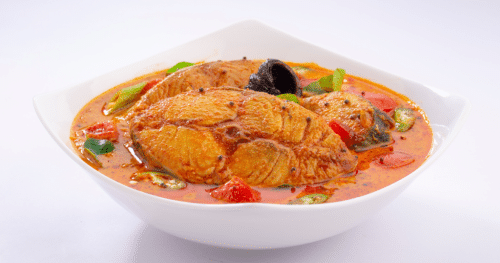
Pondicherry Fish Curry is a coastal favorite that showcases how French colonial influence blended with Tamil flavors in this charming seaside town. The curry starts with a roasted spice paste that includes coconut, fenugreek, and curry leaves, which you grind into a thick base. Tamarind extract adds the signature tang that balances the richness of the fish and oil.
The final tempering with mustard seeds and green chillies brings a burst of aroma just before serving. I like making this on weekends when I have a little extra time to layer the flavors properly. The butter fish holds its shape well in the gravy, soaking up all that spice and tang without falling apart.
About the Recipe
This recipe deserves a spot in your regular rotation because it delivers restaurant quality flavor at home with ingredients you can find easily. The technique of frying and grinding the spice paste before adding it to the gravy creates depth that you cannot rush. Tamarind brings the sourness that makes coastal curries so craveable, while the double layer of tempering adds complexity.
Butter fish is forgiving and stays moist even after simmering, which makes this dish beginner friendly. The gravy thickens beautifully as it cooks, clinging to each piece of fish without being heavy or oily.
Why you will love this recipe
The aroma alone makes this curry worth trying. When you fry the fenugreek and curry leaves in gingelly oil, your kitchen fills with that unmistakable South Indian scent that makes everyone hungry. The texture of the gravy hits a sweet spot between thick and pourable, coating the fish without drowning it.
Because you temper the spices twice, once at the beginning and again near the end, each spoonful has layers of flavor that keep your palate interested. The tamarind sharpness cuts through the richness of the coconut and oil, so the curry tastes bright rather than heavy. If you enjoy curries that balance tang, spice, and warmth, this one delivers on all counts. The recipe also scales up easily for gatherings or meal prep.
Cooking Tips
Do not skip the grinding step or try to substitute with pre ground spices. The freshly ground paste gives the curry its character and helps thicken the gravy naturally. When you add the fish, lower the heat to a gentle simmer so the pieces stay intact. If your tamarind extract tastes very sour, start with three quarters of a cup and adjust after tasting.
Keep an eye on the consistency as it boils. You want the gravy thick enough to coat a spoon but still loose enough to mix with rice. I always prepare the tempering ingredients ahead so everything is ready when the gravy reaches the right stage.
Serving and Storing Suggestions
This recipe serves four people generously and takes about 45 minutes from start to finish. Serve the curry hot with steamed white rice or appam for soaking up the gravy. Store leftovers in an airtight container in the refrigerator for up to two days. The flavors often deepen overnight, making the next day portion even tastier.
Reheat gently on the stovetop with a splash of water if the gravy has thickened too much. Avoid microwaving at high power, which can make the fish rubbery.
Similar Recipes
- Goan Fish Curry
- Kerala Meen Moilee
- Tamil Nadu Fish Kuzhambu
- Mangalorean Fish Gassi
- Chettinad Fish Curry
Nutrient Benefits
This curry provides lean protein from the butter fish, which supports muscle health and keeps you satisfied longer. Turmeric and red chilli powder offer antioxidants and anti inflammatory compounds that benefit overall wellness. Garlic and ginger add immune supporting properties along with digestive comfort. Tamarind contains vitamin C and minerals, while curry leaves contribute iron and fiber. The gingelly oil, though used generously, provides healthy fats that help your body absorb fat soluble vitamins from the spices and vegetables.

Pondicherry Fish Curry
Ingredients
- 1 cup Small Onion
- 4 tsp Cumin Seeds
- 2 tsp Mustard Seeds
- 8 Garlic
- 4 tsp Pepper
- 4 tsp Jeera
- 2 tsp Fenugreek Seeds
- 1/2 cup Coconut
- 1 cup Onion
- 1/2 cup Curry Leaves
- 1 cup Viral Meen (Butter Fish)
- 5 tsp Coriander Powder
- 1 cup Tamarind Extract
- 2 cup Tomato
- 4 tsp Red Chilli Powder
- 2 tsp Turmeric Powder
- 5 Green Chillies
- 1 cup Gingelly Oil
Instructions
- Heat 8 tsp of oil in a pan over moderate heat.
- Add garlic, pepper, jeera, fenugreek and small onions.
- Fry for a minute.
- Add curry leaves, coriander powder and coconut.
- Fry for 60 seconds and grind all together.
- In another pan, add tamarind extract and tomatoes.
- Fry for 30 seconds.
- Add the ground paste and mix well.
- Add salt, turmeric powder and red chilli powder.
- Let it boil for 10 to 15 minutes.
- Add a little water if required.
- Add the fish and continue to boil for another 10 minutes.
- Meanwhile heat 2 tsp of oil in a pan.
- Add mustard seeds, green chillies, curry leaves and fry for 15 seconds.
- Add onion and garlic.
- Fry for 30 seconds.
- Add coriander leaves.
- Add this to the gravy and boil for another 5 to 10 minutes.
- Serve hot.
Sign up for our newsletter
Add Awesome Cuisine as a Preferred Source

Frequently Asked Questions
Can I use a different type of fish for this curry?
Yes, you can substitute with any firm white fish such as kingfish, pomfret, or snapper. Just make sure the pieces are thick enough to hold up during the simmering time without breaking apart.
What can I use if I do not have gingelly oil?
You can use coconut oil or any neutral vegetable oil. Gingelly oil adds a nutty flavor that is traditional, but the curry will still taste good with another oil.
How do I know when the fish is cooked through?
The fish is done when it turns opaque and flakes easily with a fork. This usually takes about 10 minutes of gentle simmering after you add it to the gravy.
Can I make the spice paste ahead of time?
Yes, you can fry and grind the paste a day in advance and store it in the refrigerator. Bring it to room temperature before adding it to the tamarind and tomato mixture.
Why does my curry taste too sour?
Tamarind strength varies by brand and age. If the curry is too tangy, add a pinch of sugar or a little extra coconut to balance the sourness without diluting the spice.