What Is Onam? Kerala’s Ten-Day Homecoming Festival, Explained

By Praveen Kumar

You know Onam is close before anyone says a word about the calendar. The kitchen starts smelling of roasting coconut a few days early. Someone’s ammachi is already fussing over the ash gourd for the kalan. An uncle is quietly convinced that this year’s olan needs less pumpkin, not more, and nobody agrees with him. Banana leaves get stacked by the back door, waiting their turn. In Kerala, and in every Malayali home scattered across the world, this is what the run-up to Onam feels like: less a countdown, more a slow, happy simmer.

If you’ve only ever seen Onam through a single photograph, probably a flower carpet or a groaning banana leaf full of food, you’ve seen the postcard version. Here’s the fuller story: what Onam actually is, why an entire state builds ten days around a mythical king’s homecoming, and what happens on the day the feast finally lands on the leaf.

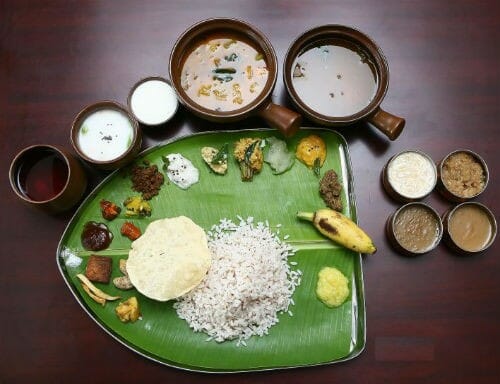
Onam Sadhya

Key Takeaways

  • Onam is a ten-day harvest festival celebrated mainly in Kerala, built around the legend of King Mahabali’s yearly homecoming.
  • The festival runs from Atham to Thiruvonam, with flower carpets, boat races, folk dances, and new clothes marking different days.
  • The grand vegetarian feast, Onasadya, is the centrepiece of Thiruvonam and is served on a banana leaf in a fixed order.
  • Onam isn’t only a Kerala event anymore. Malayali communities from Dubai to Chicago recreate the Sadhya and the spirit of the festival every year.
  • A traditional Sadhya is rich and indulgent by design, so a little planning goes a long way if you’re recreating one at home.

Onam matters right now because it’s approaching fast. If you’re trying to understand what the fuss is about, plan a Sadhya of your own, or just settle an argument about how many dishes actually belong on the leaf, this is the explainer that should answer it.

What Is Onam, Exactly?

Onam is a ten-day Hindu harvest festival native to Kerala, observed at the start of the Malayalam month of Chingam, which falls in August or September. It marks two things at once: the year’s paddy harvest, and the mythical annual homecoming of King Mahabali, the beloved former ruler of Kerala. The festival closes on its most important day, Thiruvonam, when families gather for the grand feast called Onasadya.

What makes Onam different from most Indian festivals is how little it asks of the calendar of any one religion. Malayalis of every faith take part, which is part of why it’s often called the state’s cultural festival rather than a strictly religious one.

Why Do Malayalis Celebrate Onam?

The story goes back to King Mahabali, a generous and much-loved ruler under whom Kerala is said to have known a kind of golden age: no poverty, no dishonesty, everyone treated as equal. The catch, in most tellings, was Mahabali’s growing pride. Threatened by his popularity, the gods sent Vishnu in the form of Vamana, a dwarf, who asked the king for a modest gift: as much land as he could cover in three steps.

Mahabali agreed. Vamana then grew to cosmic size, covering the earth in one step and the heavens in the second. With nowhere left to place the third, Mahabali offered his own head. Moved by that humility, Vishnu granted him one wish: to return and visit his people once every year. That yearly visit is Onam.

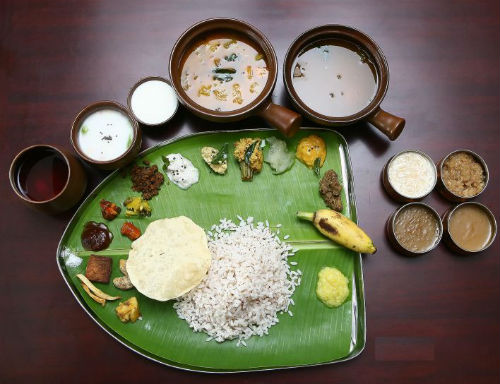
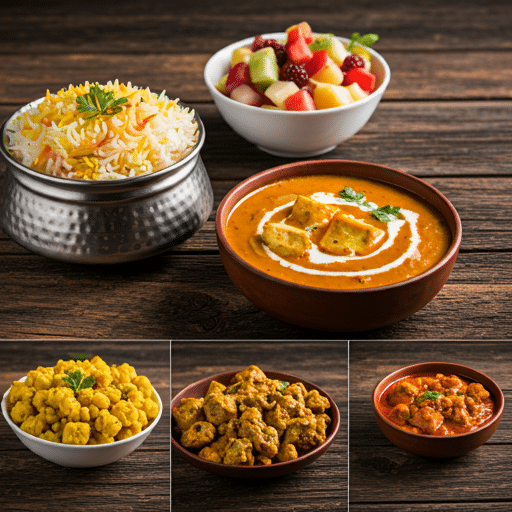
Onasadya is Kerala’s grand Onam feast: a multi-course vegetarian meal served on a banana leaf, in a fixed left-to-right order, that can run from around a dozen dishes at home to well over twenty at a temple or restaurant.

How Is Onam Celebrated Day by Day?

The ten days run from Atham to Thiruvonam, and each one carries its own small ritual. None of this is rigid across every household. Regions and families adjust it. But the broad shape holds across Kerala.

Day What Happens
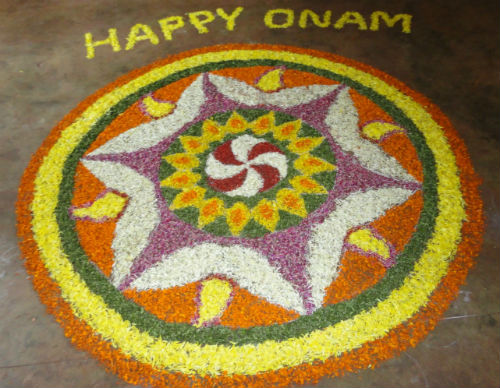
Atham (Day 1) The first layer of Pookalam, the flower carpet, goes down at the front door to welcome Mahabali’s spirit.
Chithira (Day 2) More flowers are added to the Pookalam, which grows a little more intricate each day.
Chothi (Day 3) Families shop for new clothes and jewellery, part of the Onakkodi tradition of dressing up for the festival.
Vishakam (Day 4) Preparation for the Onasadya begins in earnest; markets fill up with vegetables and provisions.
Anizham (Day 5) Vallamkali, the snake boat race, is held on the Pamba river, with crews rowing to the beat of traditional boat songs.
Thriketa to Moolam (Days 6-7) Households finish shopping and start placing small clay idols of Mahabali and Vamana at the entrance.
Pooradam (Day 8) The Mahabali and Vamana idols are made slightly larger, and the Pookalam nears its final size.
Uthradam (Day 9) Known as ‘First Onam’ in some homes; the biggest Pookalam of the festival is laid, and elders are visited.
Thiruvonam (Day 10) The main day. The grand Onasadya is served, new clothes are worn, and the whole family eats together.

Kerala Tourism’s official festival guide lays out this same nine-to-ten day sequence, though the exact rituals attached to each day can vary a little by region and family.

What Happens on Thiruvonam, the Grand Finale?

Thiruvonam is where all ten days of build-up land. Families sit on a mat on the floor, banana leaves are laid out with the tapered end to the left, and the Onasadya is served course by course rather than all at once. Pickles and banana chips go up in the top left corner. Payasam, the sweet finale, actually arrives early on the leaf, even though it’s eaten last. There’s a reason for the sequence: it isn’t just about taste, it’s meant to move the meal from sharp and salty through to rich and sweet in a way that doesn’t overwhelm the palate.

Home Sadhya Restaurant / Temple Sadhya
Typical dish count Around 12 to 20 dishes 26 dishes or more, sometimes up to 30
Serving style Family serves and re-serves by hand Waiters circulate with each dish
Best for A close family Thiruvonam lunch Bigger gatherings or first-time Sadhya experiences
Typical setting Living room floor, woven mat Banquet hall or temple courtyard

“Kanam vittum Onam unnanam” is an old Malayalam saying that translates roughly to “even if you have to sell your belongings, you must eat well on Onam.” It’s only half a joke. For many Malayali families, however tight the year has been, the Thiruvonam lunch isn’t the place to cut corners.

Thiruvonam in 2026 falls on Wednesday, 26 August, with First Onam on 25 August, according to Kerala’s official 2026 public holiday notification from the state’s General Administration Department. The main holiday period runs across four days, so if you’re planning a visit or a big family lunch, that’s the window to build around.

Onam wasn’t always an official state event. It became Kerala’s formally declared festival only in 1961, under the cabinet of then Chief Minister Pattom Thanu Pillai, according to Kerala Tourism’s official history of the celebrations. Before that, it was largely a household and temple observance rather than the state-wide public event it is today.

Is Onasadya Actually Healthy?

Onasadya gets called one of the world’s most balanced meals fairly often, and there’s a real case for that. It covers all six Ayurvedic tastes in one sitting: sweet, sour, salty, bitter, pungent, and astringent. It leans on lentils, vegetables, and coconut rather than heavily processed ingredients. But treat that as a general shape, not a free pass, because the details matter more than the reputation.

A single serving of Sadhya can carry around 94 grams of fat, mostly from ghee, coconut-based curries, and fried sides like banana chips and pappadam, according to an analysis by Dr TS Anish reported in OnManorama in 2025. That’s not a reason to skip the feast. It’s a reason to eat it the way most Malayali households already do once a year: with real enjoyment, and without treating every dish on the leaf as compulsory.

If you’re cooking a Sadhya at home and want it a little lighter without losing the point of the meal, a few small swaps help: parboiled rice instead of polished white rice, one payasam instead of two, and a lighter hand with the ghee on the parippu. None of that changes what the meal is. It just makes seconds a little easier to say yes to.

How Do People Celebrate Onam Beyond the Feast?

Food gets most of the attention, understandably, but Onam is also a genuinely loud, colourful ten days of performance and custom. Onakkodi, the tradition of wearing new clothes, has men in a white-and-gold mundu and women in a set saree or kasavu saree with a gold border. It’s less about fashion and more about a kind of collective renewal: new clothes for a fresh start.

Vallamkali, the snake boat race, draws thousands of spectators to the Pamba river, with over a hundred rowers to a boat chanting traditional vanchipattu songs as they row. In Thrissur, performers cover themselves in tiger and leopard paint for Pulikali, a dance that’s part theatre and part street party. Women perform Kaikottikali, clapping in a circle while singing songs in praise of Mahabali, and Thumbi Thullal follows a similar circular, devotional rhythm.

None of this is confined to Kerala anymore. Malayali communities in the Gulf, in the UK, across the US, and pretty much anywhere with a large enough diaspora, organise their own Onam events, complete with a Sadhya cooked from whatever ingredients the local grocery store can manage. The pookalam might be smaller. The Sadhya might swap in a substitute vegetable or two. The spirit travels intact.

You don’t have to be in Kerala, or even Malayali, to put together a version of this festival that means something. Onam has always been generous about who gets to join in.

How Can You Celebrate Onam at Home, Even Outside Kerala?

You don’t need all twenty-plus dishes to get the point of a Sadhya across. Start with five or six that carry the most flavour: a good avial, a kalan, an olan or erissery, a payasam, and rice with plenty of ghee. If you want the full spread as a reference, our roundup of popular Onam Sadhya recipes covers the classic twenty in detail, dish by dish.

Track down a fresh banana leaf if you can. It’s not just decorative. There’s a whole tradition behind why South Indian meals are served on banana leaves, and it does actually change how the food tastes and smells. If a banana leaf genuinely isn’t available where you are, a large plate works fine. Nobody’s checking.

For dessert, ela ada, steamed rice dumplings filled with coconut and jaggery, is a lighter finish than a full payasam and comes together faster if you’re short on time. Play some vanchipattu boat songs in the background, put out a small pookalam with whatever flowers you have, and you’ve got the shape of Onam even three thousand miles from Kerala.

Frequently Asked Questions

What is Onam and why is it celebrated?

Onam is Kerala’s ten-day harvest festival, celebrated to mark the paddy harvest and the mythical yearly homecoming of King Mahabali. Malayalis of all faiths take part, which is part of why it functions as much as a cultural celebration as a religious one. The festival closes with Thiruvonam, the day of the grand Onasadya feast.

What is Onam Sadhya?

Onam Sadhya is the elaborate vegetarian feast served on Thiruvonam, laid out on a banana leaf in a fixed serving order. A home version might run to a dozen or so dishes, while a temple or restaurant Sadhya can stretch past 26. Rice, parippu curry, sambar, avial, and a payasam are near-constants across most versions.

Is Onam celebrated only in Kerala?

Onam is rooted in Kerala and remains the state’s biggest cultural event, but it’s celebrated well beyond its borders today. Malayali communities across the Gulf, Europe, and North America hold their own Onam gatherings each year, usually built around a shared Sadhya and smaller versions of the pookalam.

What day is Thiruvonam in 2026?

Thiruvonam in 2026 falls on Wednesday, 26 August, with First Onam the day before on 25 August. Kerala’s state government observes a four-day public holiday period around this window, confirmed in its official 2026 holiday notification.

What does the word Onam actually mean?

Onam comes from Sravana, the Sanskrit name for the star Thiruvonam, which gives the festival’s main day its name. The festival itself is tied to the Malayalam month of Chingam and the belief that Mahabali’s spirit returns to Kerala under this particular star.

Ten days, one homecoming story, and a banana leaf that somehow holds a year’s worth of a family’s care. That’s Onam, stripped of the postcard version. Wherever you’re reading this from, there’s nothing stopping you from putting a small pookalam by your door this year and seeing what a Sadhya with five dishes instead of twenty-six feels like. Kerala won’t mind. Neither will Mahabali.

Praveen Kumar

Praveen Kumar is the Chief Food Officer at Awesome Cuisine, a platform created in 2008 to showcase India's vibrant culinary heritage. Praveen is a passionate foodie and love to cook. Having spent a few years in the retail fast food world, Praveen has been exploring the world of food since his school days. Join him on a flavorful journey.

Leave a Comment