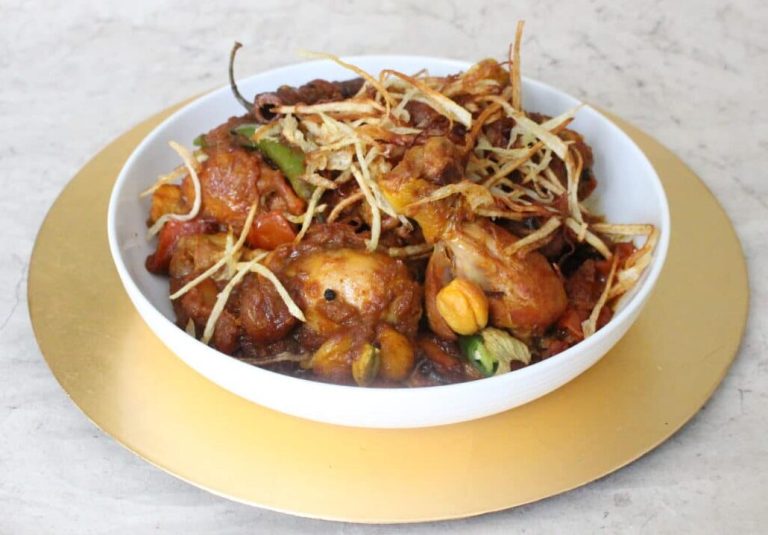
Chicken Xacuti comes from Goa, where the Portuguese influence mingles with local spice traditions to create something deeply aromatic and comforting. You roast whole spices until they smell nutty and sweet, then grind them into a paste that coats each piece of chicken. The tamarind adds a gentle tang while coconut milk smooths everything out.
I make this when I want something special that does not require fancy techniques, just patience and good spices. The pressure cooker shortens the cooking time, but the real magic happens when you let the finished curry sit for a few minutes before serving.
About the Recipe
This recipe rewards you with deep, layered flavors that you cannot get from a jar. The method involves toasting and grinding spices separately, which might seem like extra work but makes all the difference. Each spice gets its moment in the hot pan, releasing oils and aromas that become the backbone of your curry.
The two kinds of coconut additions bring different textures, with the thin milk cooking the chicken and the thick milk finishing the sauce. You will notice how the vinegar brightens everything at the end, cutting through the richness and tying the flavors together.
Why you will love this recipe
The aroma alone makes this dish worth cooking. When you toast those whole spices, your kitchen smells like a spice market in the best way. The curry itself has a balance that keeps you coming back for another bite, with warmth from the spices, richness from the coconut, and a slight tang from the tamarind. It does take some time, but most of that is hands off while the pressure cooker does its work.
I usually make a double batch because it keeps well and tastes fantastic over rice or with soft bread the next day. The combination of nutmeg, cardamom, and cinnamon gives it a warmth that feels different from other curries you might know.
Cooking Tips
Toast your whole spices on medium heat and watch them closely because they can go from fragrant to burnt quickly. Grind the spice paste as fine as you can so it blends smoothly into the curry rather than staying gritty. When frying the onions, take them to a deep golden brown for the best flavor, though not so dark that they taste bitter.
Extract your coconut milk in two stages, first pressing for thick milk and then adding water for a second thin milk. If you are using canned coconut milk instead, use half a can thinned with water for cooking and the rest straight for finishing.
Serving and Storing Suggestions
This recipe serves four to six people depending on appetite and takes about an hour and a half from start to finish, including pressure cooking time. Serve it hot over steamed white rice or with warm bread to soak up the sauce. The curry stores well in the refrigerator for up to four days, and the flavors actually improve as it sits. Reheat gently on the stove rather than in the microwave to keep the sauce smooth. You can also freeze portions for up to two months in airtight containers.
Similar Recipes
- Goan Fish Curry
- Chicken Chettinad
- Kerala Chicken Stew
- Vindaloo
- Korma
Nutrient Benefits
Chicken provides lean protein while the spices offer antioxidants and anti inflammatory compounds. Turmeric and ginger are known for supporting digestion and reducing inflammation. Coconut contributes healthy fats that help your body absorb fat soluble vitamins from the spices. The tamarind adds vitamin C and supports gut health.
Nutmeg and cinnamon have been used traditionally to aid digestion and add trace minerals. Even though this curry feels indulgent, it packs genuine nutritional value alongside all that flavor.

Chicken Xacuti
Ingredients
- 1 Chicken (skinned, cut)
- 1 tsp Cumin Seeds
- 10 Peppercorns
- 3 cm Cardamom
- 3 cm Cinnamon
- 5 Cloves
- 1/4 tsp Nutmeg (coarsely ground)
- 1 tsp Aniseeds
- 1 Ginger
- 1/2 tsp Fenugreek Seeds
- 1 tsp Poppy Seeds
- 3 Onions (large, sliced)
- 1/2 Coconut (grated)
- 2 tsp Chilli Powder
- 1 tsp Coriander Powder
- 1 cup Tamarind Juice
- 1 tsp Vinegar
- 150 ml Oil
- Salt as per taste
Instructions
- Heat 2 tsp oil in a pan.
- Fry cumin seeds, peppercorns, cardamoms, cinnamon, cloves, nutmeg, aniseeds and ginger and fenugreek seeds.
- Fry till brown and grind to a fine paste.
- Fry 1 sliced onion in a little oil then add half the coconut with poppy seeds. Fry and reserve.
- Grind to a fine paste.
- Extract the milk from the other half of the coconut to get one cup of thick milk and the rest thin milk.
- Heat 3 tsp oil and fry 2 sliced onions till brown.
- Add chicken pieces and the ground masalas. Fry.
- Add chilli, coriander and turmeric powders.
- Add tamarind juice and the thin coconut milk to the chicken.
- Stir well and add salt and pressure cook till the chicken is tender. Remove.
- Add vinegar and thick coconut milk.
- Simmer for 10 minutes.
- Serve hot with rice.
Sign up for our newsletter
Add Awesome Cuisine as a Preferred Source

Frequently Asked Questions
Can I use boneless chicken instead of bone in pieces?
Yes, boneless chicken works well but reduce the pressure cooking time by about five minutes since it cooks faster. Bone in pieces add more flavor to the sauce, but boneless thighs or breast pieces still turn out tender and flavorful.
What can I substitute if I cannot find fresh coconut?
Use canned coconut milk instead. For thin milk, mix half a can with half a cup of water. For thick milk, use the remaining coconut milk straight from the can without diluting. The flavor will be slightly different but still delicious.
How spicy is this curry and can I adjust the heat?
The heat level depends on your chili powder. Two teaspoons gives a moderate warmth that most people enjoy. You can reduce it to one teaspoon for a milder version or increase it if you prefer more heat. The coconut milk and tamarind balance the spice nicely.
Do I need a pressure cooker or can I use a regular pot?
You can use a regular pot but the cooking time will be longer. After adding the thin coconut milk and tamarind, cover and simmer on low heat for forty to fifty minutes until the chicken is tender. Check occasionally and add water if the sauce reduces too much.
Why does the recipe call for both vinegar and tamarind?
Tamarind provides a fruity, complex sourness that cooks into the dish, while vinegar adds a bright, sharp note at the end. This combination gives the curry its characteristic Goan flavor profile with layers of acidity that balance the rich spices and coconut.