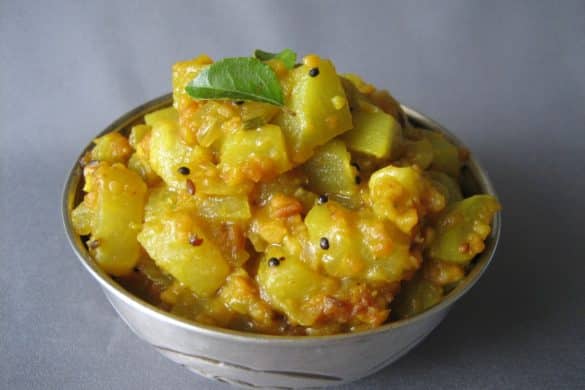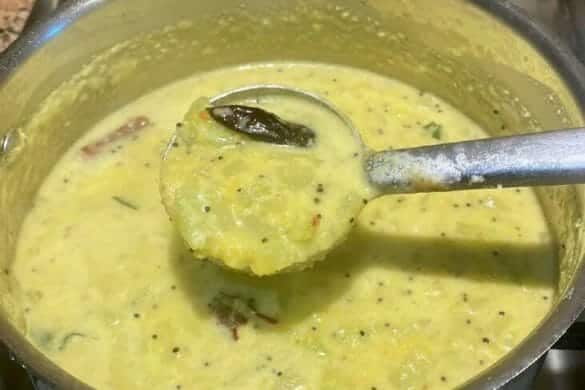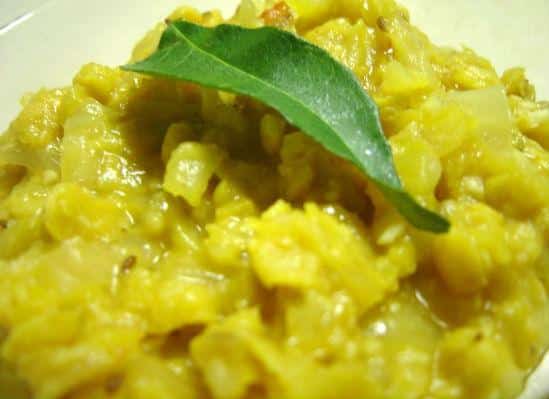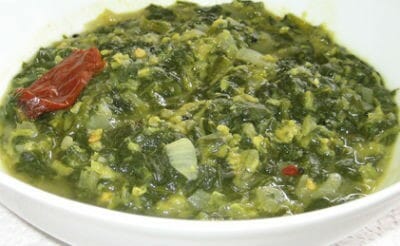
Pulippu (Tamarind) Kootu is something my mother made on days when we had run out of sambar but still needed something tangy and filling to go with rice. She would use whatever vegetable was lying around, usually ash gourd or pumpkin, and the house would smell of roasted coriander and red chilli as she ground the spice paste.
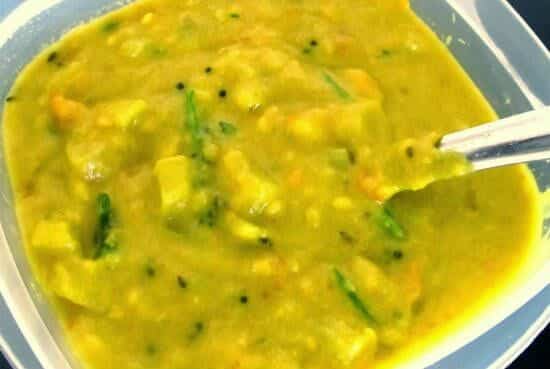
I always loved the slightly grainy texture from the cooked dals and the way the peanuts in the tempering softened just enough to bite through. It is not fancy, but it is comforting in a way that feels specific to South Indian home cooking. I started making this myself when I moved out, and now it is my go to when I want something hearty without spending an hour in the kitchen.
About the Recipe
This recipe takes about forty five minutes from start to finish, including the time it takes to pressure cook the dals. Most of the ingredients are pantry staples if you cook South Indian food regularly. Tamarind, red gram dal, and bengal gram dal are easy to find, and the spices get toasted and ground fresh, which makes a noticeable difference.
I make this on weeknights when I want something filling but do not have the energy for many dishes. The ash gourd cooks quickly and does not need much attention once it goes into the pot.
Why you will love this recipe
The combination of two dals gives this kootu a creamy, thick texture without needing to blend anything smooth. The spice paste, made with roasted coriander, pepper, and red chilli, brings a warmth that balances the sourness of tamarind without making the dish taste overly hot. The tempering with peanuts is not traditional in every kootu recipe, but it adds a nutty crunch that keeps each spoonful interesting.
Ash gourd is mild and soaks up the tangy broth well, though you can swap it for pumpkin or bottle gourd if that is what you have. It is a one pot dish that does not taste like a shortcut.
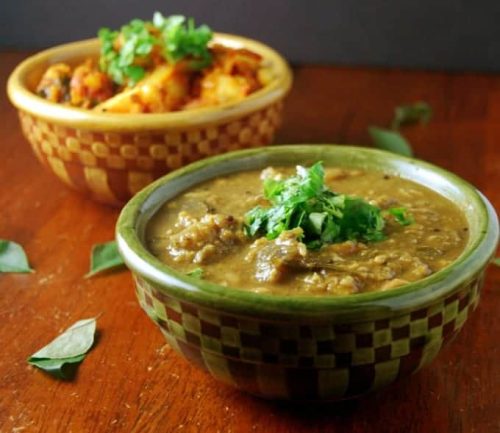
Pulippu Tamarind Kootu
Cooking Tips
The spice paste can turn bitter if you burn the coriander seeds or black gram dal, so keep the heat on medium and stir constantly while roasting. Beginners often add the spice paste too early, which makes it lose flavour. Stir it in only after the dals and vegetables are fully cooked and blended together. If your kootu turns out too thick, add a little water and simmer for a couple of minutes to loosen it. The tamarind juice should be strained well to remove any fibrous bits that can make the texture unpleasant.
Top Tips
- Soak the tamarind in warm water for at least ten minutes to make extracting the juice easier and faster.
- Cook the dals until they are soft but not mushy. They should hold their shape slightly when you stir them in.
- Roast the spice paste ingredients separately if you are not confident about even roasting. Black gram dal browns faster than coriander seeds.
- Use ghee for tempering instead of oil if you can. It adds a richness that plain oil does not bring.
- If you do not have ash gourd, try white pumpkin, ridge gourd, or even raw banana. Avoid watery vegetables like tomatoes.
Serving and Storing Suggestions
This recipe serves four people as part of a meal with rice and a dry vegetable side. Prep time is about fifteen minutes, and cooking takes another thirty. Serve the kootu hot, preferably with steamed rice and a spoonful of ghee on top. It tastes even better the next day once the flavours settle.
Store leftovers in an airtight container in the fridge for up to three days. Reheat gently on the stove with a splash of water if it thickens too much.
Similar Recipes
- Sambar
- Mor Kuzhambu
- Kadhi
- Koottu Curry
- Erissery
Nutrient Benefits
Both red gram dal and bengal gram dal are high in protein and fibre, which makes this kootu filling and good for digestion. Tamarind is rich in antioxidants and helps with nutrient absorption, though it should be used in moderation if you have acidity issues. Ash gourd is low in calories and high in water content, which makes the dish light despite the richness from coconut and ghee.
Peanuts add healthy fats and a little extra protein. The spices, especially black pepper and coriander, aid digestion and add trace minerals.

Pulippu (Tamarind) Kootu
Ingredients
- Tamarind (marble sized ball)
- 1/4 cup Red Gram Dal
- 1/4 cup Bengal Gram Dal
- 4 tbsp Fresh Coconut (grated)
- 1/2 kg Ash Gourd (peeled and chopped fine)
- Salt to taste
- 1/2 tsp Turmeric Powder
Spice Paste:
- 2 tsp Oil
- 1 1/2 tsp Black Peppercorns
- 2 tsp Black Gram Dal
- 1 tbsp Bengal Gram Dal
- 1/2 tsp Asafoetida Powder
- 1 tbsp Coriander Seeds
- 1 Dry Red Chilli
For Tempering:
- 3 tsp Ghee
- 1 tsp Mustard Seeds
- 1 tsp Black Gram Dal
- 2 tbsp Raw Peanuts
- 1 Dry Red Chilli (halved)
- Curry Leaves (few)
Instructions
- Soak the tamarind in 1 cup water and extract the juice. Set aside.
- Pressure cook the red gram dal and bengal gram dal, together and set aside.
- To make the spice paste, fry in 2 tsp oil all the ingredients for the spice paste. Grind to a fine paste adding the grated coconut and a little water.
- Heat 3 tsp ghee and add all the ingredients for tempering. When the mustard seeds splutter and the peanuts are fried, add the ash gourd, salt, turmeric powder and the tamarind juice.
- Simmer till the vegetable is tender.
- Add the cooked dals and simmer till well blended.
- Stir in the spice paste and cook for a few more minutes.
- Serve hot with rice.
note: you can use any vegetable of your choice except lady's finger, bitter gourd or colocasia.
Sign up for our newsletter
Add Awesome Cuisine as a Preferred Source

Frequently Asked Questions
Can I skip the bengal gram dal in the spice paste and use only black gram dal?
You can, but the spice paste will taste less nutty and slightly more bitter. Bengal gram dal adds a mild sweetness and body that balances the heat from the red chilli and pepper.
My kootu turned out watery. How do I fix it?
Simmer it uncovered on low heat for five to ten minutes to evaporate the excess liquid. You can also mash a few spoonfuls of the cooked dal with the back of a spoon to thicken the base naturally.
Can I make this without a pressure cooker?
Yes, but it will take longer. Cook the dals in a regular pot with enough water until they are soft, which usually takes about thirty to forty minutes. Keep checking and adding water if needed so they do not dry out.
How sour should the tamarind juice be?
It should taste tangy but not face scrunching sour. If your tamarind is very strong, use a smaller piece or dilute the extracted juice with a little extra water. You can always add more later if the kootu tastes flat.
Why does my spice paste taste raw even after cooking?
You likely added it too early or did not simmer the kootu long enough after stirring it in. Let it cook on low heat for at least five minutes after adding the paste so the spices lose their rawness and blend with the dals.