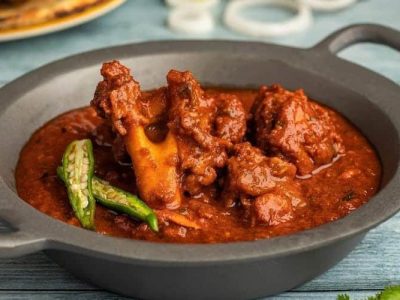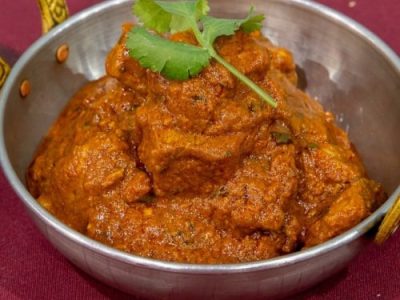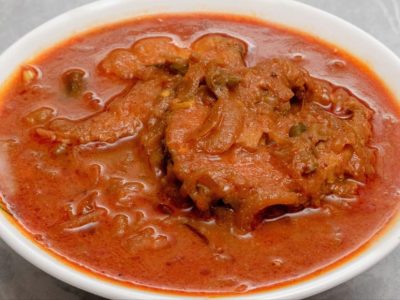
Mutton Kuzhambu is what my mother-in-law makes when the family gathers on weekends, and after watching her a few times, I understood why she never skips the double grinding step. The first paste, made with dry roasted spices, gives the curry its backbone. The second paste, with raw coconut and onions, goes in after the mutton is cooked and softens the heat while adding body to the gravy.
I used to try shortcuts and grind everything together, but the flavor always felt muddy. Now I follow her method exactly, and the difference is clear. The garnish step, where you fry sliced onions until they brown in coconut oil, adds a final hit of sweetness that makes the dish feel complete. It takes time, but not much effort, and the result is a kuzhambu that tastes like it came from a home kitchen, not a hurried weeknight.
About the Recipe
This recipe uses ingredients that are easy to find in most South Indian kitchens or local markets. The pressure cooker handles the mutton, so you do not need to stand over the stove. Total time from start to finish is about an hour and a half, including prep and cooking. I make this when we have weekend guests or when I want to meal prep a curry that tastes better the next day. The double grinding step might sound like extra work, but each paste takes only a few minutes, and you can do the first one while the mutton pressure cooks.
Why you will love this recipe
The two-paste method gives you control over flavor in a way that single-step curries do not. The roasted spice paste brings warmth and depth, while the coconut paste adds sweetness and creaminess without making the gravy heavy. Because the mutton cooks in the pressure cooker with tomatoes and onions, it stays tender and picks up flavor from the start. The garnish step is not optional here.
Frying the sliced onions until they caramelize in coconut oil adds a sweetness that balances the black pepper and red chili heat. The gravy thickens as it simmers, and the mutton softens further, so by the time you serve it, the texture is rich without being oily. It reheats well, and the flavors deepen overnight, which makes it practical for advance cooking.
Cooking Tips
The most common mistake is adding the second coconut paste too early, which can make it taste raw and bitter. Always wait until the mutton is fully cooked and the first spice paste has simmered for a few minutes. If the gravy looks too thick after adding the coconut paste, add a quarter cup of water and let it come to a boil again.
The garnish onions need to fry on medium heat until they turn golden brown, not just soft. If you rush this step on high heat, they burn and taste bitter. If the mutton is tough after three whistles, close the cooker again and cook for one more whistle. Older mutton takes longer.
Top Tips
- Roast the spices for the first paste on low heat until fragrant but not burnt, usually two to three minutes.
- Grind the coconut paste with just enough water to make it smooth, not soupy, so the gravy does not thin out too much.
- You can substitute regular onions for small onions, but slice them thin so they cook evenly in the garnish.
- If you do not have a pressure cooker, simmer the mutton in a covered pot for an hour and a half until tender.
- Make the spice pastes ahead and store them in the fridge for up to two days, which speeds up the process on the day you cook.
Serving and Storing Suggestions
This recipe serves four people with rice. Prep time is about twenty minutes, and cooking time is around an hour and fifteen minutes. Serve the kuzhambu hot with steamed rice, and keep a bowl of plain yogurt on the side to balance the heat. It also pairs well with dosa or idiyappam if you have leftovers.
Store the curry in an airtight container in the fridge for up to three days. The flavors settle and taste better on the second day. Reheat on low heat with a splash of water if the gravy has thickened. You can freeze it for up to a month, but thaw it overnight in the fridge before reheating.
Similar Recipes
- Chettinad Mutton Curry
- Kerala Style Mutton Stew
- Tamil Mutton Paya
- Mutton Chukka
- Andhra Mutton Fry
Nutrient Benefits
Mutton provides high quality protein and is rich in iron, which supports healthy blood cells. The black pepper and fennel seeds aid digestion and help reduce bloating after a heavy meal. Coconut adds healthy fats and gives the gravy a creamy texture without dairy. Garlic and small onions contain antioxidants that support immune function.
Tomatoes add vitamin C and balance the richness of the meat. The spices, especially coriander and cumin, have anti-inflammatory properties and can help with gut health. This is a nutrient-dense dish that works well as part of a balanced meal with rice and vegetables.

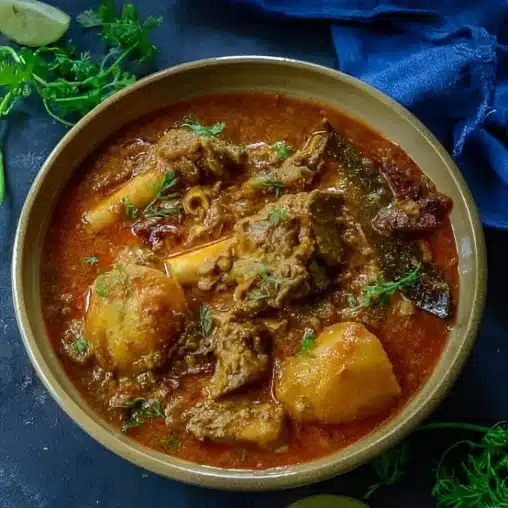
Mutton Kuzhambu
Ingredients
- 1/2 kg Mutton
- 2 cups Tomato
- 15 to 20 Small Onions
- 4 to 5 Green Chillies
- 2 tsp BlackPepper
- 10 flakes Garlic
- 2 tsp Jeera
- 1/2 tsp Sombu (Fennel Seeds)
To Grind:
- 2 tsp Coconut Oil - 2 tsp
- Red Chillies - few
- 2 tsp Coriander Seeds (Dhaniya)
- 2 tsp Pepper
- 2 tsp Jeera
- 1/2 tsp Fennel Seeds
To Grind (2)
- 1 cup Coconut
- 7 to 8 Garlic
- 10 Small Onions
- Curry Leaves (few)
For Garnish:
- Coconut Oil
- 1/2 tsp Mustard Seeds
- 4 to 5 Red Chilli
- 7 to 8 Small Onions (grated)
Instructions
- Heat a pan over moderate heat and add the coconut oil.
- Add the red chillies, coriander seeds, pepper, jeera and fennel seeds.
- Fry and grind to a paste.
- Keep aside.
- Add mutton in cooker with 2 cups of water.
- Add onion, tomatoes, green chillies, turmeric powder and 2 tsp of oil.
- Pressure cook for 3 whistles.
- In a pan, heat oil and add the coconut, garlic and small onions.
- Fry them with curry leaves and grind to a paste.
- Open the cooker and add the ground paste.
- Add salt and allow it to boil for sometime.
- To garnish, fry the small onions, red chilli and mustard seeds in little coconut oil till the onions turn brown.
- Add this to the gravy.
- Boil for 10 more minutes.
- Serve hot with rice.
Sign up for our newsletter
Add Awesome Cuisine as a Preferred Source

Frequently Asked Questions
Can I skip the second grinding step and just use one paste?
You can, but the flavor will not be as layered. The roasted spice paste gives depth, and the coconut paste adds freshness. If you combine them, the roasted spices overpower the coconut, and the curry tastes one-dimensional.
My gravy turned out too watery after adding the coconut paste. How do I fix it?
Simmer the curry uncovered on medium heat for ten to fifteen minutes. The water will evaporate, and the gravy will thicken naturally. Do not add cornstarch or flour, as it changes the texture.
The mutton is still tough after three whistles. What should I do?
Close the cooker again and cook for one more whistle. Older mutton or larger pieces take longer to soften. You can also transfer it to a pot and simmer covered for another twenty minutes.
Can I use goat meat instead of mutton?
Yes, goat meat works well and cooks faster. Reduce the pressure cooking time to two whistles and check for tenderness. Goat meat is leaner, so the gravy may be slightly less rich.
How do I store leftovers, and how long do they last?
Store in an airtight container in the fridge for up to three days. The curry tastes better the next day as the spices settle. Reheat on low heat with a little water. You can freeze it for up to a month, but thaw it in the fridge overnight before reheating.