
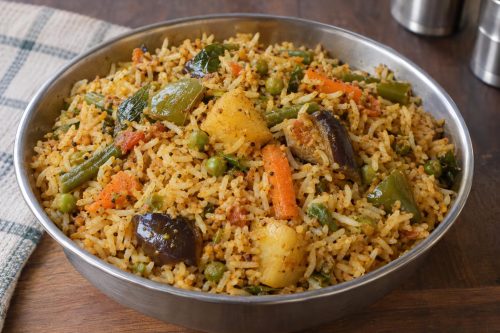
Vegetable Masala Rice Recipe is a South Indian style mixed rice where cooked rice is tossed with spiced, tamarind-flavoured vegetables and a freshly ground masala powder. The masala is made by frying bengal gram dal, black gram dal, coriander seeds, dried red chillies and asafoetida in a small amount of oil before grinding, which gives it a roasted, nutty base. Copra gratings are worked into the powder and also added at the end, which sets this recipe apart from most vegetable rice dishes. The tamarind extract adds a mild sourness that balances the spice and keeps the rice from tasting flat.
About the Recipe
The recipe has two main parts: preparing the spice powder and cooking the vegetables. The masala powder is ground fresh with copra, which means it will have a coarser, more textured consistency than a store-bought powder. The vegetables are added to the pan in stages, starting with the harder ones like potato and carrot, so everything finishes cooking at roughly the same time. Tamarind extract is added after the peas and cooked down until the water evaporates before the masala powder goes in. The cooked rice is kept separate and mixed in at the end.
Why You Will Love This Recipe
The freshly ground masala powder is the main reason this rice tastes different from a simple vegetable pulao or a Mixed Vegetable Rice. Because the dals and spices are roasted before grinding, the powder has a depth that a ready-made blend does not quite match. The tamarind gives the dish a gentle sourness, and the copra gratings added at the very end provide a slightly chewy contrast to the soft vegetables and rice. It is filling enough to serve on its own without needing a side dish.
Cooking Tips
The most common beginner mistake is mixing the vegetable mixture into the rice while the rice is still warm and moist, which makes the rice clump. Spread the cooked rice on a plate and sprinkle a little oil over it so the grains separate as they cool. Also, make sure the tamarind water is fully cooked off before adding the masala powder, otherwise the powder turns pasty rather than coating the vegetables evenly.
Top Tips
- Cool the rice on a flat plate with a little oil before mixing, so the grains stay separate and do not turn mushy.
- Add the vegetables to the pan in order of hardness: potato first, then carrot and beans, then capsicum and brinjal, and tomato last.
- Cook the tamarind extract until all the water has evaporated before adding the masala powder, or the powder will not blend in properly.
- Include the copra gratings in two stages: some go into the masala while grinding, and the rest are added fresh at the end for texture.
- If the mixed rice feels dry after combining, add a small amount of oil and toss gently rather than adding water, which will make the rice sticky.
- Cinnamon and cloves are listed as optional in the masala, but even a small piece of cinnamon noticeably changes the aroma of the powder.
Serving and Storing Suggestions
Serve Vegetable Masala Rice hot with a raita or plain yoghurt on the side. It is substantial enough to be a one-dish meal. If you are packing it for a lunchbox, let it cool completely before closing the container. Stored in the refrigerator, it keeps well for one day. Reheat with a sprinkle of water and a few drops of oil to loosen the grains. Avoid reheating more than once as the vegetables soften further and the masala flavour fades.
Similar Recipes
Nutrient Benefits
This dish includes a range of vegetables such as carrot, peas, beans, brinjal and potato, which together contribute fibre, potassium and several vitamins to the meal. The bengal gram dal and black gram dal in the masala add a small amount of plant protein. Copra gratings provide some fat that helps carry the fat-soluble flavour compounds from the spices. Tamarind contributes iron and a small amount of B vitamins.
Vegetable Masala Rice
Ingredients
- 1 1/2 cups rice
- 3 tablespoons oil
- 1 small lump of tamarind
- 1 brinjal (eggplant)
- 1 potato
- 1 capsicum
- 1 tomato
- 1 carrot
- a few beans
- 1/2 cup shelled peas
- salt to taste
- 1/2 cup copra gratings
- 2 sprigs curry leaves
- 1/2 teaspoon turmeric powder
- Fry in 2 teaspoons oil and powder
- 1 tablespoon bengal gram dal
- 1/2 tablespoon black gram dal
- 1 1/2 tablespoons coriander seeds
- 3 dried red chillies
- 1/4 teaspoon asafoetida
- 1 small cinnamon stick (optional)
- 3 cloves (optional)
- Seasonings:
- 1 teaspoon mustard seeds
- 2 teaspoons bengal gram dal
- 2 teaspoons black gram dal
Instructions
- Cook the rice, and cool on a plate, sprinkling a little oil. Cook the peas and keep separately. Boil the tamarind in water and squeeze to extract the pulp.
- Cut the vegetables into pieces (1 1/2 inches) long. Prepare the masala as indicated and add some copra gratings while powdering.
- Heat the oil, and add the mustard, dal and curry leaves. When the seeds have popped, add first the potato, then the carrots and beans.
- Fry for a minute or two, and then add the capsicum and brinjals and fry for a few minutes before adding the tomatoes. Fry until the vegetables turn soft.
- Add the turmeric, salt and approximately half a cup of water. Cover and cook until done.
- Remove the lid, add the peas and the tamarind extract, and cook until the water has evaporated. Add the masala powder, mix well and remove from fire.
- Pour this mixture on to the rice and mix well. Add a little oil if the rice is dry.
- Add the chopped coriander and the rest of the copra gratings, and mix well. Serve hot.
Sign up for our newsletter
Add Awesome Cuisine as a Preferred Source

Frequently Asked Questions
Can I use pre-ground masala powder instead of making the masala fresh?
You can, but the flavour will be noticeably different. The recipe calls for roasting the dals and spices in oil before grinding, and that step creates a toasted, slightly nutty flavour that a ready-made powder does not have. If you do use a store-bought powder, start with a smaller quantity and adjust to taste, as commercial blends vary in heat and saltiness.
My rice turned sticky when I mixed in the vegetables. What went wrong?
This usually happens when the rice is mixed in while it is still warm or when the vegetable mixture still has moisture in it. Spread the cooked rice on a wide plate and drizzle a little oil over it so the grains separate as they cool. Also make sure the tamarind water has fully evaporated from the vegetable pan before you combine everything.
Can I substitute any of the vegetables listed?
Yes. The recipe uses a combination of hard vegetables like potato and carrot alongside softer ones like brinjal and tomato. You can swap in other vegetables that behave similarly, for example, raw banana instead of potato or zucchini instead of brinjal. Just follow the same principle of adding harder vegetables to the pan first so everything is cooked through at the same time.
What is copra and can I leave it out?
Copra refers to dried coconut, either grated or in pieces. In this recipe it is added in two ways: some goes into the masala while grinding, and the rest is stirred in at the end. It adds a distinct flavour and a slightly chewy texture. Fresh grated coconut can be used instead, though it has more moisture. Leaving it out entirely will change the character of the dish, but the recipe will still work.
How much tamarind extract should I use and how do I prepare it?
The recipe calls for a small lump of tamarind. Soak it in about a quarter cup of warm water for ten to fifteen minutes, then squeeze it thoroughly with your fingers to extract the pulp and strain out the fibres and seeds. The resulting liquid should be tart but not overwhelmingly sour. If the extract tastes very sharp, dilute it slightly with water before adding it to the pan.
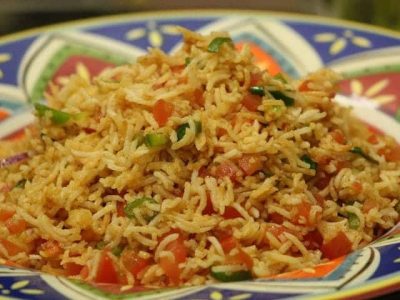
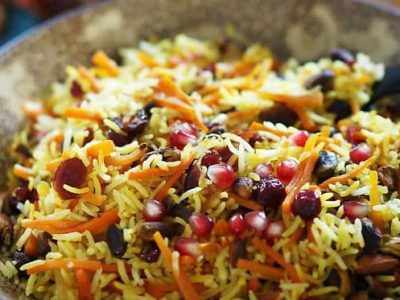
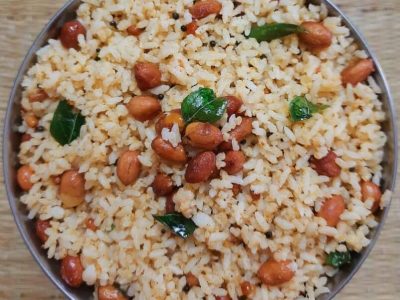
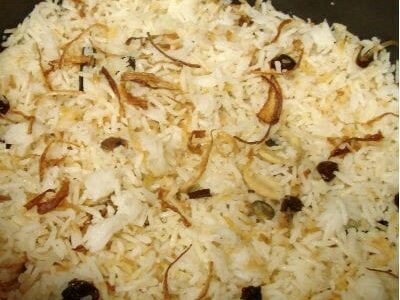
I have tried this recipe & it is yumm….. Tastes a bit like Bisi Bele Bath with similar masala, however really good.