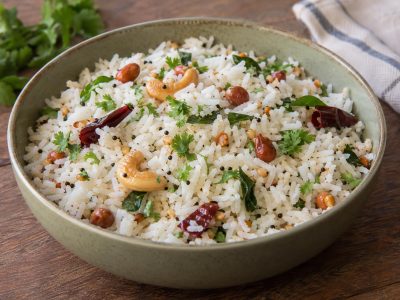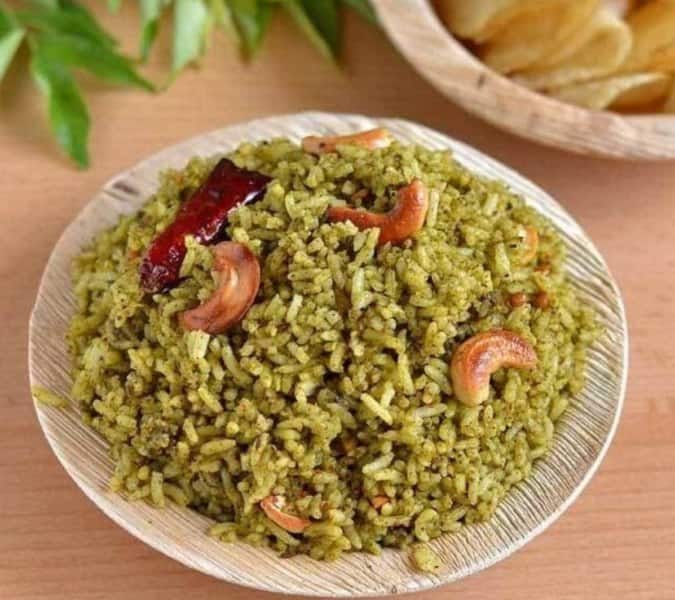
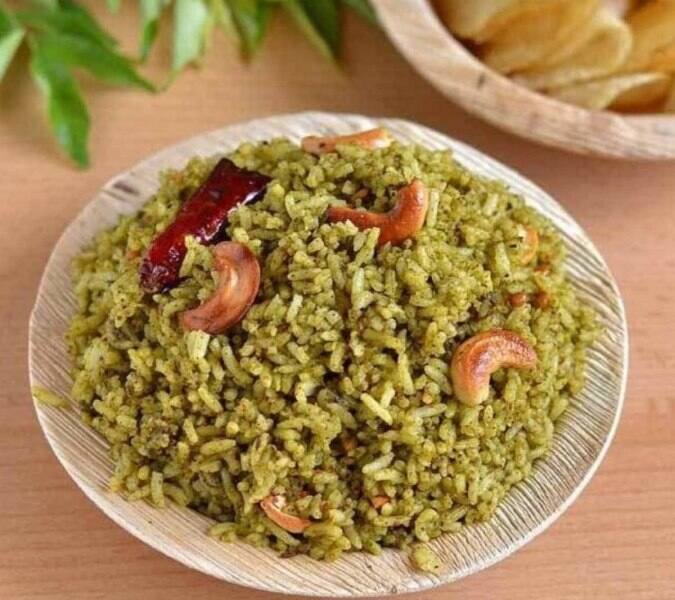
Karuveppilai Sadam is one of those recipes that brings the kitchen alive with the smell of roasting curry leaves and toasted spices. I make this often when I have leftover rice sitting in the fridge and want something more interesting than plain reheating. The masala paste is what makes this dish special, with whole spices dry roasted until they release their oils, then ground with tangy tamarind.
The tempering in ghee adds richness, while cashews give a bit of crunch. It comes together in under half an hour, and every bite has layers of flavor from the curry leaves, black pepper, and fenugreek.
About the Recipe
This recipe is worth trying because it takes simple cooked rice and turns it into something aromatic and full of character. The curry leaves are not just a garnish here, they are the star. Roasting them brings out a nutty, almost smoky flavor that is hard to describe but easy to crave. The blend of urad dal, coriander seeds, fenugreek, and peppercorns adds warmth without making the dish overly spicy.
Tamarind lends a subtle sourness that balances the richness of ghee. It is comforting without being heavy, and the textures from the fried cashews and crisped curry leaves keep things interesting.
Why you will love this recipe
This dish is straightforward to make and does not require any special equipment or hard to find ingredients. The masala comes together quickly, and the roasting step builds flavor in a way that pre ground spices just cannot match. I like how a little tamarind sharpens the taste without overpowering the curry leaves. The tempering in ghee adds a final layer of warmth and aroma that ties everything together.
Because you use already cooked rice, it is a practical choice for busy evenings or when you want to use up leftovers. The cashews add a nice crunch, and the turmeric gives the rice a gentle golden color that looks as good as it tastes.
Cooking Tips
Use day old rice if you can, as freshly cooked rice can turn mushy when mixed with the masala. Roast the curry leaves over low heat so they dry out and turn crisp without burning. Keep the flame low while frying the masala spices too, since they can scorch quickly. When grinding the masala, add water slowly to get a thick paste rather than a runny sauce.
Taste the ground masala before adding it to the rice and adjust salt or tamarind if needed. If you prefer less heat, reduce the number of dried red chillies.
Serving and Storing Suggestions
This recipe serves about three to four people and takes roughly twenty five minutes from start to finish. Serve the rice warm, straight from the pan, with a side of yogurt or raita to balance the spices. Papad or pickle also goes well. Store leftovers in an airtight container in the fridge for up to two days. Reheat gently in a pan with a splash of water or a small knob of ghee to refresh the flavors and loosen the grains.
Similar Recipes
- Puliyodarai (Tamarind Rice)
- Ellu Sadam (Sesame Rice)
- Tomato Rice
- Coconut Rice
- Lemon Rice
Nutrient Benefits
Curry leaves are rich in antioxidants and have been used in traditional medicine for their digestive properties. Urad dal and cashews provide protein and healthy fats, while turmeric offers anti inflammatory benefits. The use of ghee in tempering adds fat soluble vitamins and helps the body absorb nutrients from the spices. Tamarind is a good source of vitamin C and aids digestion. This dish balances carbohydrates from rice with the nutrients from roasted seeds, nuts, and fresh herbs.
Karuveppilai Sadam (Curry Leaf Rice)
Ingredients
- 1 1/2 cups Rice (cooked)
- 1/4 tsp Turmeric Powder
- Salt as per taste
- 2 tbsp Ghee
- 2 tbsp Cashewnuts (broken)
For the Masala:
- 1 cup Curry Leaves
- 2 tbsp Urad Dal
- 1 tbsp Oil
- 1 tsp Asafoetida Powder
- 1 tsp Coriander Seeds
- 1/4 tsp Fenugreek Seeds
- 1 tsp Black Peppercorns
- 4 Dried Red Chillies
- Tamarind - small marble size, without seeds or strings
For Tempering:
- 2 tbsp Ghee
- 1 tsp Mustard Seeds
- 1 tsp Black Gram Dal
- 1/2 tsp Cumin Seeds
- 1 Dried Red Chilli (broken)
Instructions
- Heat a pan over low heat.
- When hot, add the curry leaves for masala and roast for about 2 minutes.
- Remove from pan.
- Heat oil in the same pan.
- Fry the remaining masala ingredients except tamarind over low heat till dal turns golden.
- Remove fro pan.
- Roast the tamarind in the same pan for about 2 minutes.
- Combine all the masala ingredients and grind to a fine consistency adding 2 tblsp of water.
- Keep aside.
- Heat 2 tblsp ghee for and fry the cashewnuts till golden.
- Keep aside.
- Heat ghee for tempering and fry the tempering ingredients.
- Add the ground masala and saute for a minute.
- Add cooked rice, turmeric powder and salt.
- Remove from heat and mix well.
- Garnish with fried cashewnuts.
- Serve at once.
Sign up for our newsletter
Add Awesome Cuisine as a Preferred Source

Frequently Asked Questions
Can I use fresh rice instead of leftover rice?
Yes, but make sure the rice is completely cooled and the grains are separate. Freshly cooked rice can become sticky and clump together when mixed with the masala.
How do I know when the curry leaves are roasted enough?
The leaves should become crisp and brittle, and the color will darken slightly. This usually takes about two minutes over low heat. They should not turn black or smell burnt.
Can I skip the tamarind if I do not have any?
You can leave it out, but the dish will miss the tangy balance that tamarind provides. A small squeeze of lemon juice added at the end can work as a substitute, though the flavor will be slightly different.
Q Is it necessary to grind the masala or can I use it coarsely crushed?
Grinding the masala fine helps it coat the rice evenly and blend with the tempering. A coarse texture can make the dish feel grainy and harder to mix.
Can I make the masala paste in advance?
Yes, you can grind the masala a day ahead and store it in the fridge. Just bring it to room temperature before adding it to the tempering, so it heats evenly.