
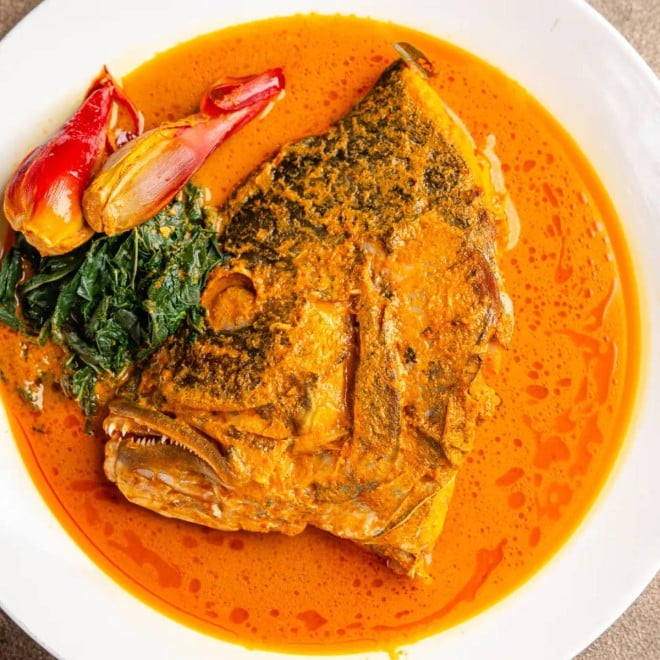
Fish Head Tamarind Curry was the first thing my neighbour Mrs. D’Souza made for me when I moved into my flat in Goa, back when I barely knew how to boil rice properly. She handed me a bowl of it through the door — rice piled high, this dark, sour curry ladled generously over the top — and I stood in my doorway eating it before I even found a chair. What stayed with me was the tamarind.
Not sharp or aggressive, but present in a way that kept pulling me back for another spoonful. I asked her for the recipe twice before she finally sat me down and walked me through the masala grinding, insisting I use fresh coriander leaves, not dried. I have made this dozens of times since then, and I still think about that first bowl every time the smell of the masala hitting the hot oil fills my kitchen.
About the Recipe
Most of the ingredients here are things you would already have in an Indian kitchen — tamarind, dried spices, garlic, ginger, green chillies. The fish heads do the heavy lifting in terms of flavour, and the fresh masala paste you grind takes under ten minutes to prepare. From start to finish, you are looking at roughly 45 minutes.
I make this on weekends when I want something that feels substantial without spending the entire afternoon in the kitchen. The mixed vegetables add bulk, which means you do not need a separate side dish beyond the rice.
Why you will love this recipe
The fresh-ground masala is the thing that makes this curry worth repeating. Coriander leaves, green chillies, ginger, and garlic blitzed together with a splash of water produce a paste that smells immediately alive — nothing like a spice powder shaken out of a tin. When that paste hits the hot oil in the pan, it sizzles and deepens within minutes.
The tamarind layer that comes in later sharpens everything, making the curry taste more complex than the ingredient list would suggest. Fish heads also carry far more natural gelatin than fillets do, so the curry has a slightly thicker, more satisfying consistency once it cooks down.
Cooking Tips
The most common beginner mistake here is adding the fish heads too early and overcooking them. Fish heads do not need long — ten minutes of covered simmering is genuinely enough. If you cook them longer, the meat around the cheeks and collar will fall apart and turn dry. The other thing I would flag is the tamarind quantity.
One tablespoon is the right starting point, but tamarind pulp varies in strength. Add it, stir, taste, and adjust before you put the lid back on.
Top Tips
- Marinate the fish heads for the full 20 minutes if you can — the lime juice in the marinade starts to firm the flesh slightly, which helps it hold together better during cooking.
- When grinding the masala, aim for a rough chutney texture, not a smooth paste. A little texture in the masala gives the curry more body.
- Blanch the tomato properly — the three minutes in boiling water makes the skin slip off easily. Do not skip the cold-water step, or the heat will keep cooking it and the tomato will turn to mush before you want it to.
- If your tamarind pulp is very thick and concentrated, use slightly less than a tablespoon and taste before adding more.
- Keep the heat at medium-low once the vegetables are in. A hard boil will break up the fish heads more than you want.
Serving and Storing Suggestions
This recipe serves four people, with a prep time of around 20 minutes and a total cook time of around 25 minutes. Serve hot over plain steamed rice — nothing else is needed. If you have leftovers, store them in an airtight container in the refrigerator for up to two days. Reheat gently on the stovetop over low heat with a splash of water to loosen the curry. I find the flavour is actually stronger on day two, once everything has had time to settle.
Similar Recipes
- Goan Fish Curry
- Kerala Fish Curry with Coconut Milk
- Tamarind Prawn Curry
- Fish Molee
- Chettinad Fish Kuzhambu
Nutrient Benefits
Fish heads are genuinely high in omega-3 fatty acids, particularly around the cheek and collar meat, which is often the most neglected part of the fish. The mixed vegetables add dietary fibre and a range of vitamins depending on what you use. Tamarind contributes iron and some B vitamins. This is not a low-calorie dish, but it is built around whole, minimally processed ingredients, and the portion of oil used is quite modest at one tablespoon for the full recipe.

Fish Head Tamarind Curry
Ingredients
- 4 Fish Heads - 4 large, cut in half (or 16 small), cleaned and prepared
- 1 tbsp Oil - 1 tblsp
- 500 gms Mixed Vegetables - 500 gms cleaned and chopped
- 1 tbsp Tamarind Pulp - 1 tblsp
- 1 Tomato - 1
- 1/4 tsp Garam Masala Powder - 1/4 tsp
- 1/2 tsp Sugar - 1/2 tsp
- Salt as per taste
For the Marinade:
- 1 tsp Turmeric Powder - 1 tsp
- 1/2 tsp Chilli Powder - 1/2 tsp
- 1 tbsp Lime Juice - 1 tblsp
- 1/2 tsp Salt - 1/2 tsp
For Masala:
- 1 bunch Coriander Leaves (chopped)
- 2 Green Chillies (chopped)
- Ginger - 1 inch piece, peeled and roughly diced
- 6 cloves Garlic (peeled and diced)
Instructions
- Mix all the marinade ingredients.
- Rub into the fish heads and marinate for 15 to 20 minutes.
- Put the tomato in boiling water for 3 minutes.
- Remove and put in cold water.
- Peel the skin and chop. Keep aside.
- Mix all the masala ingredients.
- Add some water and grind together to a chutney consistency.
- Keep aside in a bowl.
- Heat oil in a pan over medium heat.
- Add the ground masala and fry lightly.
- Add the vegetables and 1 cup of water.
- Bring to boil, then lower heat.
- Cover pan with lid and simmer.
- When the vegetables are nearly cooked, add tamarind, tomatoes and marinated fish along with all the marinade.
- Add 1 cup of water, sugar and salt.
- Cover and cook for 10 minutes or until fish is done.
- Add garam masala powder.
- Remove pan from heat and keep covered for 2 minutes.
- Serve with cooked rice.
Sign up for our newsletter
Add Awesome Cuisine as a Preferred Source

Frequently Asked Questions
Q: Can I use fish fillets instead of fish heads?
A: You can, but the curry will taste noticeably lighter. Fish heads release gelatin as they cook, which gives the curry a thicker, richer consistency. Fillets will cook faster — check them after six to seven minutes rather than ten, or they will overcook and turn flaky in a way that does not suit this curry.
Q: My masala paste turned out too watery. What should I do?
A: Add the water gradually when grinding — a tablespoon at a time is enough to get the blender or grinder moving. If the paste is already too thin, fry it in the pan for a minute or two longer before adding the vegetables. The extra time on the heat will cook off the excess moisture.
Q: The curry tastes flat. What went wrong?
A: Most likely the tamarind needs adjusting. Stir in a little more tamarind pulp and taste again. Also check the salt — under-salted curry will taste dull no matter how good the masala is. A pinch of sugar can also help balance things if the sourness feels sharp rather than rounded.
Q: Can I make the masala paste ahead of time?
A: Yes. Grind it, transfer it to a small airtight container, and refrigerate it for up to 24 hours. The colour will darken slightly but the flavour holds well. I often do this the night before if I know I want to cook this after work.
Q: Which vegetables work best in this curry?
A: Drumstick (moringa) is the most traditional and works very well because it absorbs the sour curry beautifully. Brinjal, raw banana, and potatoes are all good options. Avoid vegetables with high water content like zucchini or cucumber — they release too much liquid and thin the curry down.