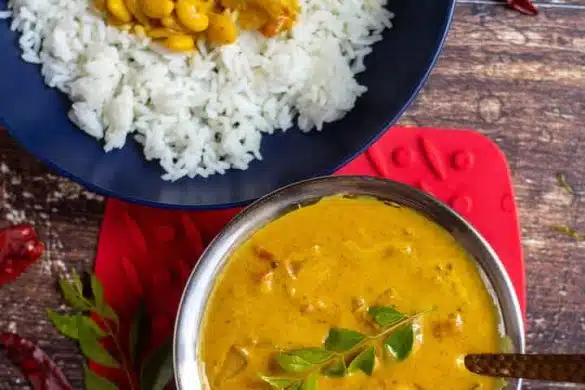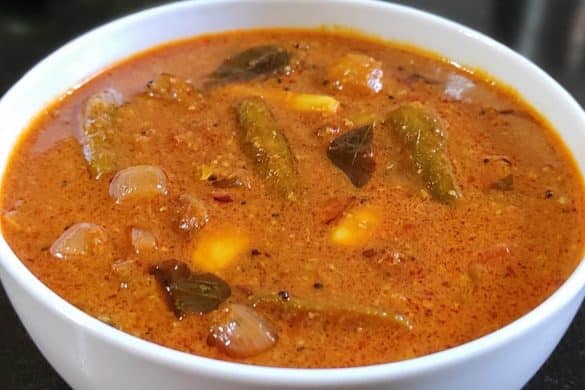
Vendakkai Puli Kozhambu is one of those recipes I learned from my aunt during a long summer visit to Chennai. She made it almost every week, always with a fresh spice paste that filled the kitchen with the smell of roasting fenugreek and red chillies. I remember thinking the spice list looked intimidating at first, but she showed me how quickly the whole process came together once the paste was ready.
The combination of sour tamarind, sweet jaggery, and that earthy, slightly bitter spice blend creates a balance that works especially well with plain steamed rice. I still make it her way, tempering the okra first so it stays firm and does not turn slimy in the gravy.
About the Recipe
Most of the ingredients here are pantry staples if you cook Indian food regularly. The okra is the only fresh vegetable you need, and even that can be swapped with drumstick or raw banana if okra is not available. The spice paste takes about ten minutes to roast and grind, and the rest of the cooking is hands off simmering.
I make this on weeknights when I want something that tastes complex but does not require constant attention. The recipe yields enough for four servings, which means leftovers thicken overnight and taste even better the next day.
Why you will love this recipe
The roasted spice paste does most of the heavy lifting here. Once you have that ready, the rest is just simmering and stirring. The okra holds its shape because it gets tempered first in hot oil, which seals the surface before it hits the tamarind liquid. That sweet and sour balance from jaggery and tamarind is something you can adjust to your taste without throwing off the dish.
The gravy thickens as it cooks, so by the time you are done, it coats the back of a spoon and clings to rice without being heavy. It works well alongside a simple rasam or curd rice for a complete meal.
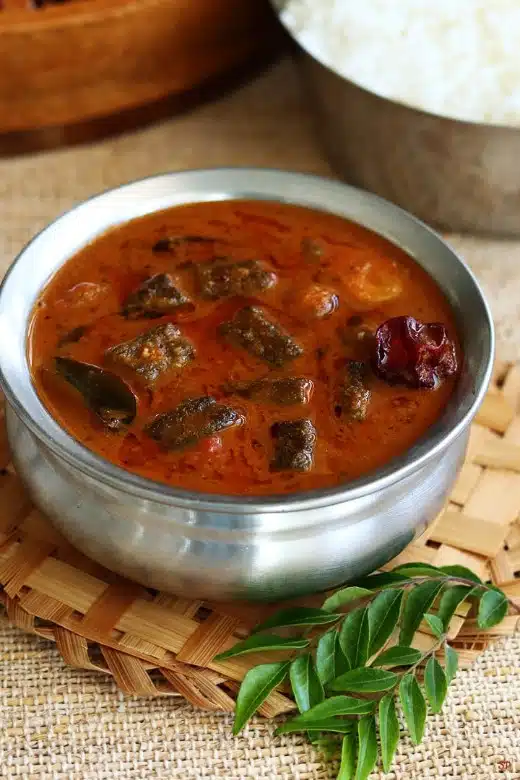
Vendakkai Puli Kozhambu
Cooking Tips
The most common mistake is adding the spice paste too early or without enough water. If you pour it in thick, it can scorch on the bottom of the pan. Always thin it with half a cup of water first, then stir it through the simmering gravy. Another issue is overcooking the okra.
If it sits in the tamarind liquid too long, it turns mushy. Keep the heat low once you add the tamarind, and do not skip the initial sauté step. If your gravy tastes too sour, add another teaspoon of jaggery instead of more water, which will dilute the spice paste.
Top Tips
- Roast the spices for the paste on low heat so the lentils turn golden without burning. If they scorch, the bitterness will carry through the whole dish.
- Extract tamarind juice with warm water for a smoother, quicker extraction. Cold water takes longer and leaves more pulp behind.
- Use a wide, shallow pan instead of a deep pot so the gravy reduces evenly and the okra cooks without steaming.
- If you do not have fresh coconut, use two tablespoons of desiccated coconut soaked in warm water for five minutes before grinding.
- Leftovers thicken as they sit, so add a splash of water when reheating to loosen the gravy.
Serving and Storing Suggestions
This recipe serves four people as a main curry alongside rice. Prep time is about fifteen minutes, and total cooking time is around forty minutes. Serve it hot with steamed rice, a dollop of ghee, and a crispy papad on the side. It also pairs well with curd rice if you want something cooling to balance the tang.
Store leftovers in an airtight container in the fridge for up to three days. The gravy thickens as it cools, so reheat gently on the stove with a few tablespoons of water to bring it back to the right consistency.
Similar Recipes
- Sambar
- Mor Kuzhambu
- Vazhakkai Puli Kuzhambu
- Pulikachal
- Vatha Kuzhambu
Nutrient Benefits
Okra is high in fiber and supports digestion, while tamarind adds a good dose of vitamin C and antioxidants. The lentils and sesame seeds in the spice paste contribute plant based protein and healthy fats. Turmeric offers anti inflammatory properties, and fenugreek seeds help regulate blood sugar levels. Coconut adds richness along with medium chain fatty acids. This dish is naturally vegan and gluten free, making it suitable for a variety of dietary needs without compromising on flavor or texture.

Vendakkai Puli Kozhambu
Ingredients
- 1 medium lemon sized ball of tamarind
- 1 cup sliced okra (vendakkai (100-125 gms))
- 1 medium sized tomato (cut into 1/2 inch pieces)
- 1/2 tsp turmeric powder
- 2 tbsp powdered jaggery
- 1 tsp salt to taste
Spice paste
- 3 tsp sesame oil
- 3-4 dried red chillies
- 1/2 tsp asafoetida powder
- 2 tsp coriander seeds
- 1/2 tsp fenugreek seeds
- 1 tsp white sesame seeds
- 1 tsp husked black gram
- 1 tsp tuvar dal
- 2 tsp husked bengal gram
- 2 tsp rice grains
- 2 tbsp grated fresh coconut
Tempering
- 1 tbsp sesame oil
- 1 tsp mustard seeds
- 1 dried red chilli
- 1 sprig curry leaves
Instructions
- Soak tamarind in 2 cups water for 10 minutes. Extract juice and discard pulp.
- Heat oil for spice paste in a frying pan. Add remaining ingredients for spice paste. Fry over low heat, tossing gently, till chillies and spices are fragrant and dals turn golden. Grind to a smooth consistency, gradually adding 1/4 cup water.
- Heat oil for tempering in the same frying pan over moderate heat. Add remaining ingredients for tempering in the order given. When mustard seeds splutter, add okra and saute for about 2 minutes.
- Blend in tomato and saute for another minute.
- Mix in tamarind juice, turmeric powder, jaggery and salt. Simmer covered over low heat for 12-15 minutes stirring occasionally till the raw aroma of tamarind disappears and vegetables are tender.
- Mix spice paste with 1/2 cup water and pour into kuzhambu. Simmer for about 5 minutes, stirring occasionally, till well blended.
Serve hot with rice
Sign up for our newsletter
Add Awesome Cuisine as a Preferred Source

Frequently Asked Questions
My okra turned slimy even after sautéing. What went wrong?
You likely cooked it on medium or low heat during the tempering step. The oil needs to be hot enough to sear the surface quickly. Also, make sure the okra is completely dry before adding it to the pan. Any moisture will make it release slime.
Can I skip the jaggery if I do not have it?
You can use regular sugar, but jaggery adds a deeper, molasses like sweetness that balances the tamarind better. If you skip it entirely, the gravy will taste sharply sour without that rounded flavor.
The spice paste turned bitter. What happened?
The lentils or fenugreek seeds likely burned during roasting. Fenugreek especially turns bitter if overheated. Keep the flame low and stir constantly. If it does happen, you cannot fix it. You will need to start the paste again.
How do I know when the tamarind has cooked enough?
The raw, sharp smell will fade and the gravy will taste rounded instead of aggressively sour. It usually takes twelve to fifteen minutes of simmering. Taste it before adding the spice paste to check.
Can I make the spice paste ahead of time?
Yes. Store it in an airtight container in the fridge for up to three days or freeze it in small portions for a month. Thaw before using and thin it with water as usual.