Thalipeeth is one of those recipes I learned from my mother-in-law during a long summer visit to Pune. She would make a big batch of the multigrain flour mix at the start of the week and store it in a jar, then pull it out whenever she needed a quick flatbread for breakfast or an evening snack. What stuck with me was how she never measured the water precisely.
She would add it bit by bit, kneading until the dough felt tight and smooth, almost like shortcrust pastry dough. That stiffness is what keeps the thalipeeth from turning soggy on the tawa. I still make it her way, mixing the flours fresh each time because I like the control it gives me over texture and flavour.
About the Recipe
The flours are easy to find in any Indian grocery, and you can substitute or adjust the ratios if you are missing one type. The dough comes together in about ten minutes, and there is no waiting around for it to rest or rise. I make this on weeknights when I want something more interesting than plain roti but do not have the energy for a multi-step recipe.
It also works well for weekend brunch, especially if you have leftover curd or a jar of mango pickle in the fridge. The whole process from mixing to serving takes about thirty minutes.
Why you will love this recipe
The multigrain base gives you a nutty, slightly rough texture that holds up well to bold accompaniments like spicy pickle or tangy curd. Because the onion and chilli are kneaded into the dough, you get flavour in every bite without needing to prepare a separate filling. The thalipeeth cooks quickly on medium heat, so you can turn out a stack in less time than it takes to make stuffed parathas.
It also tastes good at room temperature, which means you can pack it for lunch or serve it as part of a larger meal without worrying about reheating. The dough is sturdy enough that rolling does not require much flour dusting, so cleanup stays simple.
Cooking Tips
Beginners often add too much water too fast, which makes the dough sticky and hard to roll. Add water in small splashes and knead well after each addition. The dough should feel firm and slightly dry, not soft or pliable like chapati dough. If your thalipeeth puffs up too much on the tawa, it means the dough was too soft or the heat was too high.
Press gently with a spatula while cooking to keep it flat. If the edges crack while rolling, knead the dough for another minute to develop more structure.
Top Tips
- Use warm water to bring the dough together. It helps the flours hydrate faster and makes kneading easier.
- Roll the thalipeeth slightly thicker than a roti, about three millimetres. Thinner ones can turn crisp and brittle instead of soft.
- Keep the tawa at medium heat. High heat will char the outside before the inside cooks through.
- Brush a little oil on each side while cooking to get golden brown spots and a softer texture.
- If you cannot find pearl millet flour, replace it with extra whole wheat flour or sorghum flour.
Serving and Storing Suggestions
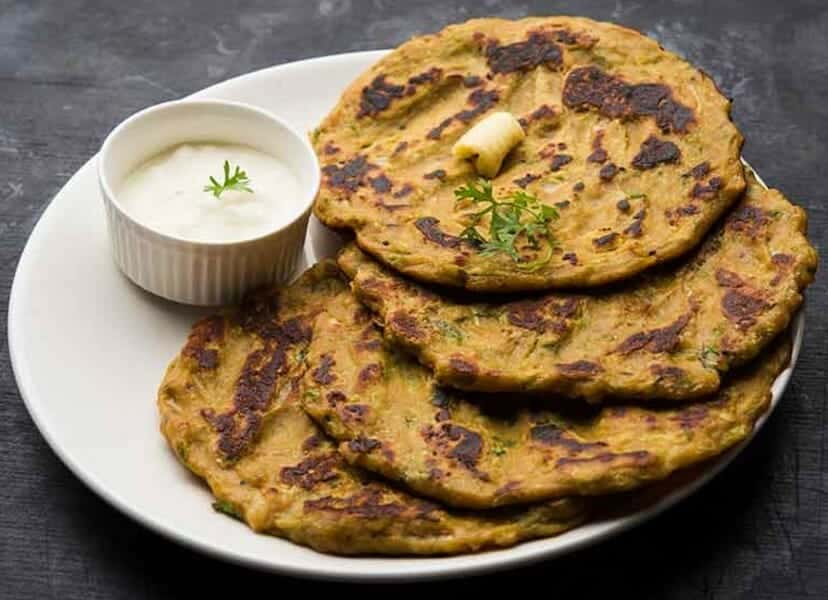
This recipe makes about eight thalipeeth, enough to serve four people as part of a meal or two people if you are eating it on its own. Total prep time is around thirty minutes including kneading and rolling. Serve warm with a spoonful of butter on top, a side of curd, or any pickle you have on hand. Store leftovers in an airtight container at room temperature for up to two days.
Reheat on a dry tawa for a minute on each side. The texture will firm up slightly after cooling, but it still tastes good.
Similar Recipes
- Bajra roti
- Akki roti
- Masala paratha
- Jowar bhakri
Nutrient Benefits
The multigrain flour mix gives you a good range of fibre, protein, and minerals compared to plain wheat flour. Gram flour adds protein, while pearl millet and rice flour bring in iron and B vitamins. Whole wheat flour keeps the dough easy to work with and adds bulk. The onion and coriander contribute some vitamin C and antioxidants, though in small amounts. Using minimal oil for cooking keeps the calorie count reasonable, and you can control how much fat goes into each thalipeeth by brushing lightly instead of shallow frying.

Thalipeeth
Ingredients
- 300 g Multigrain Flours gram flour, rice flour, whole wheat flour, pearl millet flour in equal quantities
- 1/2 tsp Cumin Powder
- 1 Onion finely chopped
- 2 Green Chillies minced
- handful Coriander Leaves - handful chopped
- as required Oil for frying
Instructions
- Add the first five ingredients in a large bowl.
- Add enough warm water, gradually, and mix to form a stiff dough.
- Transfer to a flat surface and knead well.
- Make small, equal sized balls.
- Roll the dough into flat rotis.
- Heat a tawa over medium flame.
- Cook the prepared thalipeeth rotis on both sides, for 2 to 3 minutes, until cooked and golden brown.
- Serve with butter, pickle or curd.
Sign up for our newsletter
Add Awesome Cuisine as a Preferred Source

Frequently Asked Questions
Can I make the dough in advance and store it in the fridge?
Yes, you can store the dough in the fridge for up to one day. Wrap it tightly in cling film or keep it in an airtight container. Let it come to room temperature before rolling, otherwise it will crack.
My thalipeeth turned out hard and chewy. What went wrong?
You either rolled it too thin or cooked it on high heat for too long. Thalipeeth needs medium heat and a slightly thicker roll than a regular roti to stay soft inside.
Can I use only one type of flour instead of mixing four?
You can, but the texture and flavour will change. Using only whole wheat flour will make it taste like a regular roti. The multigrain mix gives you the rough, nutty texture that makes thalipeeth distinct.
Why does my dough keep sticking to the rolling surface?
Your dough is too wet. Add a tablespoon of any of the flours you used and knead it in until the dough firms up. It should not need much dusting flour to roll out cleanly.