Key Highlights
- Start with quality ingredients like fresh vegetables and a good broth to build a flavourful base for any homemade soup.
- Master the art of layering flavours by sautéing aromatics before adding liquids like chicken stock or vegetable broth.
- Use the right equipment, such as a large soup pot or Dutch oven, and simmer your soup to perfection.
- Learn how to balance seasonings and achieve the perfect consistency for everything from tomato soup to creamy soups.
- Customise your recipes with leftovers or seasonal produce to create endless variations.
- Proper timing is crucial; knowing when to add ingredients ensures the best texture and taste.
Is there anything more comforting than a warm bowl of homemade soup? Whether it’s a classic tomato soup on a rainy day or a hearty vegetable stew, making soup at home is a rewarding experience.
It fills your kitchen with delicious aromas and allows you to create healthy, satisfying meals with simple ingredients. Forget the canned varieties; with just a single soup pot and a bit of guidance, you can easily craft flavourful soups that your whole family will love.
This guide explores 10 essential tips to help you make aromatic and savoury soup every time.
What 10 Tips Can Help Beginners Make Better Homemade Soups?
Making a delicious soup from scratch is easier than you think. It’s not about complicated recipes, but about mastering a few key techniques that turn simple ingredients into something special.
From building a solid base to finishing with finesse, these professional secrets will transform the way you use your soup pot.
Let’s explore the 10 essential tips for making incredible soup at home.
1. Start with Quality Ingredients for Flavourful Home Made Soup
The secret to any amazing homemade soup begins long before you turn on the stove. It starts with your ingredients. For beginners, the single best tip is to use the freshest, highest-quality produce and broths you can find. Using fresh vegetables instead of frozen or canned can make a world of difference in the final flavour.
Consider using seasonal vegetables for the best taste and value. A winter potato soup will be wonderfully hearty, while a summer soup can feature fresh green beans and sweet corn. The quality of your liquid base is just as important. A rich, homemade vegetable broth or chicken stock will provide a depth of flavour that water or bouillon cubes simply cannot match.
Finally, don’t forget the power of fresh herbs. They add a vibrant, fresh taste that dried herbs can’t replicate. Choosing great ingredients is the first and most important step toward making a truly memorable chicken soup or vegetable stew.
2. Master the Art of Building Layers of Flavour
One of the fundamental steps to making soup from scratch is to build flavour in layers. Don’t just throw all your ingredients into the pot at once. Start by heating olive oil over medium heat and sautéing your base vegetables, like onions, carrots, and celery. Cook them until they are soft, and the onions are translucent. This process, known as creating a mirepoix, builds a sweet, aromatic foundation.
After the initial sauté, add other aromatics like minced garlic and spices. Cooking them briefly releases their essential oils and enhances their flavour.
For tomato-based soups, stirring in tomato paste at this stage and letting it cook for a minute can add an incredible richness. This caramelisation process greatly improves the overall soup taste.
Only after you have built these foundational layers should you add your liquids and other ingredients, like a bay leaf. This patient, step-by-step approach is what separates a good soup from a great one. For creamy soups, you can later use a food processor to blend these flavours together.
3. Use the Right Techniques to Cook Soup at Home
Using the right techniques is essential when learning how to cook soup at home, especially if you’re just getting started. Begin by choosing a heavy-bottomed soup pot or Dutch oven, which helps distribute heat evenly and prevents ingredients from scorching while they cook.
Once you add the broth and main ingredients, bring the soup to a brief boil, then reduce the heat and let it simmer gently. This slow cooking method is one of the most useful tips for making soup, as a rolling boil can break down vegetables too quickly and dull the overall taste. Gentle simmering allows flavours to blend naturally, whether you’re following a delicious vegetable soup recipe or experimenting with your own combinations.
For even better results, partially cover the pot to manage evaporation, add quick-cooking vegetables toward the end, and let the soup rest briefly before serving. These simple steps go a long way in understanding how to make soup that tastes balanced, rich, and even better the next day.
4. Balance Seasonings and Herbs for Perfectly Seasoned Soups
Properly seasoning your soup is an art, and it’s all about balance and timing. Instead of adding all your salt at the beginning, start with a small amount, like half a teaspoon of salt, and add more to taste at the end. This is because the flavours will concentrate as the soup simmers, and you can easily oversalt it if you add too much at the start.
Different herbs and spices work best when added at different times. Hearty herbs and spices can be added early to infuse the broth with flavour. Consider these options for seasoning:
- For depth: A bay leaf, a Parmesan rind, or dried herbs like thyme can simmer with the soup.
- For warmth: A pinch of red pepper flakes or ground black pepper adds a gentle heat.
- For brightness: Fresh herbs like parsley, dill, or basil should be stirred in just before serving to preserve their delicate flavour and bright colour.
A final squeeze of lemon juice or a splash of vinegar can also work wonders, brightening up all the flavours in the pot and making the soup taste complete. Always taste your soup before you serve it and adjust the seasonings as needed.
5. Customise Soups to Make with Leftover or Fresh Vegetables
One of the best things about making homemade vegetable soup is its flexibility. When learning how to prepare soup, you can easily adapt the recipe to use leftover vegetables from your fridge or focus on whatever produce is in season. This approach not only reduces food waste but also makes how to make veg soup at home feel simple and creative rather than restrictive.
Vegetables like celery, carrots, or bell peppers that are past their peak can be chopped and used as a flavourful base. Heartier options, such as potatoes or cauliflower, work best when added early, while quick-cooking vegetables should go in closer to the end.
Furthermore, to turn your pot into a complete meal, you can stir in leftover cooked chicken, beans, or pasta during the last few minutes of cooking. Tender greens like spinach or kale should be added at the very end so they wilt gently, while frozen vegetables such as green beans or sweet corn are a convenient way to add volume. These small adjustments make how to make easy soup at home both practical and satisfying.
6. Achieve the Ideal Soup Consistency
Getting the consistency of your soup just right is a common challenge, but it’s easy to fix. If your soup is too thin, there are several simple ways to create a richer and thicker soup. If it’s too thick, thinning it out is even easier.
For creamy soups like cream of mushroom soup, adding a splash of heavy cream, milk, or unsweetened yogurt at the end helps thicken the soup and create a smoother texture.
Here are a few ways to adjust your soup’s consistency:
- To thicken: Add a cornflour slurry, a roux (flour and butter paste), or pureed vegetables like potatoes. You can also simmer it uncovered to allow some liquid to evaporate.
- To thin: Simply stir in more broth or a few cups of water until you reach your desired consistency. Be sure to taste and adjust the seasoning after thinning.
7. Get the Timing Right When Preparing Soup
To get the best flavours from your soup, timing is everything. The ideal cooking time depends on your ingredients. Most vegetable soups don’t need to simmer for hours. A 20 to 30 minute simmer is often enough to make the vegetables tender and allow the flavours to meld, giving you the best vegetable soup experience without turning everything to mush.
Hardy root vegetables like potatoes and carrots need more time, so they should be added to the large soup pot early in the cooking process. Quick-cooking ingredients, such as peas, corn, spinach, or fresh herbs, should be added in the last 5-10 minutes of cooking. This preserves their texture and vibrant colour.
Remember that the soup’s taste will continue to develop even after you turn off the heat. This is why many soups are even more flavourful the next day. Allowing your soup to simmer gently, not boil, is key to developing a deep, rich flavour without overcooking the ingredients.
8. Enhance Flavour with Umami Boosters
Adding umami-rich ingredients can deepen the flavour when learning how to make soup at home without making it heavy. Small additions like mushrooms, tomatoes, soy sauce, or Parmesan rinds help create a savoury base while still letting the vegetables shine.
These ingredients work best when added early so their flavour has time to infuse into the broth. Used sparingly, umami boosters can make even easy-to-make soups at home taste richer and more satisfying.
9. Don’t Skip Skimming for a Cleaner-Tasting Broth
As soup simmers, foam and impurities may rise to the surface, especially when using vegetables, beans, or proteins. Skimming this off occasionally helps keep the broth clear and improves the overall taste.
This simple step is often overlooked when figuring out how to prepare soup at home, but it makes a noticeable difference. A cleaner broth allows the natural flavours of your ingredients to come through without bitterness or cloudiness.
10. Finish with Texture for a More Interesting Soup
Texture plays an important role in how a soup feels and tastes, especially when focusing on how to make an easy soup at home that feels complete. Adding crunchy or contrasting elements at the end can make each spoonful more enjoyable.
Toppings like toasted croutons, roasted seeds, fresh herbs, or a swirl of cream add visual appeal and contrast, turning a simple soup into a more satisfying final dish.
What Are the Essential Ingredients for Making Soup at Home?
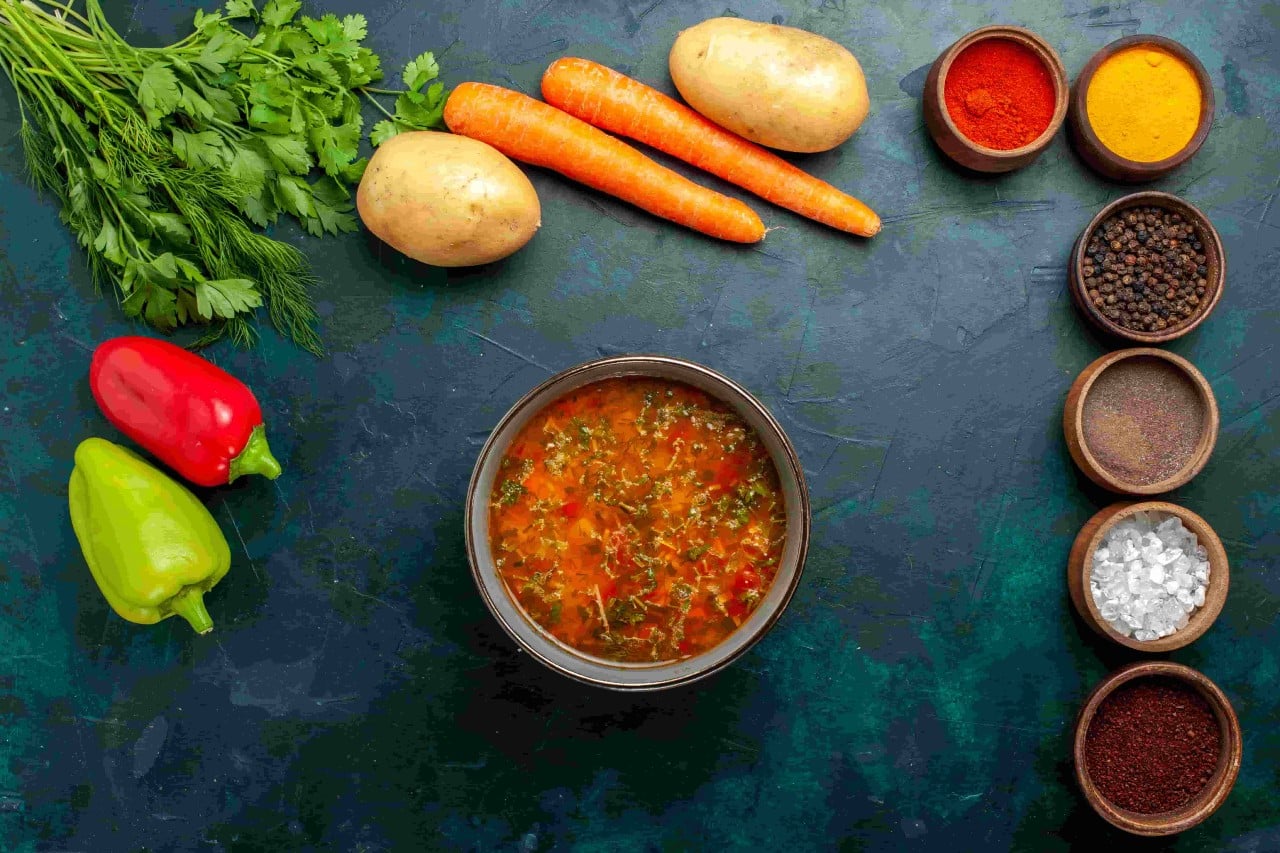
common soup ingredients kept on a table
Having a well-stocked pantry is the first step towards making delicious soup on a whim. Certain staple ingredients form the backbone of countless soup recipes, from hearty stews to light broths.
Let’s look at the common vegetables, bases, spices, and herbs that will help you succeed.
What Vegetables and Bases Are Commonly Used in Homemade Soup?
To make a simple homemade soup, you need a solid foundation. This starts with a flavourful base and a good selection of vegetables.
Here is a quick look at some essential ingredients for a simple vegetable soup:
| Ingredient Category | Examples |
| Aromatic Base | Onion, Carrots, Celery, Garlic |
| Liquid Base | Vegetable Broth, Chicken Stock, Canned Tomatoes, Cups of Water |
| Hearty Vegetables | Potatoes, Sweet Potato, Cabbage, Turnips |
| Quick-Cook Veggies | Green Beans, Sweet Corn, Peas, Spinach, Zucchini |
| Protein & Fibre | White Beans, Chickpeas, Lentils, Black Beans |
Which Spices and Herbs Are Popular for Homemade Soup Flavour?
Seasoning is what transforms a basic soup into a memorable one. Using the right combination of spices, herbs, and finishing elements adds depth, balance, and brightness to your dish.
The table below groups common flavour enhancers by their role in soup-making.
| Flavour Category | Examples & Use |
| Essential Seasoning | Salt, Black Pepper |
| Savoury Depth Builders | Bay Leaf, Parmesan Rind (simmer during cooking) |
| Warmth & Heat | Red Pepper Flakes, Chili Powder |
| Dried Herbs | Thyme, Fennel Seeds, Italian Seasoning (add early) |
| Fresh Herbs | Parsley, Basil (stir in at the end) |
| Acidity Finishers | Lemon Juice, Vinegar (add just before serving) |
Conclusion
Mastering the art of soup-making involves more than just following a recipe; it’s about understanding the ingredients and techniques that elevate your dish. By starting with quality ingredients, building layers of flavour, and paying attention to seasonings, you can create soups that are not just nourishing but also bursting with taste. Don’t forget to customise your creations with leftovers and achieve the perfect consistency through careful timing.
With these tips in hand, you’ll be well on your way to impressing friends and family with your culinary skills. Ready to take your soup-making to the next level? Try out these techniques today and enjoy a warm bowl of homemade goodness!
Frequently Asked Questions
What are the basic steps to prepare soup from scratch?
To make homemade soup, start by sautéing aromatic vegetables like onions and carrots in a large soup pot. Add your main vegetables, followed by a liquid like chicken stock. Simmer until the vegetables are tender, then finish with final seasoning and fresh herbs before serving.
How do I use leftover vegetables to make soup at home?
Making an easy vegetable soup with leftover vegetables is simple. Sauté any aromatic leftovers first in a soup pot, then add heartier vegetables and cover with vegetable broth. Simmer until tender. You can add quick-cooking greens at the end or blend the soup for one of many creamy soups.
Which classic soups are best for beginners to cook at home?
Beginners can easily master several classic soups. Simple recipes like tomato soup, potato soup, and lentil soup are great starting points. A basic chicken noodle soup or a vegetable soup made with vegetable stock are also fantastic, forgiving recipes that are hard to get wrong.
Are there any easy vegan soup recipes I can make at home?
Yes. Try lentil vegetable soup, tomato basil, or chickpea spinach soup. Use onions, garlic, canned tomatoes, broth, and spices. Simmer gently until vegetables soften. Finish with lemon or herbs for freshness. These require minimal prep and pantry staples.
How long should I cook soup to bring out the best flavours?
Most soups develop flavour when simmered for 20 to 45 minutes. Shorter times suit quick vegetable soups, while beans or bones need longer. Avoid boiling aggressively, which dulls flavours and breaks textures. Gentle heat preserves aroma, balance, and depth.
How do I thicken or thin out homemade soup if the consistency isn’t right?
To thicken soup, blend a portion, add mashed potatoes, beans, or a slurry. To thin it, add warm broth or water gradually. Adjust seasoning afterward, since dilution or thickening changes flavour balance and overall mouthfeel, texture, richness, and harmony.
Which soup is the easiest to cook?
Vegetable soup is generally the easiest to cook. It needs basic chopping, one pot, and flexible ingredients. You can adjust vegetables, seasoning, and timing without risk, making it ideal for beginners at home with limited tools or experience.
What’s the healthiest homemade soup?
Vegetable-based soups with legumes are among the healthiest options. They’re high in fiber, vitamins, and plant protein, yet low in calories. Using minimal salt and plenty of vegetables maximises nutritional value while supporting digestion, heart health, and immunity.
How do you make soup tasty?
Build flavour in soup by layering ingredients. Sauté aromatics first, use good broth, season gradually, and simmer patiently. Finish with acid, fresh herbs, or spice to brighten and balance the final taste for depth, aroma, warmth, complexity, and satisfaction.