
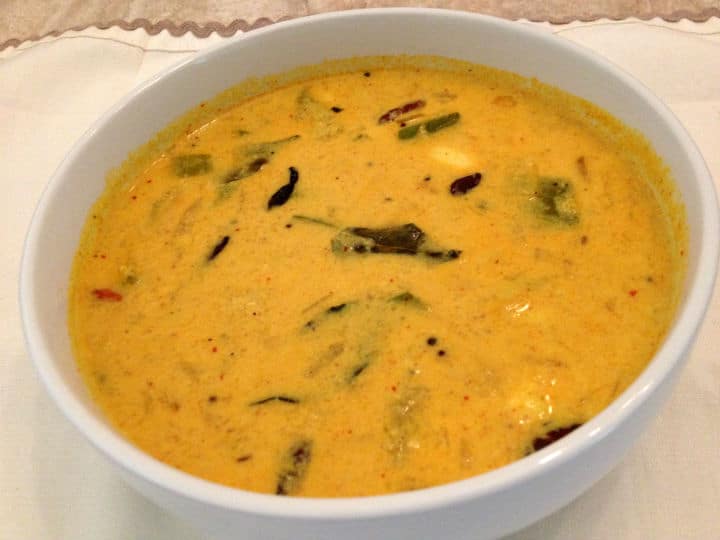
Mango Pulissery is one of those Kerala dishes I made badly at least three or four times before I got it right. My early attempts were always too sour or the curd would split into an unappetising mess because I had added it while the gravy was still boiling. That one mistake – adding curd to a hot pan – used to ruin the whole texture.
Once I started letting the mango gravy cool down fully before stirring in the curd, everything changed. Now I make this through the entire mango season without getting tired of it. The specific detail that keeps me coming back is the ground paste — fresh coconut, green chilly, and cumin ground with a little water — because it gives the gravy a body that no shortcut version quite manages.
About the Recipe
Every ingredient here is something most South Indian kitchens already have. The mango is the main character, but the dish does not need an extraordinary one — a ripe but not overripe mango works best. From start to finish, you are looking at about thirty minutes. I reach for this recipe on days when I want a proper home cooked meal without spending an hour in the kitchen, or when I have guests coming for a simple lunch and want one dish that feels a little special without asking too much.
Why you will love this recipe
The combination of sweet mango, tart curd, and warm cumin-coconut paste creates a gravy that is layered without being complicated. No single flavour overpowers the others because the proportions keep everything in balance.
There is also something genuinely satisfying about the tempering step — the hiss and pop of mustard seeds and fenugreek hitting hot oil, followed by the dry red chillies and curry leaves going in, fills the kitchen with a smell that signals the dish is nearly ready. Poured over the mango gravy, that tempering adds a smoky, slightly bitter edge that cuts through the sweetness and curd in just the right way. It is the kind of dish that makes a bowl of rice into something you actually look forward to.
Cooking Tips
The most common mistake is adding the curd while the gravy is still hot. If you do that, the curd will split and turn grainy, and the smooth texture is gone. Let the gravy come down to room temperature first, then stir in the curd. Another thing to watch: do not over-boil the gravy after adding the coconut paste.
A few minutes on low heat until the raw smell of coconut disappears is enough. Cook it any longer and the mango pieces start to break down too much.
Top Tips
- Use a fully ripe but firm mango, not one that is mushy — if it is too soft, the pieces will dissolve into the gravy before you even add the paste.
- Grind the coconut, green chilly, and cumin with just enough water to get a smooth, thick paste. Too much water makes the gravy thin and flat.
- Let the gravy cool for at least ten to fifteen minutes before adding curd. This is not optional — it protects the texture completely.
- I keep the heat on low when simmering after the coconut paste goes in. Medium or high heat at that stage makes the coconut stick to the bottom of the pan.
- If you want a slightly thicker consistency, use full-fat curd rather than the low-fat kind. It holds better and gives the gravy a richer body.
- Make the tempering last, right before serving, so the curry leaves and mustard seeds stay aromatic when they hit the gravy.
Serving and Storing Suggestions
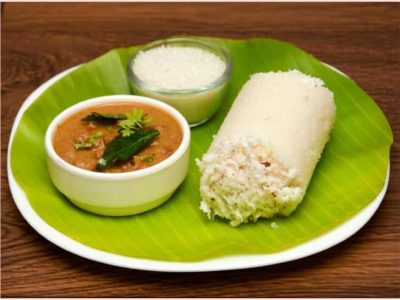
This recipe makes two to three servings and takes about thirty minutes from start to finish. Mango Pulissery is best eaten with plain steamed rice — it does not need much else alongside it, though a papad or a simple vegetable stir fry rounds out the meal well. Store leftovers in a clean airtight container in the refrigerator for up to one day. The curd can make the gravy slightly more tart the next day, so reheat it gently on very low flame and do not let it come to a full boil.
Similar Recipes
- Pineapple Pulissery
- Raw Mango Curry (Pacha Manga Curry)
- Vellarikka Pulissery (Cucumber Curd Curry)
- Kerala Kadala Curry
- Olan
Nutrient Benefits
Ripe mango brings a solid amount of vitamin C and beta-carotene, both of which the body uses better when paired with a small amount of fat — and the coconut and oil in this recipe provide exactly that. Curd adds live cultures that support digestion, and fenugreek seeds, even in small amounts, have long been associated with blood sugar regulation in traditional cooking. Cumin also aids digestion, which makes this dish genuinely gentle on the stomach despite the spice.
Mango Pulissery
Ingredients
- 1 Ripe Mango
- 1 tsp Turmeric Powder
- 1 tsp Red Chilly Powder
- 1 cup Water
- 1/2 cup Curd
- as per taste Salt
To Temper:
- 2 tsp Oil
- 1/2 tsp Mustard Seeds
- 1/2 tsp Fenugreek Seeds
- 2 Dry Red Chillies
- few Curry Leaves
To Grind:
- 1/4 cup Grated Coconut
- 1 Green Chilly
- 1/2 tsp Jeera (Cumin Seeds)
Instructions
- Grind the ingredients given to grind it by adding little water.
- Boil the mango pieces along with turmeric powder, red chilly powder and salt.
- Add the ground paste to the cooked mangoes.
- Cook till the raw smell disappears and allow the gravy to boil and switch off the flame.
- Let it cool down.
- Add the curd to the mango gravy.
- Heat a pan and add oil.
- Add all the ingredients given to temper.
- Pour them over the mango gravy and mix.
- Serve with rice.
Sign up for our newsletter
Add Awesome Cuisine as a Preferred Source

Frequently Asked Questions
Q: My curd turned grainy and the gravy looks curdled. What went wrong?
A: The gravy was almost surely still too hot when you added the curd. High heat causes curd to split immediately. Always let the mango gravy cool down to room temperature — or at least until it is just slightly warm — before stirring in the curd.
Q: Can I use raw mango instead of ripe mango?
A: You can, but the dish will taste quite different. Raw mango makes the gravy sharply sour, and you may need to reduce or skip the curd to avoid it becoming too tart. Mango Pulissery is traditionally made with ripe mango for that balance of sweet and tangy.
Q: Can I skip the fresh coconut and use desiccated coconut instead?
A: Fresh grated coconut is genuinely worth the effort here because it gives the paste a moist, creamy texture that desiccated coconut cannot replicate. If you have completely no fresh coconut available, soak the desiccated coconut in warm water for fifteen minutes before grinding, but the result will be noticeably different.
Q: How do I know when the coconut paste is cooked enough?
A: The raw smell of coconut is your signal. Once that grassy, slightly sharp smell fades and the gravy smells more mellow and rounded, the paste is cooked. This usually takes about three to four minutes on low heat after you add the paste to the mango.
Q: Can I make this dish ahead of time?
A: You can cook the mango with the spices and coconut paste ahead of time and store that base in the refrigerator. Add the curd and do the tempering only when you are ready to serve. Adding the curd too far in advance makes the gravy more sour as it sits.

nice receipe