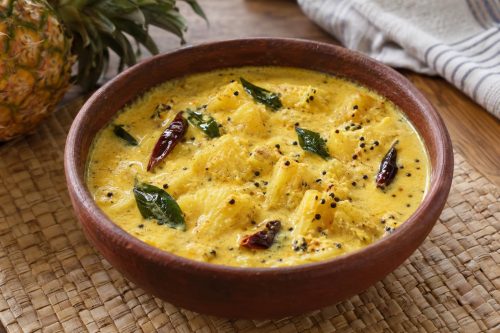
Pineapple Pulissery is a traditional Kerala pineapple curry made with fresh fruit simmered in a spiced coconut and curd base. It belongs to the same family as moru curry but gets its character from the pineapple, which softens during cooking and takes on the flavour of the turmeric, red chilli powder and ground coconut paste. Straightforward enough for a weekday meal, it is also well suited to a festive Onam Sadya spread. The tempering of mustard seeds, fenugreek seeds and curry leaves stirred in at the end gives the dish a clean, rounded finish.
About the Recipe
The recipe calls for half to one pineapple depending on size, and this detail is worth paying attention to. A large pineapple can make the dish overly sweet if you use the full fruit.
The pineapple is simmered in water with salt, red chilli powder and turmeric until the liquid reduces by half. Then the ground paste of coconut, cumin and green chillies goes in along with the curd. The flame is switched off before the curd is added to prevent it from splitting. A quick tempering in coconut oil finishes the dish.
Why You Will Love This Recipe
The balance between the pineapple and the curd is what holds this pulissery together. The fruit brings sweetness and a mild sharpness, while the curd adds body and a gentle tang without making the curry taste sour. The ground coconut paste ties both together and gives the curry a slightly thick, coating consistency that sits well over rice.
If you have made Mango Pulissery before, this follows the same logic and is just as easy to put together.
Cooking Tips
The most common mistake is adding curd over high heat, which causes it to curdle and leave the curry looking grainy. Switch off the flame completely before stirring in the curd, and wait for the bubbling to stop.
Do not over-simmer after adding the coconut paste. Prolonged cooking at this stage can make it taste heavy rather than fresh. Grind the coconut with cumin and green chillies to a smooth paste so it blends evenly into the liquid without leaving coarse bits.
Top Tips
- Choose a ripe but firm pineapple. Overripe fruit turns mushy during simmering and makes the curry too sweet.
- Reduce the water by half before adding the coconut paste. This concentrates the spice flavour and prevents a watery curry.
- Switch off the flame before adding curd. Adding curd to a hot pan over flame will cause it to split.
- Use coconut oil for tempering. It makes a noticeable difference to the final aroma compared to neutral cooking oil.
- Grind the coconut, cumin and green chillies to a fine, smooth paste. A coarse paste will not blend evenly into the curry.
Serving and Storing Suggestions
Serve Pineapple Pulissery warm with steamed rice. It is a natural fit for an Onam Sadya alongside other Kerala dishes, and it also pairs well with plain paratha or chapati.
Store leftovers in a sealed container in the refrigerator for up to a day. Reheat gently on a low flame and do not let it boil, as the curd base can split with aggressive reheating. The flavour tends to deepen a little after a few hours of resting.
Similar Recipes
Nutrient Benefits
Pineapple provides vitamin C and manganese. Coconut adds some fat and gives the curry its body. Curd contributes calcium and a modest amount of protein. Turmeric and cumin are common spices used across Indian cooking.

Pineapple Pulissery
Ingredients
- 1/2 to 1 Pineapple use 1/2 if it is big or 1 if it is small
- 1/2 cup Curds
- 1 tsp Red Chilli Powder
- 1/2 tsp Turmeric Powder
- 1/2 cup Water
- 2 Red Chillies small
- 1 tsp Coconut Oil
- Salt as per taste
- Curry Leaves few
To Grind:
- 1/2 tsp Cumin Seeds
- 1 to 2 Green Chillies
- 1/2 cup Coconut grated
For Tempering:
- Mustard Seeds few
- Fenugreek Seeds few
- Curry Leaves few
Instructions
- Peel and chop the pineapple into small pieces.
- Heat water in a pan.
- Add the pineapple pieces, salt, red chilli powder and turmeric powder.
- Add cumin powder and stir well.
- Reduce flame to low and simmer until water has reduced by half.
- Add the ground coconut paste and curd. Stir well.
- Switch off the flame.
- Fry the mustard seeds, fenugreek seeds, curry leaves and red chillies for a minute.
- Add to the pan and stir.
- Serve.
Sign up for our newsletter
Add Awesome Cuisine as a Preferred Source

Frequently Asked Questions
Can I use canned pineapple instead of fresh?
Fresh pineapple works best because it holds its shape during simmering and has a natural tartness that balances the curd. Canned pineapple is already soft and much sweeter, which can make the curry taste one-dimensional. If fresh is not available, use canned but cut the simmering time short to avoid the pieces breaking down completely.
Why does my curd curdle when I add it to the curry?
Curd splits when it hits a very hot pan. The recipe instructs you to switch off the flame before adding the curd, and this step matters. Make sure the pan has come off the heat and the bubbling has stopped before you stir the curd in. Using curd at room temperature rather than cold straight from the refrigerator also helps.
What is the difference between Pineapple Pulissery and Pineapple Pachadi?
Both are Kerala dishes made with pineapple and curd, and both use a coconut paste. The main difference is in the spice profile. Pineapple Pachadi is typically sweeter and uses mustard paste as part of the grinding, giving it a sharper, more pungent note. Pulissery is milder and more curry-like in consistency, making it better suited as a side dish with rice.
Can I make this without coconut?
The ground coconut paste is central to the texture and flavour of this pulissery. Leaving it out will give you a thin, spiced curd curry rather than a pulissery. If fresh or desiccated coconut is not available, coconut milk can work as a partial substitute. Add it after the water has reduced and before the curd, and use a smaller quantity to avoid making the curry too thin.
Are fenugreek seeds in the tempering necessary?
Fenugreek seeds are used in very small quantities here and contribute a faint bitterness that balances the sweetness of the pineapple. They are a standard part of Kerala tempering for curd-based curries. If you do not have them, the dish will still taste good, but the tempering will have a slightly flatter finish. Do not increase the quantity beyond a few seeds as fenugreek can turn noticeably bitter if over-used.