
Table of Contents
Key Highlights
- Fruits provide essential vitamins, fibre, and antioxidants that support digestion and immunity.
- Eating fruits alone may lead to early hunger due to the lack of protein and healthy fats.
- A fruit-only breakfast can cause quick energy spikes followed by sudden drops.
- Certain fruits may cause acidity or discomfort when eaten on an empty stomach.
- Pairing fruits with protein, fats, and whole grains improves satiety and energy balance.
- Choosing the right fruits helps support digestion, hydration, and steady energy levels.
- Portion control and variety are key to avoiding excess sugar intake.
Mornings often start with one simple question: What should you eat to feel light yet stay full? Many people turn to fruits as an easy option, but this choice can sometimes leave you hungry sooner than expected.
Fruits deliver vitamins, fibre, and quick fuel, yet they don’t always provide lasting fullness or steady energy on their own. This creates confusion about whether they are enough to support your morning needs.
In this guide, we explore whether fruits are suitable for breakfast, when they work best, and how to turn them into a more balanced and satisfying start to your day.
What Does It Mean to Eat Fruits for Breakfast?
Eating fruit for breakfast means starting your day with fresh fruit, either on its own or combined with foods like yoghurt, smoothies, or oatmeal. While this provides quick energy and essential nutrients, eating only fruits differs from a balanced meal, as it lacks protein and healthy fats needed for lasting fullness and steady energy.
What Are the Nutritional Benefits of Eating Fruits for Breakfast?
Eating fruits for breakfast provides essential vitamins, fibre, antioxidants, and natural sugars that support digestion, immunity, and energy levels. Fruits offer a clean and hydrating start to the day, delivering nutrients your body needs after an overnight fast. Their combination of fibre and natural sugars helps fuel your morning while supporting overall health.
1. What Vitamins and Minerals Do Fruits Provide in the Morning?
Fruits are rich in essential vitamins and minerals that support key body functions, from immunity to heart health. They offer a convenient and natural way to meet daily nutrient needs without heavy or processed foods.
Citrus fruits provide vitamin C for immunity and skin health, while bananas supply potassium to help regulate blood pressure. Other important nutrients include:
- Folate: Supports cell growth and red blood cell formation
- Vitamin A: Aids vision and strengthens immune function
Including a variety of fruits ensures a broader range of nutrients for overall well-being.
2. How Do Antioxidants in Fruits Help Strengthen Your Immunity?
Fruits contain antioxidants that help protect cells from damage and support a stronger immune system. These compounds reduce inflammation and improve the body’s ability to fight infections.
Fruits with deeper colours, such as berries, contain higher levels of antioxidant compounds that help limit cellular damage and support immune response. Other reliable sources include:
- Citrus fruits: High in vitamin C for immune defence
- Papaya: Supports immunity with vitamins C and A
- Bell peppers: Provide a high dose of vitamin C
Including a variety of antioxidant-rich fruits helps strengthen daily immune support.
3. How Does Fibre in Fruits Support Better Digestion in the Morning?
Fruits may provide dietary fibre, which helps regulate digestion and support regular bowel movements. Including them in the morning can promote gut health and reduce issues like constipation. Certain fibres, such as pectin in apples, also act as prebiotics, supporting beneficial gut bacteria. However, very fibrous or acidic fruits may cause mild discomfort for some individuals if eaten on an empty stomach or in large amounts.
4. How Do Natural Sugars in Fruits Provide Quick Morning Energy?
Fruits contain natural sugars like fructose and glucose that provide quick, easily accessible energy after an overnight fast. This helps boost alertness and kickstart your metabolism in the morning.
Unlike refined sugars, fruit sugars are paired with fibre and water, which slow absorption and provide a steadier energy release. However, portion control is important, as excessive intake may still affect energy balance.
Together, these nutritional benefits make fruits a refreshing and nourishing addition to breakfast, especially when paired with other foods for a balanced start to the day.
What Are the Downsides of Eating Only Fruits for Breakfast?
Eating only fruits for breakfast may lead to low satiety, unstable energy levels, and nutritional gaps due to the absence of protein and healthy fats. Fruits are nutritious, but relying on them alone may not provide lasting energy or fullness. Without protein and fats, you may feel hungry sooner and experience energy dips during the morning.
Key Downsides
- Low Satiety: Fruits digest quickly, which may leave you hungry within 1–2 hours.
- Lack of Protein and Healthy Fats: Missing these nutrients reduces fullness and limits sustained energy release.
- Blood Sugar Fluctuations: Natural sugars can cause a rapid rise followed by a drop, leading to fatigue or cravings.
- Nutritional Imbalance Over Time: Regularly skipping protein and fats can affect muscle health and overall nutrition.
- Digestive Discomfort: Some fruits may cause acidity or bloating when eaten alone on an empty stomach.
Fruits That May Cause Discomfort
While fruits are generally easy to digest, certain types may cause mild discomfort when eaten on an empty stomach, especially for individuals with sensitive digestion.
- Highly acidic fruits: Oranges, grapefruits, and kiwis may trigger acidity or heartburn.
- High-fibre or raw fruits: Apples or similar fruits may cause bloating in sensitive individuals.
Being mindful of how your body reacts can help you choose the right fruits and avoid unnecessary digestive discomfort in the morning.
What Are the Best Fruits for a Healthy Morning Start?
Choosing the right fruits for breakfast can improve digestion, support sustained energy, and prevent sudden hunger. The best options are those that combine fibre, natural sugars, and essential nutrients, helping your body transition smoothly from an overnight fast without causing sharp energy drops.
1. Banana for Sustained Energy

Bananas are rich in complex carbohydrates and natural sugars that provide both immediate and sustained energy. Their fibre content slows digestion, helping maintain stable energy levels rather than causing a quick spike and crash.
They are also a good source of potassium, which supports muscle function and helps regulate blood pressure. This makes bananas particularly useful for active mornings or busy routines. If you need a quick, filling, and energy-supporting option, bananas are one of the most practical choices.
2. Apple for Fibre and Satiety
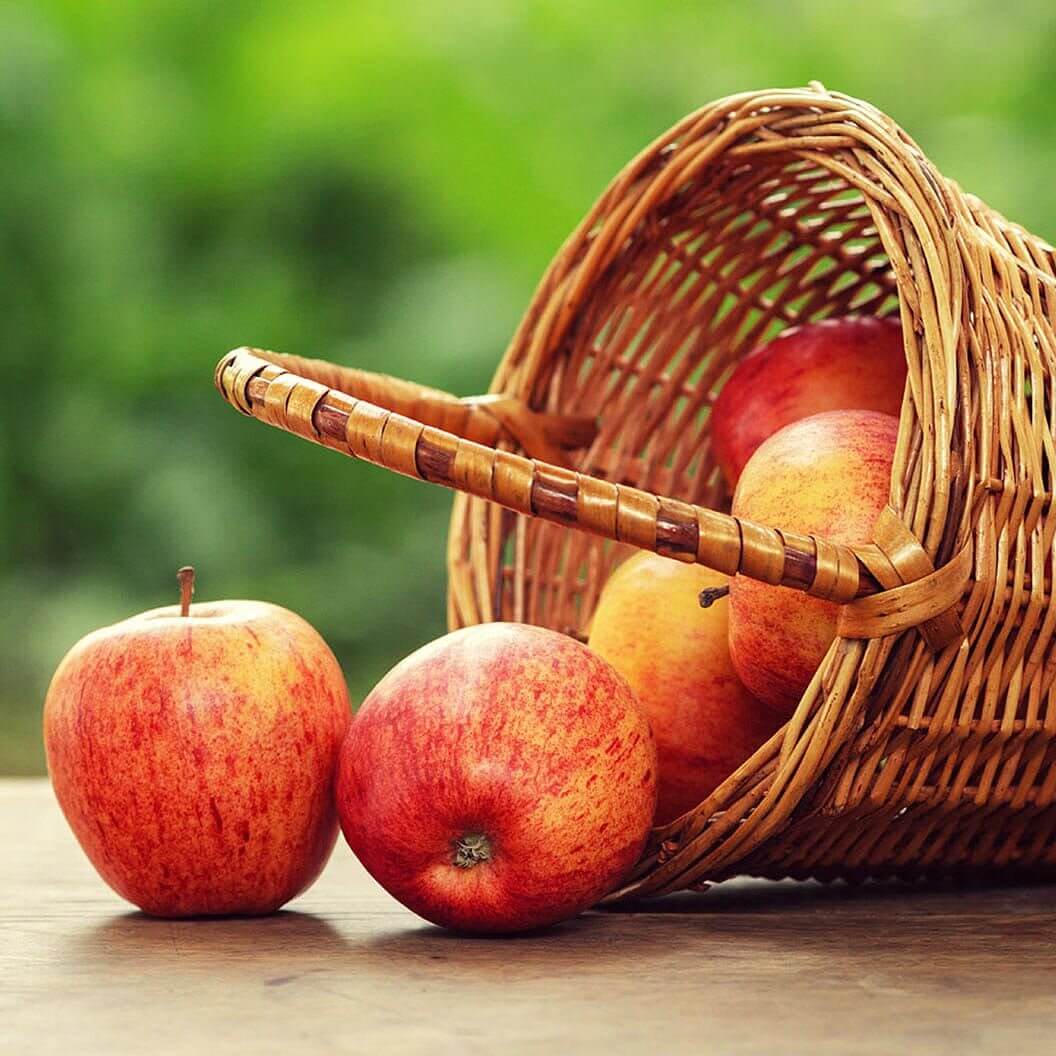
Apples are rich in soluble fibre, particularly pectin, which slows digestion and helps you feel full for longer. This supports better appetite control and reduces the likelihood of mid-morning hunger.
Their fibre content also helps regulate blood sugar by slowing carbohydrate absorption, providing steady energy rather than sudden spikes. Apples additionally offer hydration and antioxidants that support overall health. If you’re looking for a light yet filling option that promotes satiety and stable energy, apples are a practical choice for breakfast.
3. Papaya for Better Digestion
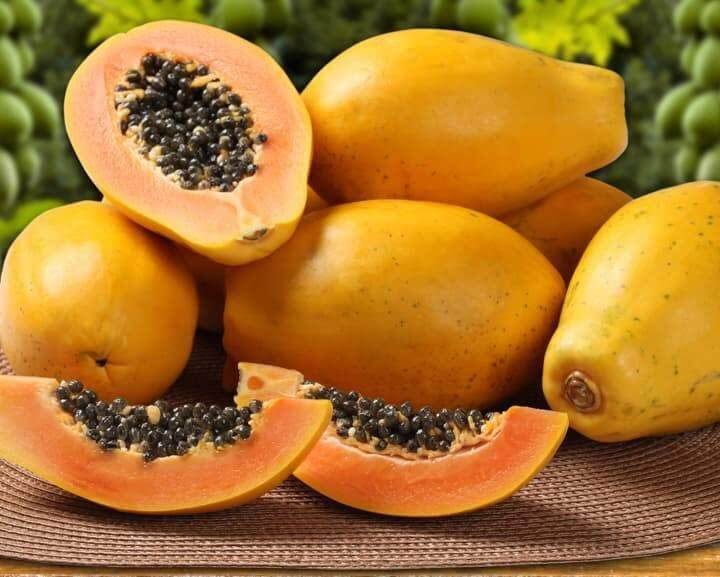
Papaya is easy to digest and contains papain, an enzyme that helps break down food and supports smoother digestion. This makes it especially suitable for those who experience heaviness or discomfort in the morning.
It is also rich in vitamin C, vitamin A, and antioxidants, while its fibre and water content help promote regular digestion and prevent constipation. If you’re looking for a light, digestion-friendly fruit that supports gut health, papaya is an excellent choice for breakfast.
4. Berries for Antioxidant Support

Berries such as blueberries, strawberries, and raspberries are rich in antioxidants that help protect cells and support immune function. Their high nutrient density makes them a strong addition to a healthy morning routine.
They are also high in fibre and relatively low in sugar, which helps maintain stable blood sugar levels and supports better satiety without sudden drops in energy. If you’re looking for a nutrient-dense option that supports immunity while keeping sugar intake controlled, berries are an ideal choice for breakfast.
5. Oranges for Hydration and Vitamin C
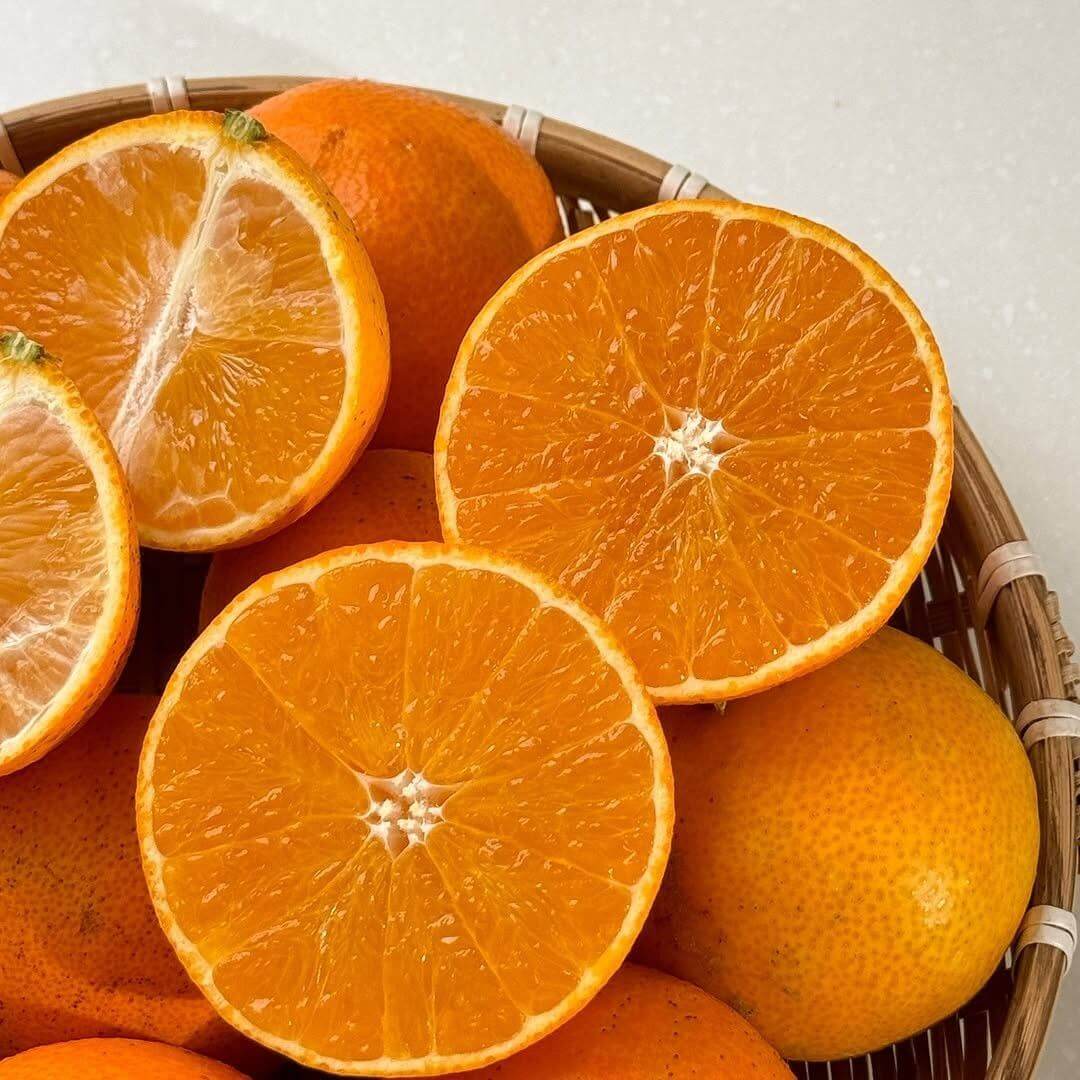
Oranges are rich in vitamin C, which supports immune function and helps protect the body against infections. Including them in the morning can contribute to daily nutrient intake and overall health. Their high water content also helps rehydrate the body after an overnight fast, while nutrients like potassium and folate support normal body functions. If your goal is to improve hydration and boost immunity, oranges are a refreshing and effective addition to your breakfast, though best paired with other foods if you have a sensitive stomach.
Together, these fruits offer a balanced mix of energy, digestive support, and essential nutrients, making them ideal choices for a healthier, more satisfying start to your day.
Which Fruits Should You Avoid on an Empty Stomach?
While fruits are generally healthy, not all are ideal to eat first thing in the morning. Certain fruits, especially those high in acid, sugar, or difficult-to-digest fibre, may cause discomfort or sudden energy fluctuations for some individuals when consumed on an empty stomach.
Key Points
- Highly acidic fruits: Oranges, grapefruits, lemons, and kiwis may trigger acidity or heartburn.
- Overly sugary fruits (in excess): Mangoes, grapes, and cherries may cause rapid spikes and drops in blood sugar.
- Unripe or hard-to-digest fruits: Unripe bananas or fibre-rich fruits like apples (with the skin) may cause bloating or discomfort.
Being mindful of these choices can help you enjoy fruits more comfortably while supporting better digestion and stable energy in the morning.
How Can You Make a Fruit Breakfast More Balanced?
A fruit-based breakfast becomes more effective when combined with other nutrient groups. Adding protein, healthy fats, and complex carbohydrates helps improve satiety, stabilise energy levels, and create a more complete meal.
Key Ways to Balance Your Fruit Breakfast:
- Pair fruits with protein-rich foods: Combine fruits with yoghurt, eggs, nuts, or seeds to improve fullness and support steady energy levels.
- Add healthy fats for better satiety: Include options like nut butter, chia seeds, flaxseeds, or avocado to slow digestion and enhance nutrient absorption.
- Combine fruits with whole grains: Pair fruits with oats or whole-grain cereals to provide sustained energy and support digestion.
Together, these simple additions help turn a fruit-based breakfast into a balanced meal that keeps you full, energised, and nutritionally supported throughout the morning.
7 Healthy Fruit-Based Breakfast Recipes
Starting your day with fruit becomes more effective when combined with protein, healthy fats, and complex carbohydrates. These recipes help create balanced, filling breakfasts that support steady energy, better satiety, and overall nutrition.
These recipes combine fruits with protein, healthy fats, and complex carbs to create a complete and satisfying breakfast.
1. Fruit & Yoghurt Power Bowl
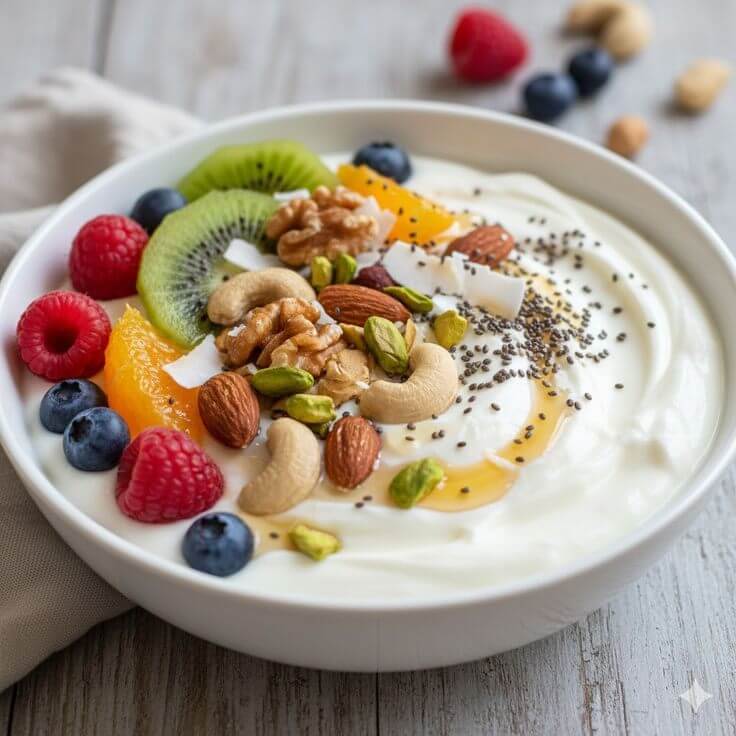
A fruit and yoghurt power bowl is a simple yet nutrient-dense breakfast that combines protein, fibre, and healthy fats in one meal. The yoghurt provides protein for satiety, while fruits add natural sugars, vitamins, and hydration. Nuts and seeds contribute healthy fats and texture, making the bowl more filling and balanced. This combination helps maintain steady energy levels and prevents early hunger, making it a practical and satisfying morning option.
Ingredients:
- 1 cup Greek yogurt
- ½ banana (sliced)
- ½ cup mixed berries
- 1 tbsp chia seeds
- 1 tbsp almonds/walnuts
Recipe:
- Add yoghurt to a bowl.
- Top with banana slices and berries.
- Sprinkle chia seeds and nuts.
- Mix lightly and serve.
If you love yoghurt-based treats, you’ll definitely want to explore more refreshing ideas like these fruit dessert recipes for summer for your next bowl.
2. Berry Oatmeal Bowl
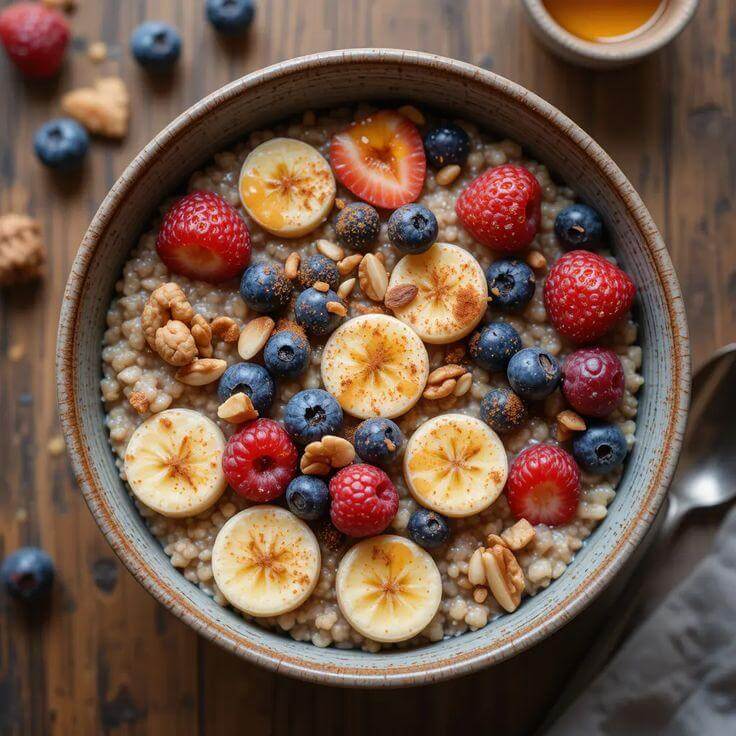
A berry oatmeal bowl combines oats with fresh berries to create a structured, nutrient-rich breakfast. Oats release energy gradually, helping maintain consistent focus, while berries add antioxidants and natural flavour without relying on added sugar. The inclusion of seeds contributes healthy fats and additional fibre, supporting digestion and prolonging fullness. This combination works well for those who need a steady, sustaining start without feeling heavy or experiencing early energy dips.
Ingredients:
- ½ cup oats
- 1 cup milk or water
- ½ cup mixed berries
- 1 tsp honey
- 1 tbsp flaxseeds
Recipe:
- Cook oats with milk or water until soft.
- Add berries and honey.
- Top with flaxseeds and serve warm.
3. Fruit Protein Smoothie

A fruit protein smoothie is a quick, balanced option that combines natural carbohydrates with protein to support steady energy. Fruits provide easily digestible sugars for immediate fuel, while protein helps slow absorption and maintain fullness. Adding seeds or nut butter introduces healthy fats, improving satiety and nutrient uptake. This combination is especially useful for busy mornings, offering a convenient way to create a complete breakfast without relying on processed foods.
Ingredients:
- 1 banana
- ½ cup berries
- 1 tbsp peanut butter or protein powder
- 1 cup milk
- 1 tbsp seeds
Recipe:
- Add all ingredients to a blender.
- Blend until smooth.
- Pour into a glass and serve immediately.
4. Apple Peanut Butter Toast

Apple peanut butter toast combines whole-grain bread, fresh apple slices, and nut butter to create a balanced breakfast. The bread provides complex carbohydrates for sustained energy, while apples add fibre that supports fullness and steady digestion. Peanut butter contributes healthy fats and protein, helping slow energy release and reduce mid-morning hunger. This combination offers a practical option for those seeking a structured meal that is both filling and easy to prepare.
Ingredients:
- 1–2 slices whole-grain bread
- 1 apple (sliced)
- 1 tbsp peanut butter
- Pinch of cinnamon (optional)
Recipe:
- Toast the bread slices.
- Spread peanut butter evenly.
- Add apple slices on top.
- Sprinkle cinnamon and serve.
5. Tropical Fruit Chia Pudding

Tropical fruit chia pudding combines soaked chia seeds with fruits like mango or papaya to create a fibre-rich, digestion-friendly breakfast. Chia seeds absorb liquid and form a gel-like texture, which slows digestion and supports sustained energy release. The fruits add vitamins, hydration, and natural sweetness without added sugar. This combination works well for those seeking a light yet structured meal that supports gut health and maintains fullness for longer.
Ingredients:
- 2 tbsp chia seeds
- 1 cup milk
- ½ cup mango or papaya
- 1 tsp honey
Recipe:
- Soak chia seeds in milk overnight.
- Stir well in the morning.
- Top with chopped fruits and honey.
- Serve chilled.
Craving more refreshing, fruit-packed treats like this? Dive into these irresistible fruit dessert recipes for summer and give your mornings a tropical twist!
6. Mixed Fruit & Nut Salad

A mixed fruit-and-nut salad combines fresh fruits with a small portion of nuts to create a balanced, nutrient-dense breakfast. Fruits provide fibre, hydration, and natural sugars for quick energy, while nuts add healthy fats and protein to improve satiety. This pairing helps slow digestion and reduces sudden energy drops. It’s a practical option for those who prefer a light yet structured meal that still supports steady energy and fullness.
Ingredients:
- 1 apple (chopped)
- 1 banana (sliced)
- ½ cup papaya
- 1 tbsp mixed nuts
- 1 tsp lemon juice
Recipe:
- Combine all fruits in a bowl.
- Add nuts and drizzle lemon juice.
- Toss gently and serve fresh.
If you enjoy light, refreshing salads like this, don’t miss exploring more delicious ideas from these Indian salad recipes for dinner to keep your meals exciting and nutritious.
7. Banana Oat Pancakes

Banana oat pancakes combine oats and ripe bananas to create a balanced breakfast with natural sweetness and steady energy. Oats provide complex carbohydrates that release energy gradually, while bananas contribute quick fuel and potassium. Adding eggs or a plant-based alternative introduces protein, improving satiety and structure. This combination offers a more filling alternative to refined pancakes, making it suitable for those who need sustained energy without relying on added sugars.
Ingredients:
- 1 banana
- ½ cup oats
- 1 egg (or flax egg)
- ¼ cup milk
Recipe:
- Blend all ingredients into a smooth batter.
- Heat a pan and pour small portions.
- Cook both sides until golden.
- Serve warm.
Starting your day with fruit is far more effective when paired with protein, healthy fats, and complex carbohydrates. These recipes are designed to create balanced, filling breakfasts that support steady energy, improved satiety, and better overall nutrition.
Fruits vs Balanced Breakfast – Which Is Better?
Choosing between a fruit-only breakfast and a balanced meal can affect your energy, fullness, and overall nutrition throughout the day. While fruits provide quick fuel through natural sugars like fructose, a balanced meal that includes protein sources (eggs, yoghurt), healthy fats (nuts, seeds), and complex carbs (oats, whole grains) offers more sustained support.
| Aspect | Fruit-Only Breakfast | Balanced Breakfast |
| Energy Release | Quick spike from natural sugars, followed by a drop | Slow, steady release from complex carbs and protein |
| Satiety (Fullness) | Low, hunger returns quickly | High keeps you full for longer |
| Macronutrients | Mainly carbohydrates | Includes carbs, protein (eggs, yoghurt), and fats (nuts, seeds) |
| Nutritional Balance | Rich in vitamins but incomplete | More complete with multiple nutrient groups |
| Blood Sugar Impact | May fluctuate quickly | More stable due to slower digestion |
| Sustainability | Not ideal for daily long-term use | Suitable for regular routines |
| Energy Stability | Short-lived, may affect focus | Sustained, supports productivity |
| Muscle & Body Support | Lacks protein for repair | Supports recovery and maintenance |
| Lifestyle Suitability | Works for light or occasional eating | Better for active or busy lifestyles |
| Adaptability | Limited combinations | Easily adaptable to different diets |
A balanced breakfast remains the better choice for sustained energy, improved satiety, and overall nutritional completeness.
What Are the Common Mistakes When Eating Fruits for Breakfast?
Common mistakes when eating fruit for breakfast include relying solely on fruit, overlooking protein and fat, choosing poor combinations, and overeating, all of which can affect energy, digestion, and overall nutrition. Being aware of these habits helps you get the most benefits from fruits without compromising balance or satiety.
Key Mistakes to Avoid
- Relying Only on Fruits Daily: Eating only fruits like bananas or apples can lead to nutrient gaps and early hunger due to missing protein and fats.
- Ignoring Protein and Healthy Fats: Skipping foods like yoghurt, eggs, nuts, or seeds reduces satiety and leads to quicker energy drops.
- Overeating or Poor Portion Balance: Large servings of fruits such as mangoes or grapes can increase sugar intake and disrupt energy stability.
- Choosing Poor Fruit Combinations: Mixing highly acidic and sweet fruits may cause bloating or discomfort for some individuals.
- Not Considering Individual Tolerance: Certain fruits may trigger acidity or digestive issues depending on sensitivity.
- Lack of Variety in Fruit Choices: Repeating the same fruits limits nutrient diversity and reduces overall nutritional value.
Avoiding these simple mistakes ensures fruits remain a healthy and effective part of a balanced breakfast routine.
Conclusion
Eating fruits for breakfast can be a healthy and refreshing choice, but relying on them alone may not provide the balance your body needs. While fruits offer quick energy and essential nutrients, they lack the protein and fats required for sustained energy and fullness.
For a more effective approach, include fruits in a balanced breakfast by pairing them with other nutrient-rich foods. This helps improve satiety, stabilise energy levels, and support overall health. A thoughtful balance ensures you enjoy the benefits of fruits without compromising nutrition or performance throughout the day.
Frequently Asked Questions
Is eating fruit for breakfast suitable for people with diabetes?
Yes, but choose low-glycemic fruits like berries and control portion sizes. Pair fruits with protein or healthy fats to slow sugar absorption and maintain stable blood sugar levels.
What is the best time in the morning to eat fruits for maximum benefits?
There’s no fixed “best” time. Eating fruits in the morning can boost energy, but pairing them with protein or fats helps improve digestion and maintain stable energy levels throughout the day.
Can We Eat Fruits as Breakfast Daily?
Yes, you can eat fruit for breakfast daily, but it should be part of a balanced meal. Pairing fruits with protein and healthy fats helps improve satiety, energy stability, and overall nutrition.
Can eating just fruits for breakfast help with weight loss?
Eating only fruits may reduce calories in the short term, but it can cause hunger and energy dips. For sustainable weight loss, include fruits in a balanced breakfast with protein and healthy fats to improve satiety and nutrient intake.
Are there any digestive issues from eating certain fruits in the morning?
Yes, some fruits may cause discomfort on an empty stomach. Highly acidic fruits can increase acidity, while high-fibre or unripe fruits may cause bloating in sensitive individuals.
Are there any fruits that should be avoided at breakfast?
Some fruits may be better limited at breakfast, especially for sensitive digestion. Highly acidic fruits like oranges or grapefruits can trigger acidity, while high-sugar fruits such as mangoes or grapes may cause energy spikes. Unripe or very fibrous fruits can also lead to discomfort.