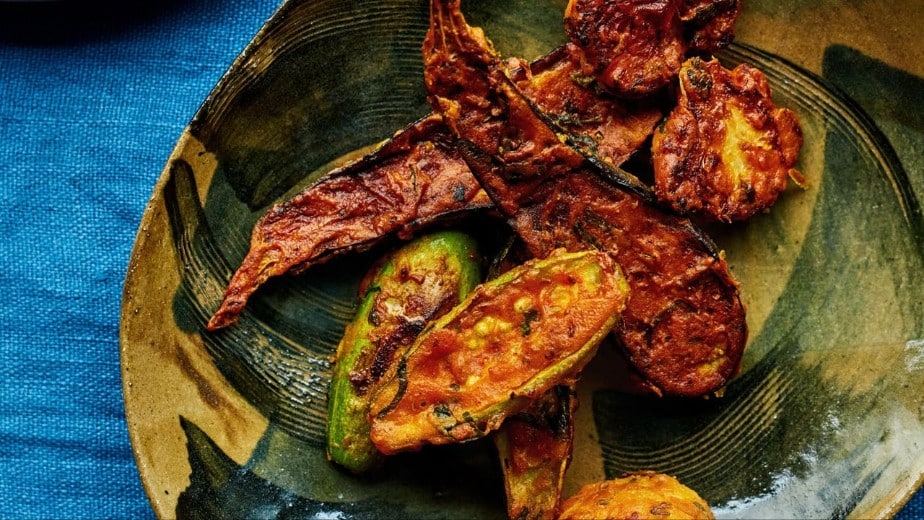
Parwal Kocheko is a dish I first tasted at a Bengali friend’s dinner party about six years ago, and I spent the next week trying to replicate it. The stuffed parwals looked elegant on the plate, and the spiced lamb filling was rich without being heavy. What stuck with me most was how the vegetables stayed firm even after frying, unlike stuffed capsicum or karela that sometimes turn limp.
I now make this when I have guests who appreciate a bit of effort but do not want anything too fussy. The tying step feels a little ceremonial, but it is necessary. Without that string, the filling tends to ooze out during frying.
About the Recipe
Parwals are easy to find in most Indian vegetable markets, though you may need to check a couple of stalls for the long, evenly sized ones. The recipe takes about an hour from start to finish, including prep and frying. I make this when I want a side dish that can sit on the table without getting soggy or losing structure. It reheats well, which is useful if you are cooking ahead for a weekend lunch. The lamb filling is not heavily spiced, so it pairs easily with rice or roti without clashing with other dishes.
Why you will love this recipe
The stuffing technique here is straightforward because parwals have a natural hollow once you remove the seeds. You are not carving out tiny spaces or fighting with fragile shells. The lamb mixture cooks down until it is almost dry, which means it packs firmly into each vegetable without leaking moisture during frying. That dry texture also helps the filling stay inside when you slice the parwals before serving.
The final dish has a clean look with no messy edges or spilling innards. It sits well on a plate next to dal or curry without soaking up extra gravy.
Cooking Tips
If your parwals are too thin, they will tear when you try to deseed them. Choose ones that are at least as thick as your thumb. The lamb needs to cook until almost all moisture evaporates, or the filling will be too loose to stay inside the vegetable. Do not skip the water sprinkle step if the meat is still pink after the first round of cooking.
Undercooked lamb will taste chewy and the spices will not blend properly. Tying the parwals too loosely is a common mistake. The string should be snug but not so tight that it cuts into the flesh.
Top Tips
- Pat the parwals completely dry after washing, or the oil will splatter when you start frying.
- Use cotton kitchen string for tying, not synthetic thread, which can melt near heat.
- Fry the parwals on medium heat so they cook through without burning the outside.
- If you cannot find lamb, use chicken mince but cook it a minute or two less as it dries out faster.
- You can stuff the parwals a few hours ahead and refrigerate them, then fry just before serving.
- Keep the fried parwals in a warm oven if you are frying in batches, so they all stay hot.
Serving and Storing Suggestions
This recipe serves four as a side dish. Prep time is around 30 minutes, and cooking takes another 30 minutes. Serve the parwals warm with steamed rice and a light dal, or alongside a dry sabzi. I sometimes pair them with plain yogurt to balance the spiced filling.
Store leftovers in an airtight container in the fridge for up to two days. Reheat in a pan with a little oil rather than the microwave, which makes the parwals rubbery. The filling holds well, but the texture is best on the first day.
Similar Recipes
- Bharwan Karela
- Stuffed Capsicum
- Keema Paratha
- Mutton Kofta Curry
- Shahi Tukda
Nutrient Benefits
Parwals are low in calories and contain a decent amount of fibre, which helps with digestion. Lamb provides protein and iron, especially useful if you are looking to add more animal protein to your meals. Garlic and turmeric both have anti-inflammatory properties, though the amounts here are small. Green coriander adds a bit of vitamin K. This dish is not a health food by any measure, but it balances vegetables and meat in a way that feels satisfying without being too rich.

Parwal Kocheko
Ingredients
- 250 gms Parwars - 250 gms
- 150 gms Lamb (minced)
- Salt to taste
- 1 tbsp Clarified Butter
- 5 Garlic Cloves (finely chopped)
- 3 1/2 tbsp Onions (chopped)
- 1/2 tsp Turmeric Powder
- 1/2 tsp Cumin Seed Powder
- 1 tsp Red Chilli Powder
- 1/2 tsp Garam Masala
- 1 tbsp Green Coriander (finely chopped)
- 3 tbsp Oil
Instructions
- Wash well and pat dry the parwars.
- Make a slit diagonally along the length of the parwars.
- Sprinkle a little salt inside each. Keep aside.
- Heat the clarified butter, add the garlic and saute a little.
- Add the onions and saute till brown.
- Add the lamb, turmeric powder and salt.
- Cook over medium flame till the liquid gets absorbed.
- If the lamb is not cooked, sprinkle 2 tbsp of water and cook more.
- Add the cumin seed powder, red chilli powder and garam masala.
- Cook covered over a low flame for a few minutes and then put aside.
- Mix in the green coriander.
- Carefully deseed the parwars.
- Fill each parwar with a little of the mince mixture and secure with a piece of string.
- Heat the oil, preferably in a non-stick pan.
- Fry the parwars one by one till they are cooked.
- Remove from the pan and transfer to a casserole to keep warm.
- Before serving, remove the strings and cut into halves.
Sign up for our newsletter
Add Awesome Cuisine as a Preferred Source

Frequently Asked Questions
Can I bake the stuffed parwals instead of frying them?
Yes, but the texture will be softer and the skin will not have that light sear. Brush them with oil and bake at 180 degrees Celsius for about 25 minutes, turning once halfway through.
My parwals split open while frying even though I tied them. What went wrong?
The slit was probably too deep or the parwals were overripe and soft. Choose firm, fresh parwals and make a shallow slit just deep enough to remove the seeds and add filling.
Can I use a vegetarian filling instead of lamb?
You can use paneer crumbled with boiled potatoes, or a mix of mashed chana dal and spices. Cook the filling until dry so it holds its shape inside the parwal.
How do I know when the lamb is cooked enough before stuffing?
The mixture should look almost dry with no visible liquid pooling at the bottom of the pan. The meat will change from pink to brown and start to pull away slightly from the sides.
The string left marks on my parwals. Is that normal?
Yes, the string will leave slight indentations. Remove it just before slicing and the marks will be less noticeable once the parwals are cut in half.