
Table of Contents
Key Highlights
- Gulab jamun, rasmalai, kaju katli, and jalebi are among the most famous Indian sweets enjoyed across festivals and celebrations.
- Different regions in India are known for unique desserts, from Bengali milk sweets to South Indian jaggery-based treats.
- Festival favourites like modak, gujiya, and sheer khurma are closely connected to Indian cultural traditions.
- Dry Indian sweets such as soan papdi and kaju katli are popular for gifting because of their longer shelf life.
- Milk-based desserts like peda, kalakand, and rasmalai remain among the richest and most loved mithais.
- Traditional Indian sweets remain popular because of their strong connection to family gatherings and celebrations.
- Indian desserts offer a wide variety of textures and flavours, including creamy, flaky, syrupy, and nut-based sweets.
Walk past any Indian sweet shop during Diwali or a wedding celebration, and you’ll immediately see trays filled with golden jalebis, silver-coated kaju katli, syrup-soaked gulab jamun, and colourful mithai stacked side by side. Indian sweets are more than desserts; they are a central part of festivals, family gatherings, gifting traditions, and celebrations across the country.
With hundreds of traditional desserts available across different regions, choosing which Indian sweets to try can quickly become overwhelming. Some are rich and creamy, others are flaky, fried, syrupy, or packed with nuts and aromatic spices, making every sweet completely different in flavour and texture.
This guide covers the best Indian sweets worth trying, including famous mithai, regional favourites, festive desserts, and classic Indian sweet dishes that continue to define Indian dessert culture.
What Makes Indian Sweets So Popular Around the World?
Indian sweets are popular worldwide because they offer flavours and textures that feel completely different from most traditional desserts. From soft gulab jamun and rich kaju katli to crispy jalebi, every sweet has its own unique taste and texture. Many Indian mithais use ingredients like saffron, cardamom, ghee, nuts, and milk solids to create rich and aromatic flavours. Their strong connection to festivals, weddings, and celebrations also makes them deeply tied to tradition and hospitality.
The variety, flavour, and cultural significance of Indian sweets continue to make them loved across the world.
What Are the 25 Best Indian Sweets Everyone Should Try?
Some of the best Indian sweets include gulab jamun, rasmalai, jalebi, kaju katli, and laddu because they represent the most popular flavours, textures, and traditional dessert styles found across India. With hundreds of Indian sweet dishes available, knowing where to start can be confusing, especially for first-timers. Some desserts are soft and creamy, while others are crispy, nutty, or soaked in sugar syrup. Each sweet offers a completely different flavour and texture experience, which is why Indian desserts remain so diverse and memorable.
The sweets below are some of the most famous Indian desserts served during festivals, weddings, celebrations, and everyday gatherings across the country.
1. Kalakand
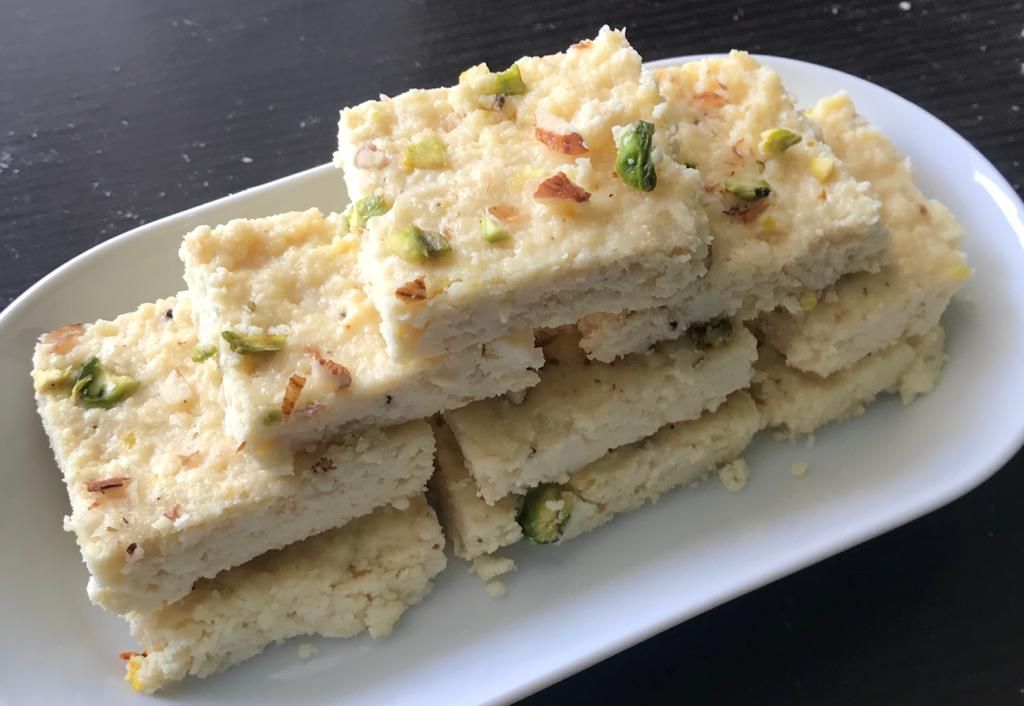
Soft, moist, and lightly grainy, Kalakand is a traditional milk-based Indian sweet made by slowly reducing milk with paneer or chenna until thick and rich. Unlike heavily syrup-soaked desserts, kalakand has a creamy texture and mild sweetness that feels rich without becoming overpowering. Commonly garnished with pistachios or saffron, this festive mithai is especially popular during Diwali, weddings, and family celebrations because of its soft texture and fresh milk flavour.
Key Ingredients: Milk, paneer (chenna), sugar, cardamom, pistachios
Recipe:
- Boil 1–1.5 litres of full-fat milk and simmer until reduced by nearly half.
- Add crumbled paneer or fresh chenna and continue stirring on low heat for 10–15 minutes.
- Mix in sugar and cardamom until the mixture becomes thick and slightly grainy.
- Transfer the mixture to a greased tray and flatten evenly.
- Garnish with pistachios or almonds.
- Cool completely before cutting into squares.
Kalakand remains a festive favourite because of its rich milk flavour and soft, melt-in-the-mouth texture.
2. Gajar Ka Halwa
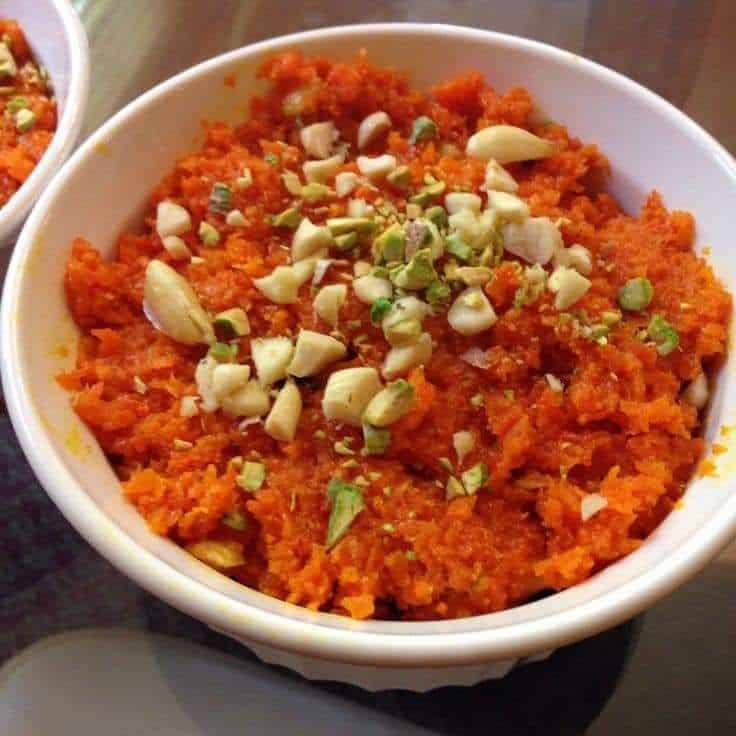
Warm, rich, and comforting, Gajar ka halwa is one of the most popular Indian desserts served during winter, weddings, and festive celebrations. Made by slowly cooking grated carrots with milk, sugar, and ghee, this classic sweet develops a soft texture and slightly caramelised flavour over time. It is commonly finished with cardamom, almonds, cashews, and raisins, while some versions are served warm with rabri or ice cream during special occasions.
Key Ingredients: Carrots, milk, ghee, sugar, cardamom, almonds, cashews
Recipe:
- Grate 500–700 grams of fresh carrots and add them to 1 litre of full-fat milk.
- Cook on low heat for 35–45 minutes until the milk reduces almost completely and the carrots soften.
- Stir every few minutes to prevent the mixture from sticking to the pan.
- Add sugar and 3–4 tablespoons of ghee, then continue cooking for another 10–15 minutes until the halwa becomes glossy and rich.
- Mix in cardamom and roasted dry fruits.
- Serve warm, optionally with ice cream or extra nuts.
Gajar ka halwa remains a festive favourite because of its rich texture, comforting flavour, and slow-cooked sweetness.
3. Rasgullas
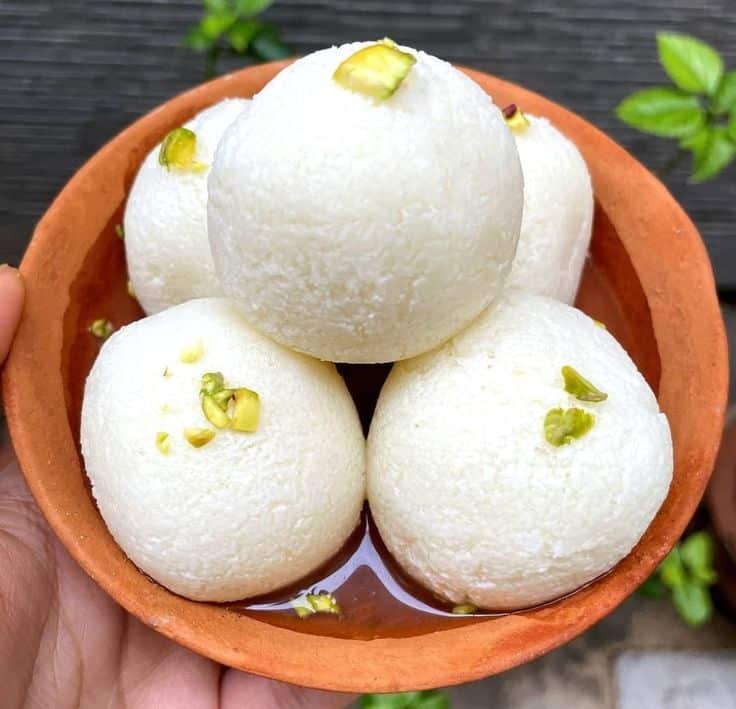
Soft, spongy, and filled with light sugar syrup, rasgullas are one of the most famous Bengali sweets enjoyed during festivals and celebrations across India. Made using fresh chenna, these soft dessert balls are gently boiled in sugar syrup instead of fried, which gives them their airy texture and juicy consistency. Their mild sweetness and soft texture make rasgullas especially popular among people who prefer lighter milk-based Indian desserts.
Key Ingredients: Chenna (fresh paneer), sugar, water, cardamom, rose water
Recipe:
- Boil 1 litre of milk, then curdle it with lemon juice or vinegar to prepare fresh chenna.
- Drain the whey completely and knead the chenna for 8–10 minutes until smooth and soft.
- Shape the mixture into small crack-free balls.
- Boil sugar and water to prepare a light syrup.
- Add the chenna balls and cook, covered, for 12–15 minutes, until they double in size and become spongy.
- Allow the rasgullas to cool completely before serving chilled.
Rasgullas remain one of the most-loved Indian sweets because of their soft texture and light, syrupy flavour.
4. Ghewar
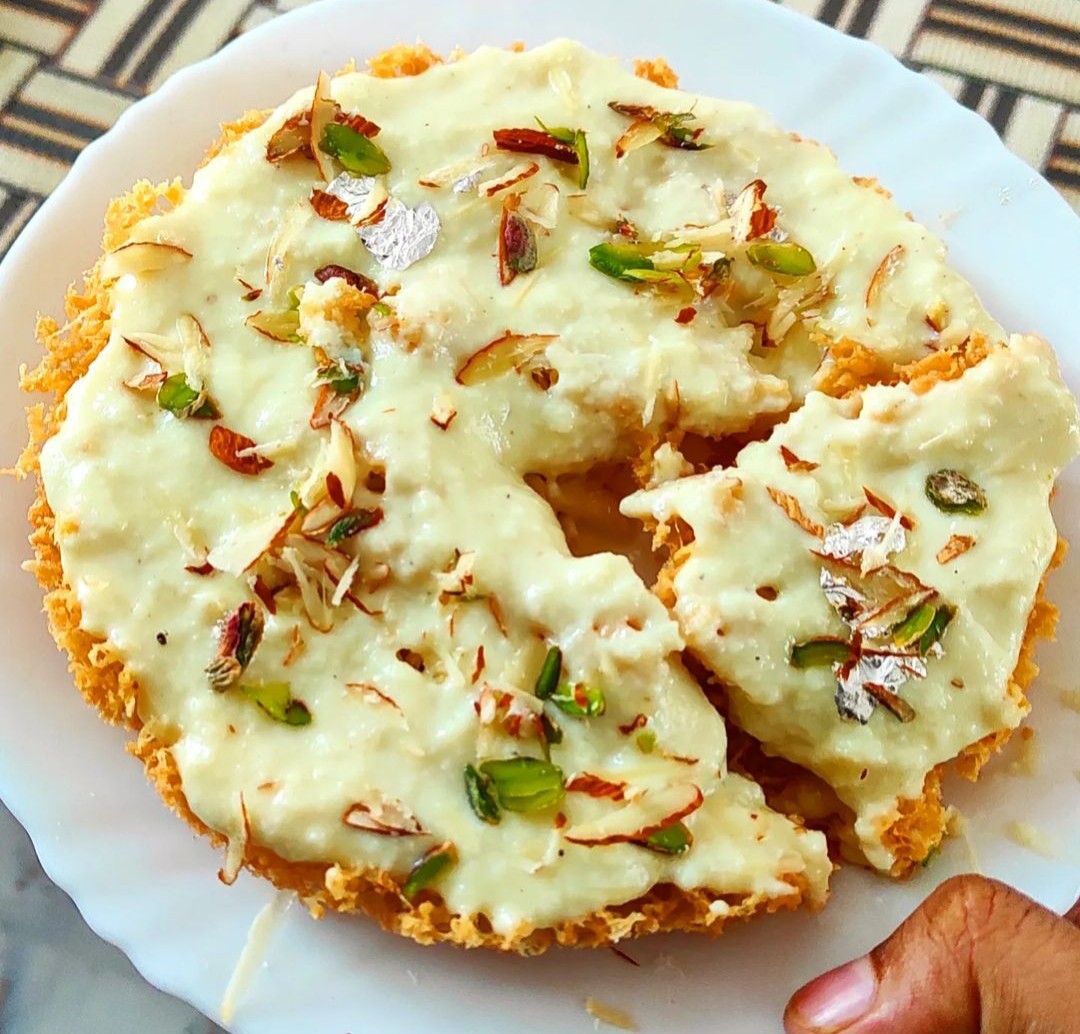
Crispy, airy, and soaked in sugar syrup, ghewar is one of Rajasthan’s most iconic festive sweets, especially popular during Teej and Raksha Bandhan. Its signature honeycomb texture is created by pouring thin batter into extremely hot ghee in stages, forming delicate, crisp layers. Once fried, ghewar is lightly soaked in sugar syrup and often topped with rabri, saffron, pistachios, or almonds, giving it a rich festive flavour and texture.
Key Ingredients: Flour, ghee, sugar syrup, milk, saffron, dry fruits
Recipe:
- Prepare a very thin batter using flour, melted ghee, chilled water, and milk.
- Heat ghee or oil in a deep, narrow pan until very hot.
- Pour small amounts of batter gradually from a height into the centre to create the layered honeycomb texture.
- Allow each layer to partially cook before adding more batter repeatedly.
- Fry until the ghewar becomes crisp and golden brown.
- Dip briefly in warm sugar syrup without softening the crisp texture.
- Top with rabri, saffron, pistachios, or almonds before serving.
Ghewar remains a festive favourite because of its crisp honeycomb texture and rich syrup-coated flavour. If you enjoy traditional Rajasthani desserts, you can also explore sweets like malpua and balushahi for similarly rich festive flavours and textures.
5. Anjeer Cutlet
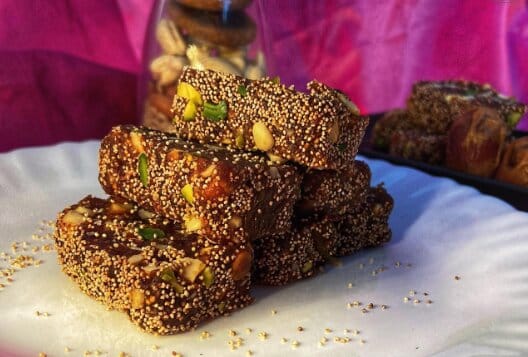
Rich, dense, and naturally sweet, anjeer cutlet is a premium Indian sweet made using dried figs, khoya, and mixed nuts. Popular during festivals and luxury mithai gifting, this dessert is known for its chewy texture and rich dry fruit flavour instead of heavy sugar syrup. Ingredients like almonds, pistachios, and cashews add crunch and richness, while its lower moisture content also makes anjeer cutlet easier to store and travel with during festive occasions.
Key Ingredients: Dried figs (anjeer), khoya, almonds, cashews, pistachios, cardamom
Recipe:
- Soak 200–250 grams of dried figs in warm water for 20–30 minutes until softened.
- Blend the figs into a thick paste without adding excess water.
- Cook the fig paste with khoya on low heat for 8–10 minutes until the mixture thickens.
- Add chopped almonds, pistachios, cashews, and cardamom for texture and flavour.
- Shape the mixture into small cutlets, rolls, or discs while still warm.
- Garnish with pistachios or silver leaf before serving.
Anjeer cutlet remains a popular festive sweet because of its rich, dry fruit flavour and premium texture. If you enjoy nut-based Indian sweets, you can also explore kaju katli, dry fruit laddus, and soan papdi for similarly rich festive flavours.
6. Gulab Jamun
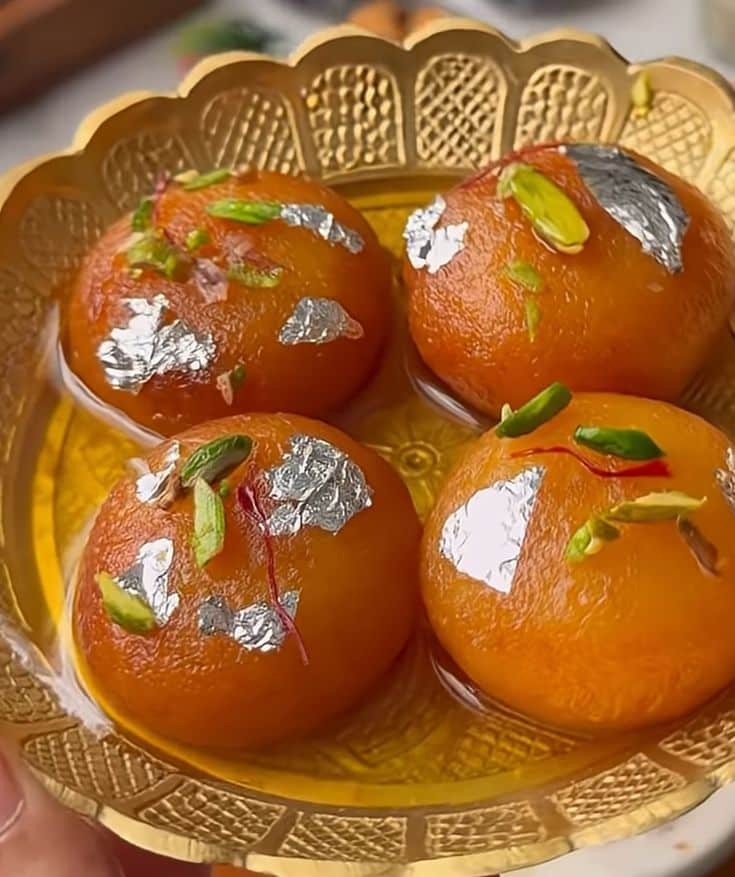
Soft, syrupy, and melt-in-the-mouth, Gulab jamun is one of the most famous Indian sweets served during weddings, festivals, and celebrations across India. These deep-fried milk-based dumplings are made using khoya and soaked in warm sugar syrup flavoured with cardamom and rose water. Their soft texture and rich syrupy flavour make gulab jamun one of the most loved traditional Indian desserts.
Key Ingredients: Khoya, flour, sugar, cardamom, rose water, ghee
Recipe:
- Mix 1 cup of khoya with a small amount of flour to prepare a soft, smooth dough.
- Shape the dough into small, crack-free balls to prevent them from breaking during frying.
- Heat ghee or oil on low heat and fry the dumplings slowly for 7–10 minutes until evenly golden brown.
- Prepare warm sugar syrup using sugar, water, cardamom, and rose water separately.
- Soak the fried gulab jamuns in the warm syrup for at least 1–2 hours before serving.
- Serve warm or chilled based on preference.
Gulab jamun remains one of the most loved Indian desserts because of its soft texture and rich syrupy flavour. If you enjoy syrup-soaked Indian sweets, you can also explore desserts like jalebi, rasgulla, and balushahi for similarly rich festive flavours and textures.
7. Mysore Pak
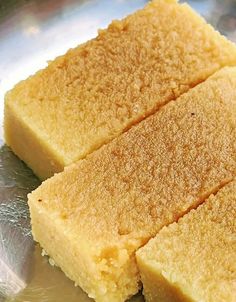
Rich, buttery, and crumbly, Mysore Pak is one of the most famous South Indian sweets, originally created in the royal kitchens of Mysore. Made with gram flour, sugar, and generous amounts of ghee, this traditional dessert is known for its deep roasted flavour and melt-in-the-mouth texture. Its signature porous and crumbly texture is created by slowly adding hot ghee while continuously stirring the flour and sugar mixture during cooking.
Key Ingredients: Gram flour (besan), ghee, sugar
Recipe:
- Roast 1 cup of gram flour lightly in a few tablespoons of ghee until aromatic.
- Prepare sugar syrup separately by boiling sugar and water until slightly sticky.
- Gradually mix the roasted gram flour into the syrup while stirring continuously to avoid lumps.
- Heat additional ghee separately and pour it slowly into the mixture in stages.
- Continue stirring constantly for 8–10 minutes until the mixture becomes frothy, porous, and thick.
- Transfer immediately into a greased tray and allow it to set before cutting into pieces.
Mysore Pak remains one of the most iconic South Indian sweets because of its rich ghee flavour and delicate crumbly texture. If you enjoy traditional ghee-based mithai, you can also explore sweets like laddus, adhirasam, and soan papdi for similarly rich festive flavours.
8. Laddus
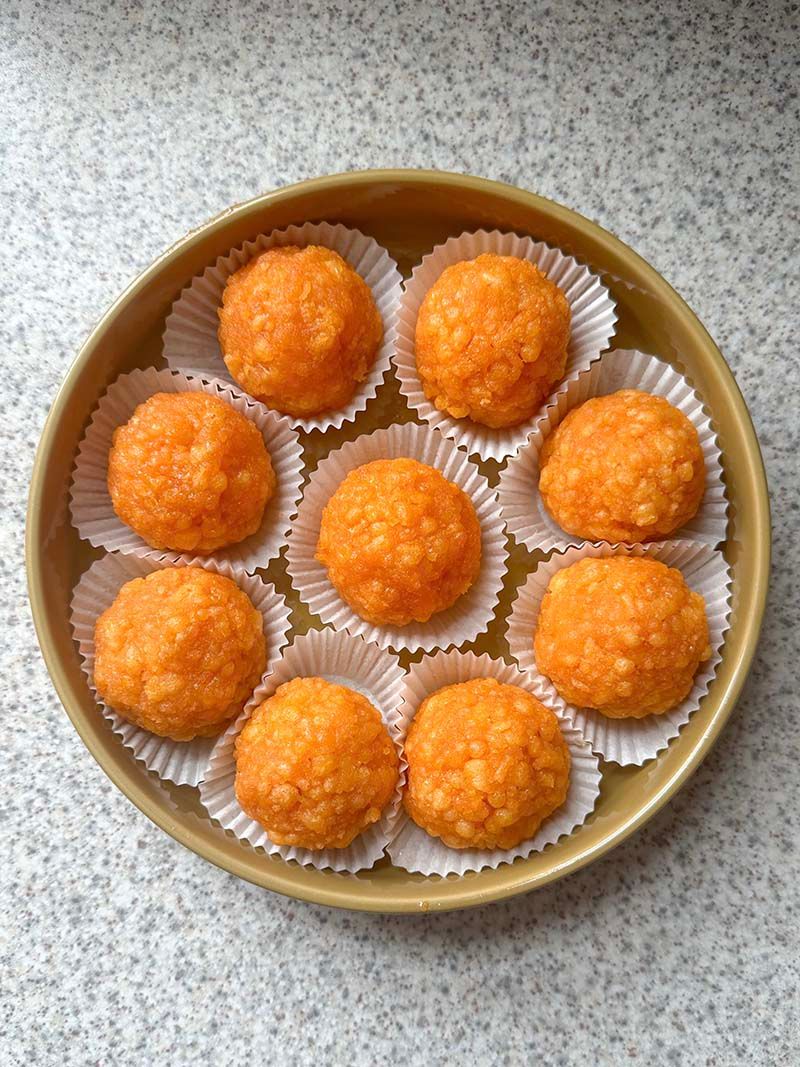
Round, rich, and packed with flavour, laddus are among the most traditional Indian sweets prepared during festivals, weddings, and religious celebrations. Different regions make laddus using ingredients like gram flour, coconut, semolina, or dry fruits, giving each variety a unique texture and flavour. From nutty besan laddu to soft motichoor laddu, these bite-sized sweets remain popular because they are easy to store, serve, and share during festive occasions.Key Ingredients: Gram flour, ghee, sugar, cardamom, nuts, coconut
Recipe:
- Roast 1–2 cups of gram flour or the main ingredient in ghee on low heat for 12–15 minutes until aromatic.
- Add sugar or light sugar syrup along with cardamom for flavour.
- Mix in chopped nuts, raisins, or coconut if desired.
- Allow the mixture to cool slightly until warm but manageable by hand.
- Shape into small round balls while the mixture is still warm.
- Let the laddus cool completely before serving or storing.
Laddus remain one of the most popular Indian sweets because of their rich flavour, long shelf life, and wide variety of regional styles. If you enjoy festive mithai made with ghee and nuts, you can also explore sweets like Mysore Pak, peda, and soan papdi for similarly rich textures and flavours.
9. Sheer Khurma
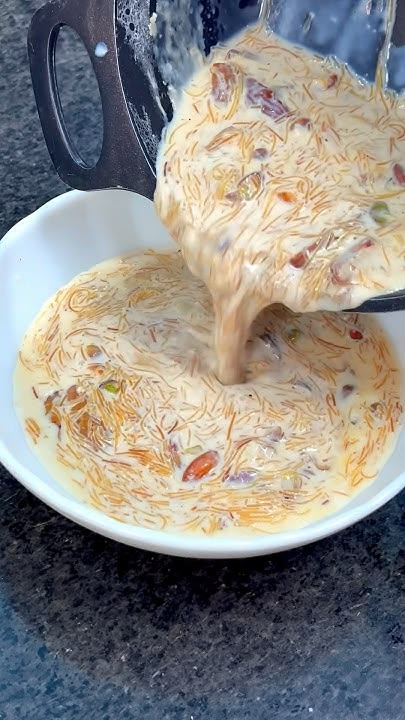
Creamy, rich, and delicately sweet, Sheer khurma is a traditional Eid dessert made with milk, vermicelli, dates, and nuts. Unlike heavier syrup-based sweets, it has a lighter, silky texture with natural sweetness from dates and roasted dry fruits. Commonly served during Eid celebrations and family gatherings, sheer khurma is known for its comforting flavour, creamy consistency, and festive significance across South Asian households.
Key Ingredients: Milk, vermicelli, dates, sugar, cardamom, almonds, pistachios
Recipe:
- Roast thin vermicelli lightly in ghee until golden brown.
- Boil 1 litre of milk and simmer for 15–20 minutes until slightly thickened.
- Add roasted vermicelli, chopped dates, sugar, and cardamom.
- Cook until the vermicelli softens and the flavours combine fully.
- Mix in roasted almonds, pistachios, and saffron.
- Serve warm or chilled based on preference.
Sheer khurma remains a festive favourite because of its creamy texture and rich dry fruit flavour. If you enjoy milk-based Indian desserts, you can also explore sweets like kheer, rabri, and rasmalai for similarly rich and comforting flavours.
10. Adhirasam
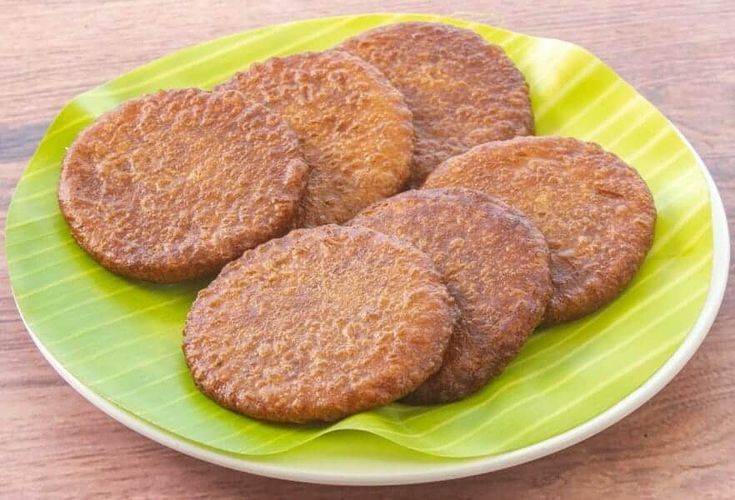
Soft on the inside and slightly crisp outside, Adhirasam is a traditional South Indian sweet made using rice flour and jaggery. Popular in Tamil Nadu during Diwali and temple festivals, this dessert is known for its chewy texture and deep caramel-like flavour. Unlike many sugar-based sweets, adhirasam gets its richness and colour from jaggery, while resting the dough overnight helps develop its soft texture and flavour.
Key Ingredients: Rice flour, jaggery, cardamom, ghee or oil
Recipe:
- Prepare jaggery syrup by boiling jaggery with a small amount of water until slightly sticky.
- Gradually mix the syrup into the rice flour to form a soft dough.
- Rest the dough for 8–12 hours or overnight for better flavour and texture.
- Shape small portions into flat discs by hand.
- Deep-fry on medium heat until golden brown and slightly crisp on the outside.
- Press gently to remove excess oil before serving.
Adhirasam remains one of the most traditional South Indian sweets because of its chewy texture and rich jaggery flavour. If you enjoy jaggery-based desserts, you can also explore sweets like modak, payasam, and malpua for similarly rich festive flavours.
11. Kaju Katli
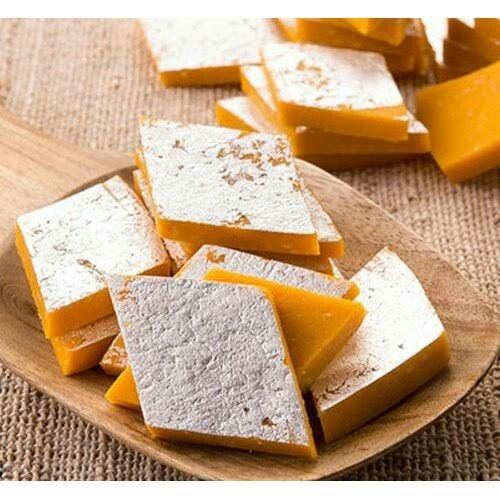
Smooth, rich, and delicately sweet, Kaju katli is one of the most popular Indian mithai sweets served during Diwali, weddings, and festive gifting. Made mainly with cashews and sugar, this thin diamond-shaped dessert is known for its soft texture and rich cashew flavour. Its smooth consistency and lighter sweetness make kaju katli stand out from heavier syrup-based Indian sweets, while edible silver leaf often gives it a premium festive appearance.
Key Ingredients: Cashews, sugar, cardamom, ghee
Recipe:
- Blend 1–2 cups of cashews into a fine powder without releasing excess oil.
- Prepare a light sugar syrup by boiling sugar and water until slightly sticky.
- Add the cashew powder gradually and cook on low heat for 6–8 minutes until a soft dough forms.
- Allow the mixture to cool slightly until manageable by hand.
- Roll the dough evenly between butter paper or on a greased surface.
- Cut into thin diamond shapes and garnish with silver leaf if desired.
Kaju katli remains one of the most gifted Indian sweets because of its smooth texture, premium appearance, and rich cashew flavour. If you enjoy nut-based mithai, you can also explore sweets like anjeer cutlet, dry fruit laddu, and soan papdi for similarly rich festive flavours.
12. Balushahi
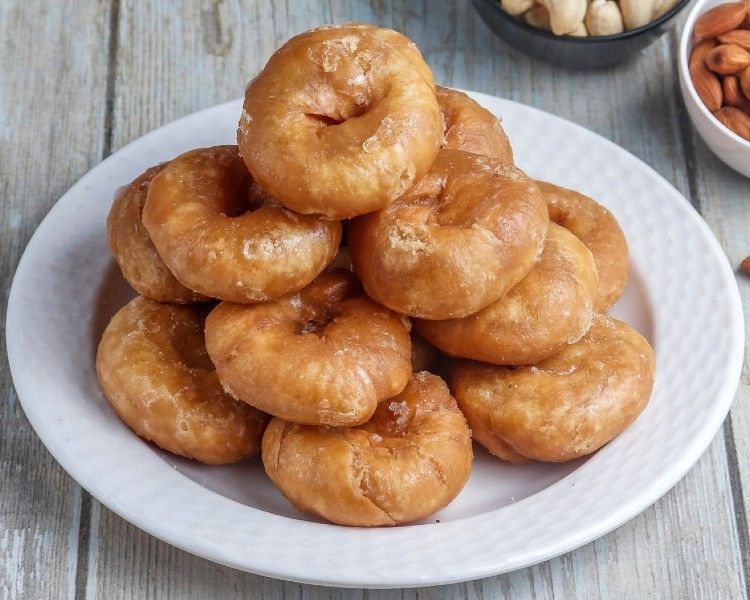
Flaky, crisp, and coated in sugar syrup, Balushahi is a traditional Indian sweet often compared to a glazed doughnut. Made with flour, ghee, and yoghurt, this dessert is known for its layered texture and light sugar syrup coating. Unlike soft syrup-soaked sweets, balushahi has a slightly crisp outer shell that slowly absorbs sweetness while keeping the inside flaky and rich.
Key Ingredients: Flour, ghee, yoghurt, sugar, cardamom
Recipe:
- Prepare a soft dough using flour, ghee, and yoghurt without over-kneading.
- Rest the dough for 15–20 minutes before shaping.
- Shape small round discs with a slight indentation in the centre.
- Deep fry slowly on low heat for 12–15 minutes until evenly golden and flaky.
- Dip the fried balushahi briefly in warm sugar syrup flavoured with cardamom.
- Allow the syrup coating to set before serving.
Balushahi remains a festive favourite because of its flaky texture and crisp syrup-coated finish. If you enjoy traditional fried Indian sweets, you can also explore desserts like jalebi, malpua, and gujiya for similarly rich festive flavours and textures.
13. Gujia
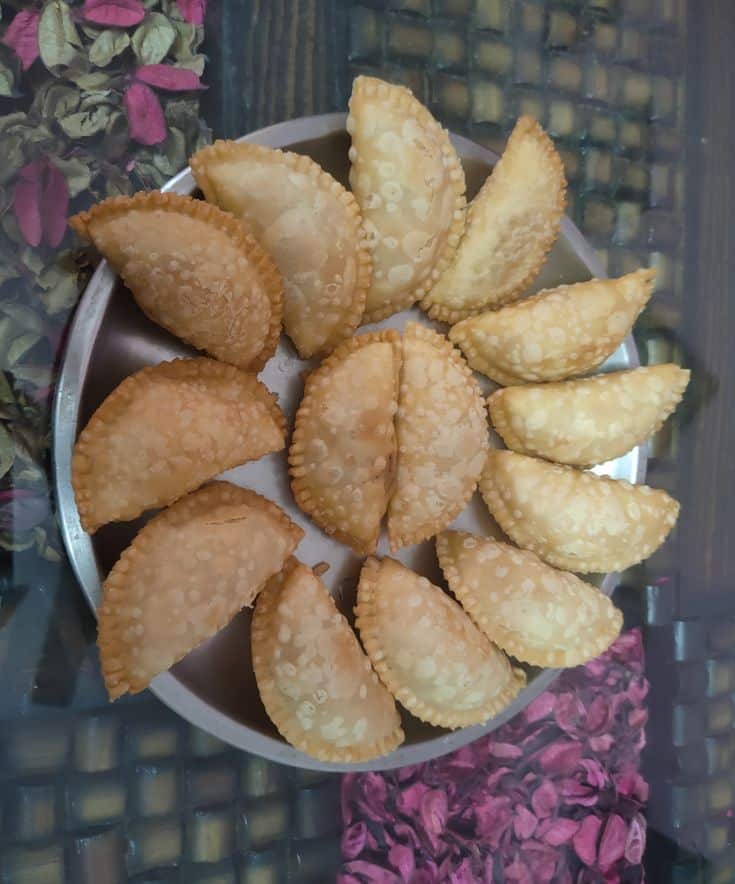
Crispy outside and rich inside, gujiya is a traditional Indian sweet commonly prepared during Holi and festive celebrations. This deep-fried pastry is filled with khoya, coconut, sugar, and dry fruits, giving it a rich and slightly crunchy filling. Its crisp outer shell and soft sweet centre make gujiya one of the most recognisable festive sweets across North India.
Key Ingredients: Flour, khoya, coconut, sugar, almonds, raisins, cardamom
Recipe:
- Prepare a stiff dough using flour and ghee, then rest it for 20–30 minutes.
- Cook khoya with sugar, coconut, chopped nuts, raisins, and cardamom until lightly thickened.
- Roll small dough circles and place the filling in the centre.
- Fold into a half-moon shape and seal the edges tightly by pressing or twisting.
- Deep fry on medium-low heat until evenly golden and crisp.
- Allow the gujiyas to cool slightly before serving.
Gujiya remains one of the most popular Holi sweets because of its crisp pastry shell and rich festive filling. If you enjoy traditional fried mithai, you can also explore sweets like balushahi, malpua, and jalebi for similarly rich festive flavours and textures.
14. Rasmalai
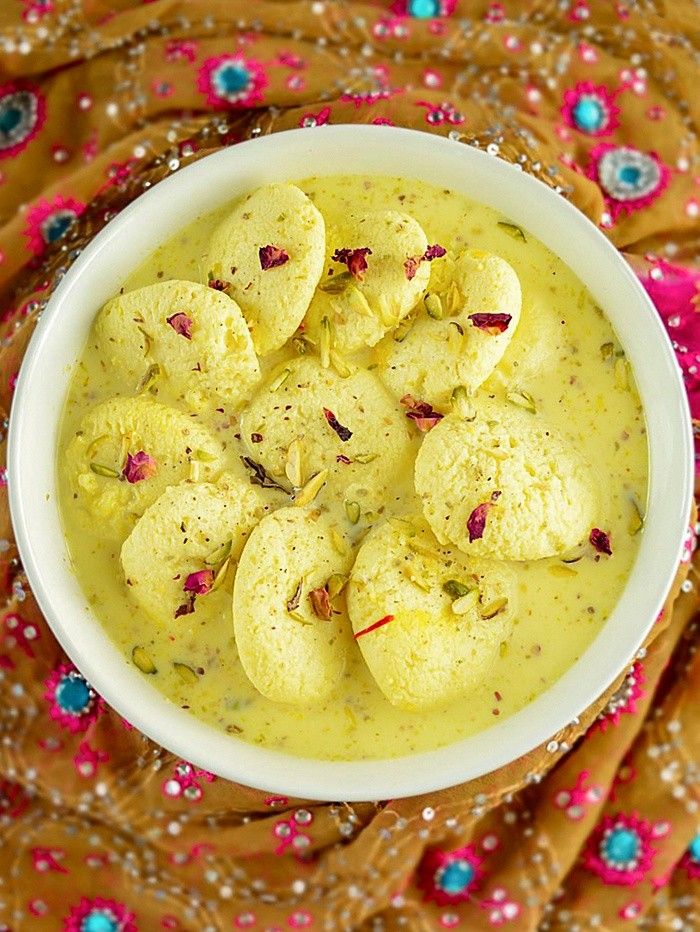
Soft, creamy, and lightly sweet, Rasmalai is one of the most loved milk-based Indian desserts served during festivals, weddings, and celebrations. Made with soft chenna discs soaked in thickened saffron-flavoured milk, this traditional sweet is known for its delicate texture and rich flavour. Its chilled creamy consistency and mild sweetness make rasmalai lighter and smoother than many heavily fried or syrup-soaked Indian sweets.
Key Ingredients: Paneer (chenna), milk, sugar, saffron, cardamom, pistachios
Recipe:
- Prepare fresh chenna with 1 litre of milk, then knead until smooth and soft.
- Shape the chenna into flat discs without cracks.
- Cook the discs in light sugar syrup for 12–15 minutes until soft and spongy.
- Boil another litre of milk, then simmer for 25–35 minutes, until slightly thickened.
- Add saffron, cardamom, and sugar to flavour the milk.
- Soak the chenna discs in the chilled flavoured milk before serving.
Rasmalai remains one of the most popular Indian desserts because of its soft texture and rich creamy flavour. If you enjoy milk-based Bengali sweets, you can also explore desserts like rasgulla, cham cham, and sandesh for similarly soft and delicate textures.
15. Jalebi
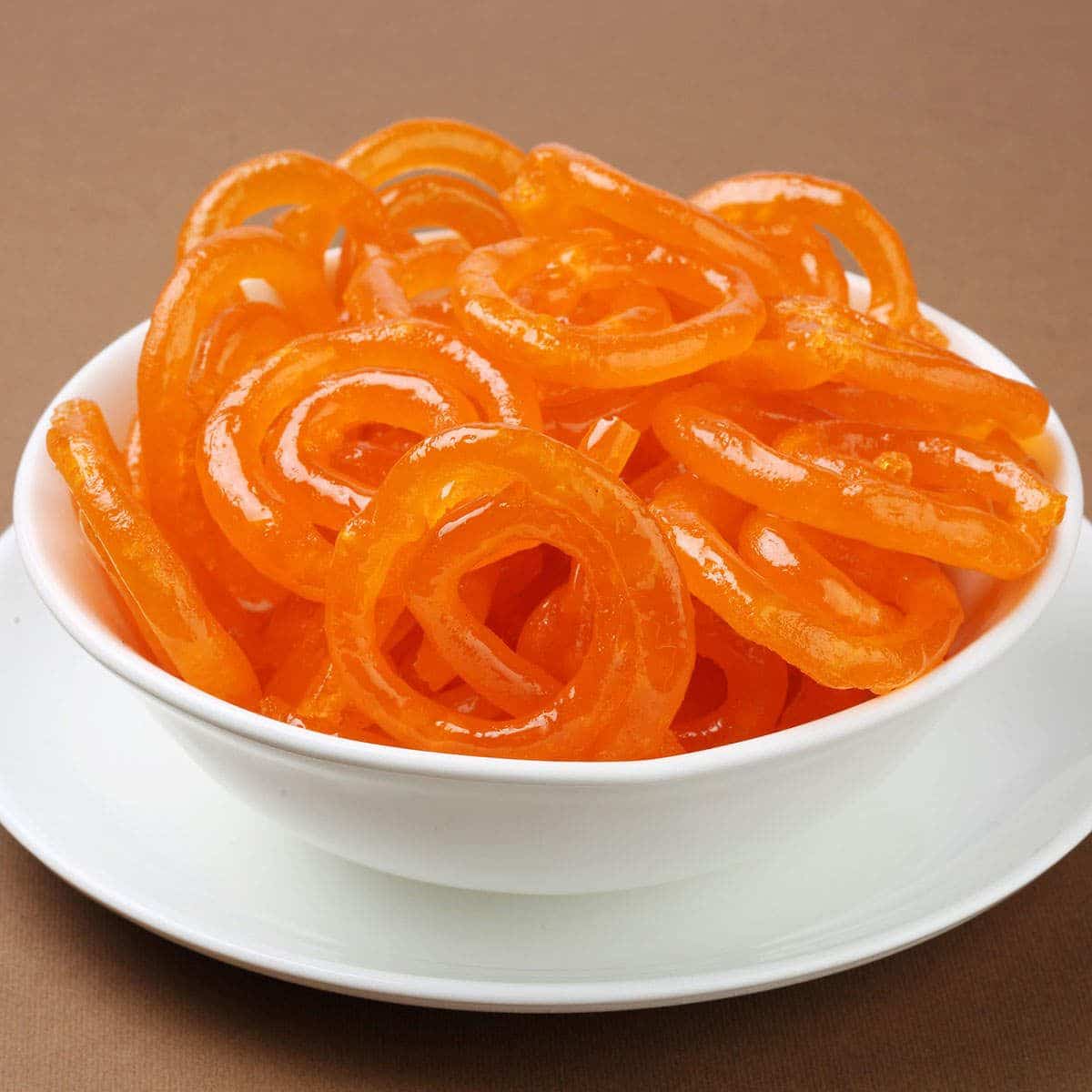
Crispy, syrupy, and brightly coloured, Jalebi is one of the most famous Indian sweets sold in sweet shops, street markets, and festival celebrations across India. Made from fermented flour batter, jalebi is deep-fried into spiral shapes before being soaked in saffron-flavoured sugar syrup. Its crisp texture and juicy sweetness make jalebi one of the most recognisable Indian sweet snacks.
Key Ingredients: Flour, yoghurt, sugar, saffron, cardamom, ghee or oil
Recipe:
- Prepare a smooth batter using flour and yoghurt, then ferment for 8–12 hours.
- Transfer the batter into a piping bottle or a cloth for shaping.
- Pipe spiral shapes directly into medium-hot oil or ghee.
- Fry until crisp and evenly golden orange.
- Dip the fried jalebis briefly into warm saffron-flavoured sugar syrup.
- Serve hot for the best texture and flavour.
Jalebi remains one of the most popular Indian sweets because of its crisp texture and rich syrupy flavour. If you enjoy syrup-soaked desserts, you can also explore sweets like gulab jamun, balushahi, and malpua for similarly rich festive flavours and textures.
16. Modak
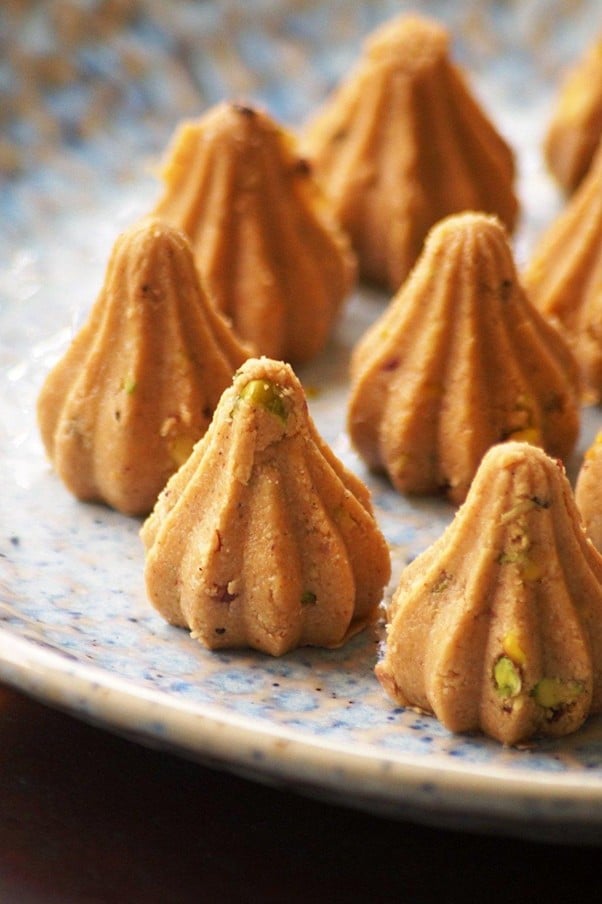
Soft, sweet, and filled with coconut and jaggery, Modak is a traditional Maharashtrian sweet strongly associated with Ganesh Chaturthi celebrations. Made using soft rice flour dough and a rich coconut-jaggery filling, these steamed dumplings are known for their delicate texture and aromatic flavour. Their pleated shape and festive significance make modak one of the most iconic Indian sweets prepared during religious celebrations.Key Ingredients: Rice flour, coconut, jaggery, cardamom, ghee
Recipe:
- Boil water with a small amount of ghee, then gradually mix in rice flour to form a soft dough.
- Cook grated coconut with jaggery and cardamom until the filling thickens slightly.
- Shape small portions of dough into cups using lightly greased hands.
- Fill with the coconut-jaggery mixture and seal the edges into pleated dumpling shapes.
- Steam the modaks for 10–12 minutes until soft and glossy.
- Serve warm with a small amount of ghee if desired.
Modak remains one of the most iconic festive Indian sweets because of its soft texture and rich coconut-jaggery filling. If you enjoy traditional steamed or jaggery-based desserts, you can also explore sweets like adhirasam, payasam, and kozhukattai for similarly rich festive flavours.
17. Sandesh
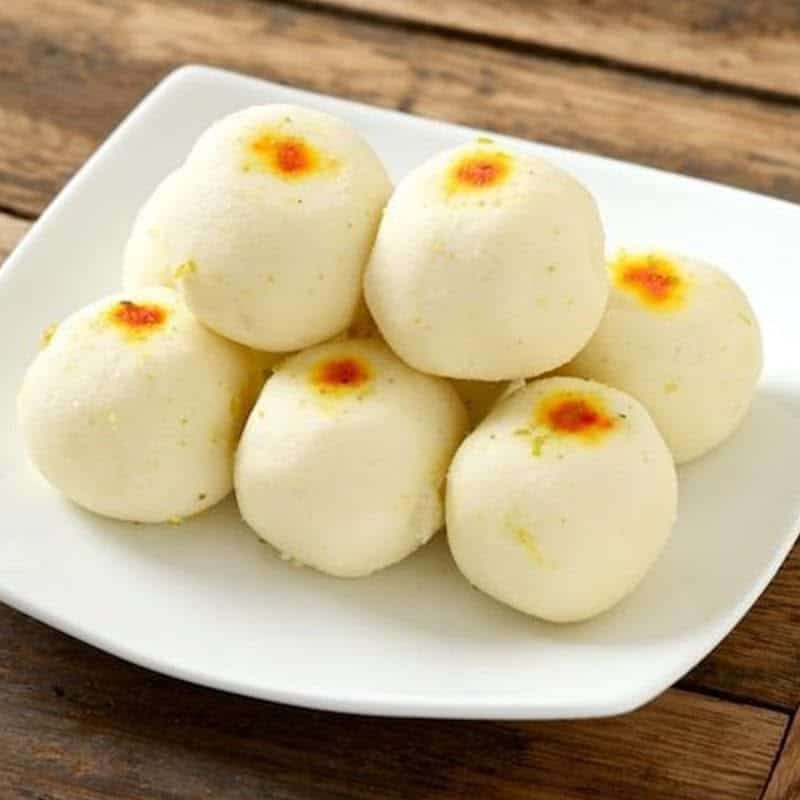
Light, soft, and delicately sweet, Sandesh is a traditional Bengali dessert made using fresh chenna and lightly flavoured with cardamom or saffron. Unlike heavily syrup-soaked sweets, sandesh has a mild milk flavour and smooth texture that feels lighter after meals. Its soft consistency, delicate sweetness, and decorative presentation make sandesh one of the most refined milk-based Indian sweets.
Key Ingredients: Chenna (fresh paneer), sugar, cardamom, saffron, pistachios
Recipe:
- Prepare fresh chenna by curdling 1 litre of milk and draining the whey completely.
- Knead the chenna for 8–10 minutes until smooth and soft.
- Cook the mixture lightly with sugar on low heat for 5–7 minutes without over-drying it.
- Add cardamom or saffron for flavour.
- Shape into small rounds or decorative moulds while still soft.
- Garnish with pistachios or saffron before serving.
Sandesh remains one of the most famous Bengali sweets because of its soft texture and delicate milk flavour. If you enjoy light milk-based desserts, you can also explore sweets like rasmalai, mishti doi, and cham cham for similarly soft and creamy textures.
18. Peda
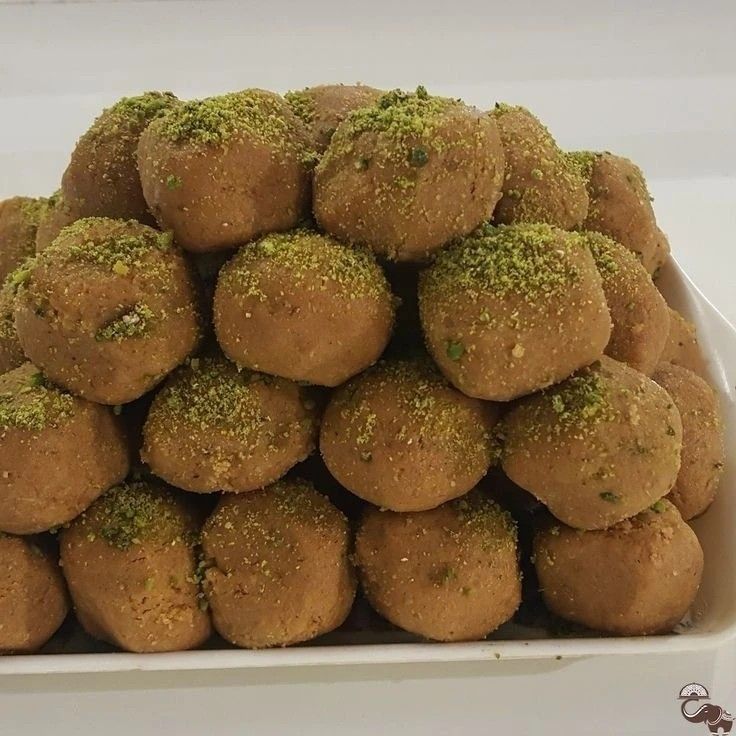
Soft, rich, and mildly sweet, Peda is a traditional Indian sweet made from thickened milk solids known as khoya. Popular during festivals and religious celebrations, peda is known for its smooth texture and concentrated milk flavour. Its balanced sweetness and soft consistency allow the richness of the milk to stand out, while regional varieties like Mathura peda are loved for their slightly caramelised flavour.
Key Ingredients: Khoya, sugar, cardamom, saffron, ghee
Recipe:
- Cook 250–300 grams of khoya on low heat until it softens and becomes aromatic.
- Add sugar and cardamom while stirring continuously for 5–7 minutes.
- Allow the mixture to cool slightly until warm but easy to handle.
- Shape into small round discs or balls by hand.
- Garnish with pistachios or saffron if desired.
- Let the peda cool completely before serving.
Peda remains one of the most traditional Indian milk sweets because of its rich flavour and soft texture. If you enjoy khoya-based desserts, you can also explore sweets like kalakand, gulab jamun, and rabri for similarly rich festive flavours.
19. Soan Papdi
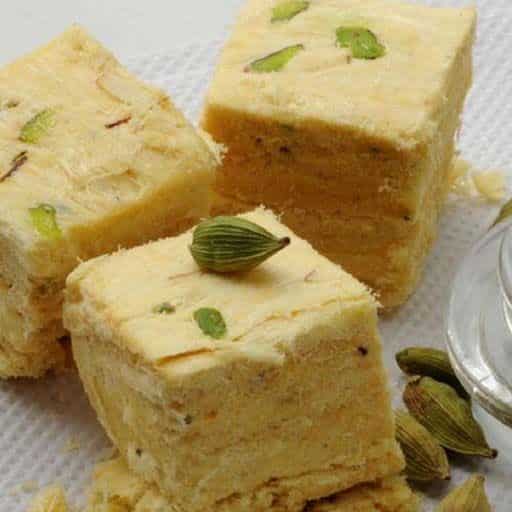
Flaky, light, and melt-in-the-mouth, Soan papdi is one of the most recognisable Indian sweets sold during Diwali and festive celebrations. Made with gram flour, sugar, flour, and ghee, this cube-shaped mithai is known for its delicate layered texture that breaks into thin flaky strands. Its light texture and rich buttery flavour make soan papdi one of the most popular festive sweets for gifting and celebrations.
Key Ingredients: Gram flour, flour, sugar, ghee, cardamom, pistachios
Recipe:
- Roast gram flour and flour in ghee on low heat until aromatic.
- Prepare sugar syrup separately until it reaches a one-thread consistency.
- Combine the syrup with the roasted flour mixture while still hot.
- Stretch, pull, and fold the mixture repeatedly for 10–15 minutes to create thin flaky layers.
- Press the mixture evenly into greased trays while still warm.
- Allow it to cool and set before cutting into cubes.
- Garnish with pistachios or almonds before serving.
Soan papdi remains one of the most popular festive mithais because of its flaky texture and long shelf life. If you enjoy dry Indian sweets, you can also explore desserts like kaju katli, Mysore Pak, and dry fruit laddu for similarly rich festive flavours.
20. Mishti Doi
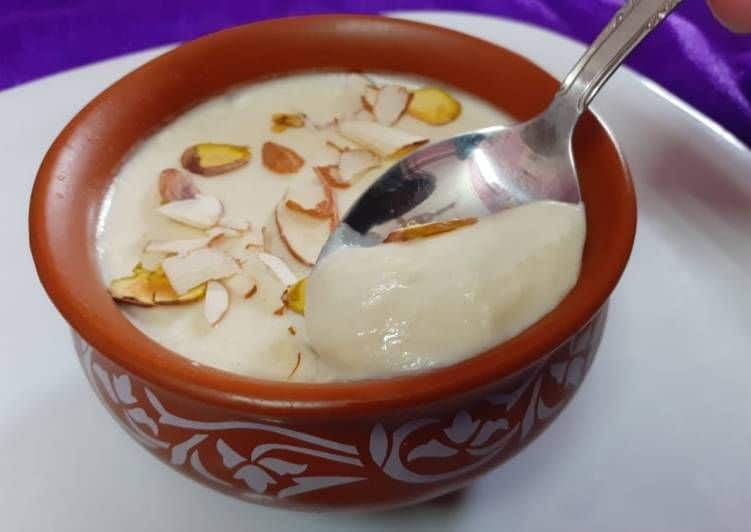
Creamy, smooth, and lightly caramelised, mishti doi is a traditional Bengali dessert made from sweetened fermented yoghurt. Unlike heavily rich or syrup-soaked sweets, mishti doi has a mild sweetness and chilled creamy texture that makes it especially popular after meals and during festivals. Traditionally served in clay pots, this dessert is known for its subtle caramel flavour and soft, refreshing consistency.
Key Ingredients: Milk, yoghurt, jaggery or sugar, dry fruits
Recipe:
- Boil 1 litre of milk, then simmer for 20–30 minutes, until slightly thickened.
- Prepare caramelised sugar or melted jaggery separately and mix it into the milk.
- Allow the milk to cool until warm, not hot.
- Add yoghurt culture and mix gently without over-stirring.
- Pour into clay pots or bowls and leave undisturbed in a warm place for 6–8 hours.
- Chill completely before serving.
Mishti doi remains one of the most popular Bengali desserts because of its creamy texture and lightly caramelised flavour. If you enjoy chilled milk-based sweets, you can also explore desserts like shrikhand, rasmalai, and sandesh for similarly rich and refreshing flavours.
21. Shrikhand
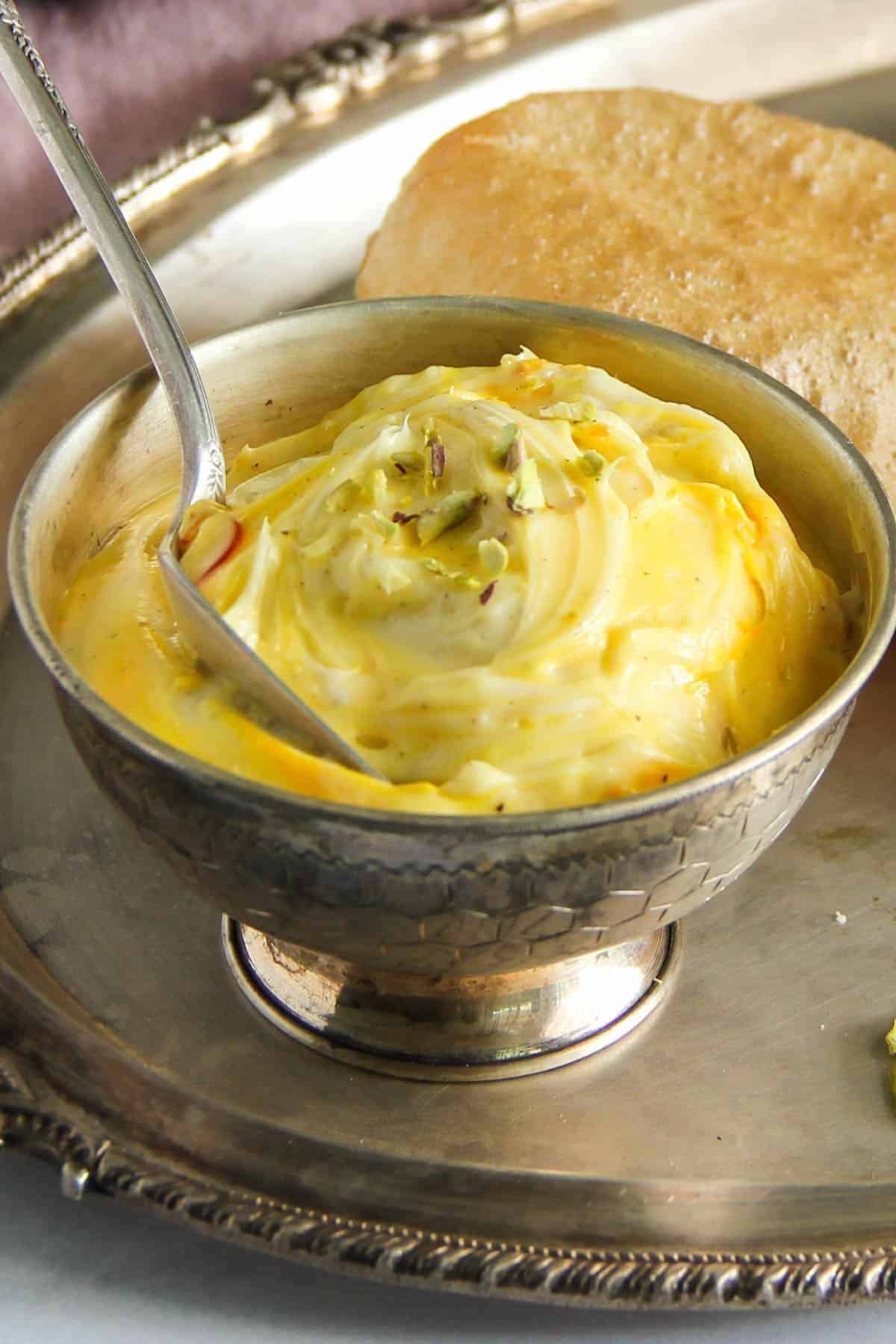
Thick, creamy, and lightly flavoured with cardamom and saffron, Shrikhand is a traditional Maharashtrian and Gujarati dessert made using strained yoghurt. Unlike heavy milk sweets or syrup-soaked mithai, shrikhand has a chilled, smooth texture that feels lighter and more refreshing. Its rich creamy consistency and mild sweetness make it especially popular during summer festivals and festive meals.
Key Ingredients: Hung curd, sugar, saffron, cardamom, pistachios
Recipe:
- Hang 1 litre of fresh yoghurt in a muslin cloth for 6–8 hours or overnight to remove excess water.
- Transfer the thick hung curd to a bowl and whisk until smooth.
- Add sugar gradually and mix until fully combined.
- Mix in saffron soaked in warm milk along with cardamom.
- Chill for 1–2 hours before serving for a thicker texture.
- Garnish with pistachios or almonds before serving.
Shrikhand remains one of the most popular chilled Indian desserts because of its creamy texture and refreshing flavour.
22. Rabri
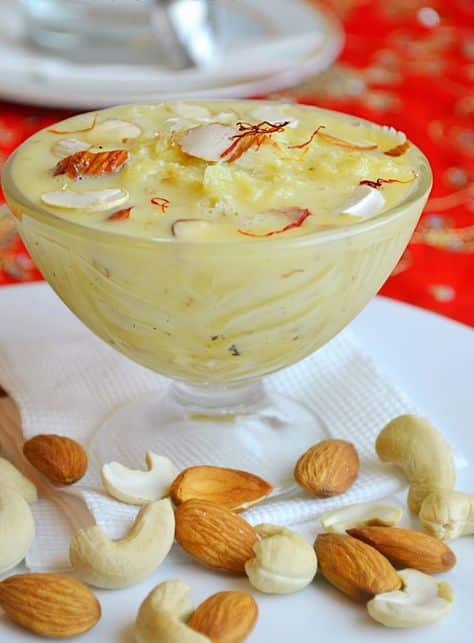
Thick, creamy, and deeply rich, rabri is a traditional Indian dessert made by slowly reducing full-fat milk until layers of cream form naturally. Popular during festivals and weddings, rabri is known for its dense texture and concentrated milk flavour. It is often served on its own or paired with sweets like jalebi and malpua, making it one of the richest milk-based Indian desserts.
Key Ingredients: Milk, sugar, saffron, cardamom, almonds, pistachios
Recipe:
- Boil 1.5–2 litres of full-fat milk in a wide heavy-bottomed pan.
- Simmer on low heat for 45–60 minutes, gently collecting the cream layers along the sides of the pan.
- Continue reducing the milk until nearly half the quantity remains.
- Add sugar, saffron, and cardamom for flavour.
- Gently fold the collected cream layers back into the thickened milk.
- Garnish with almonds and pistachios before serving warm or chilled.
Rabri remains one of the richest milk-based Indian desserts because of its layered creamy texture and deep caramelised milk flavour. If you enjoy festive milk sweets, you can also explore desserts like rasmalai, kheer, and malpua for similarly rich traditional flavours.
23. Malpua
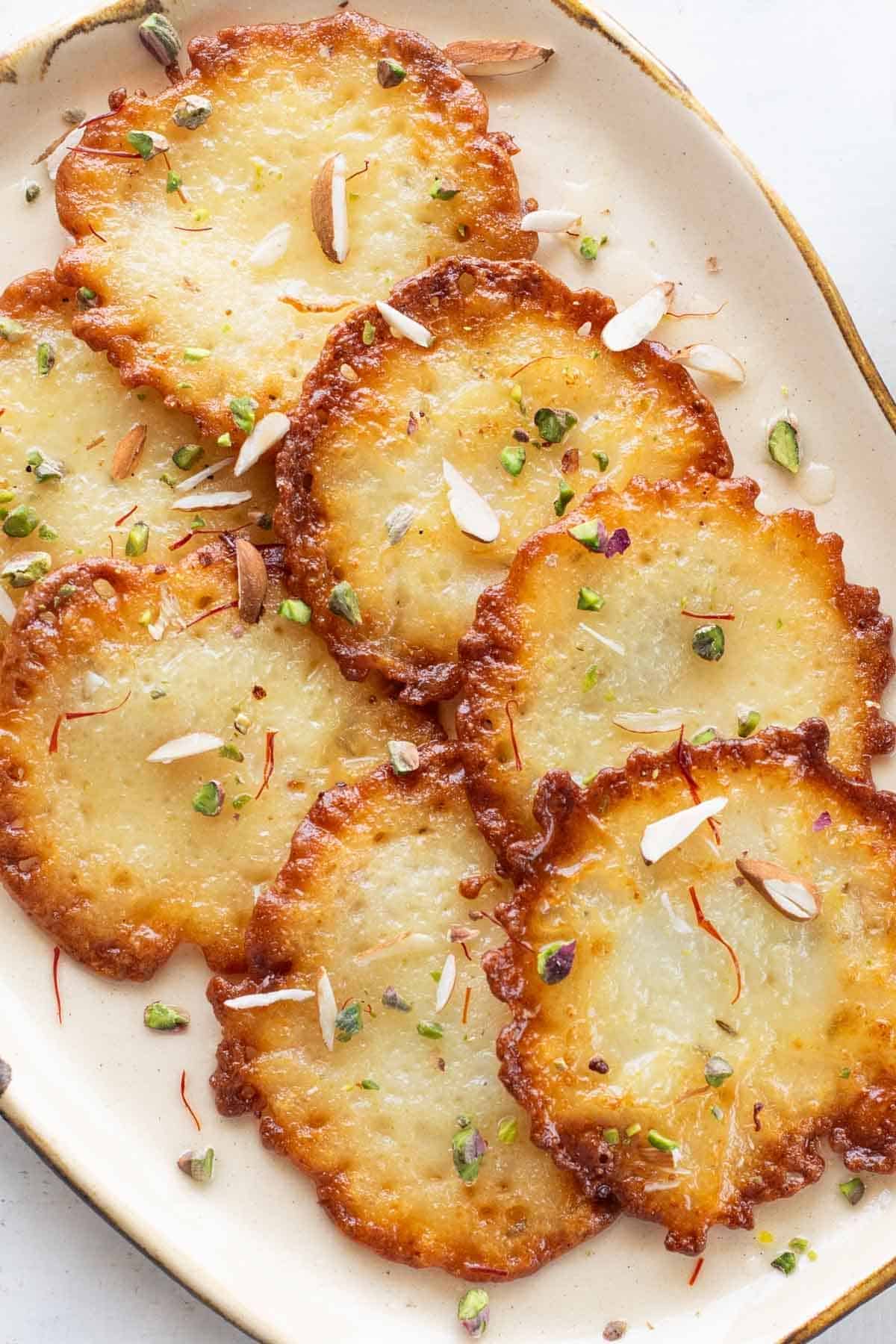
Soft in the centre and lightly crisp around the edges, Malpua is a traditional Indian dessert often served during Holi and festive celebrations. These syrup-soaked pancakes are made with flour, milk, and aromatic spices like fennel or cardamom, giving them a rich flavour and soft texture. Some versions are thin and crisp throughout, while others are thicker and softer inside. Malpua is commonly paired with chilled rabri for extra richness.
Key Ingredients: Flour, milk, sugar, fennel seeds, cardamom, ghee
Recipe:
- Prepare a smooth batter using flour, milk, sugar, and fennel or cardamom.
- Rest the batter for 20–30 minutes for a softer texture.
- Pour small portions into medium-hot ghee or oil to form small pancakes.
- Fry until the edges turn golden and lightly crisp.
- Dip the fried malpuas briefly into warm sugar syrup.
- Serve warm, often topped with chilled rabri.
Malpua remains a festive favourite because of its soft texture and rich syrup-coated flavour.
24. Payasam (Kheer)
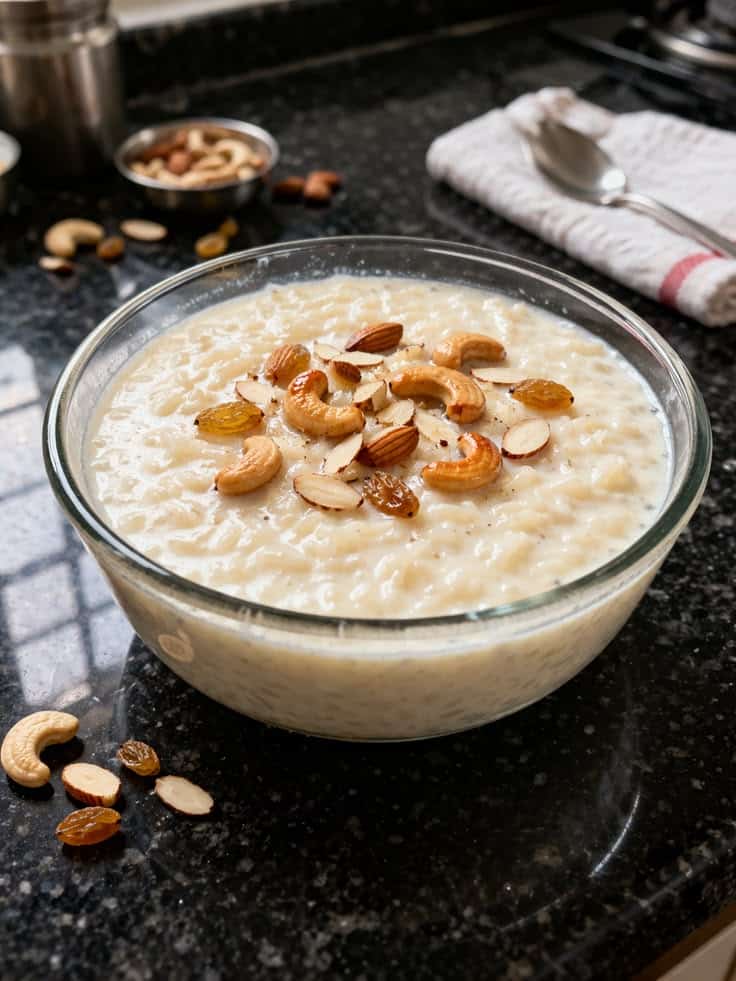
Creamy, comforting, and lightly flavoured with cardamom, payasam, also known as Kheer, is one of the most traditional Indian desserts served during festivals, temple offerings, and family celebrations. Made by slowly cooking milk with rice, vermicelli, or lentils, this dessert is known for its smooth texture and mild sweetness. Different regional variations may use jaggery or coconut milk, giving payasam a richer and more distinctive flavour.
Key Ingredients: Milk, rice or vermicelli, sugar or jaggery, cardamom, cashews, raisins
Recipe:
- Boil 1 litre of milk in a heavy-bottomed pan and simmer on low heat.
- Add washed rice or roasted vermicelli, then cook slowly for 35–45 minutes, until soft.
- Stir regularly to prevent the milk from sticking to the bottom.
- Add sugar or jaggery along with cardamom for flavour.
- Roast cashews and raisins separately in ghee, then mix them into the dessert.
- Serve warm or chilled based on preference.
Payasam remains one of the most comforting Indian desserts because of its creamy texture and slow-cooked flavour.
25. Cham Cham
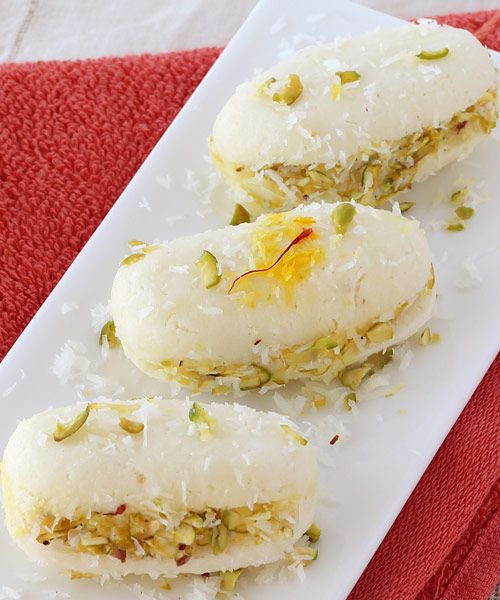
Soft, juicy, and delicately sweet, Cham cham is a traditional Bengali dessert made from fresh chenna cooked in sugar syrup. Known for its smooth texture and oval shape, this sweet is often coated with coconut flakes or garnished with dry fruits for extra flavour. Its soft texture and light syrupy sweetness make cham cham one of the most popular milk-based sweets served during festivals and celebrations.
Key Ingredients: Chenna (fresh paneer), sugar, cardamom, coconut, saffron
Recipe:
- Prepare fresh chenna by curdling 1 litre of milk and draining the whey completely.
- Knead the chenna for 8–10 minutes until smooth and soft.
- Shape the mixture into small oval pieces without cracks.
- Boil sugar and water to prepare light syrup, then cook the chenna pieces for 12–15 minutes until soft and spongy.
- Allow the sweets to cool slightly while absorbing the syrup.
- Garnish with grated coconut, saffron, or pistachios before serving.
Cham cham remains one of the most-loved Bengali sweets because of its soft texture and juicy, syrup-filled flavour.
Conclusion
Indian sweets are much more than desserts. They are deeply connected to celebrations, traditions, festivals, and family gatherings across the country. From rich milk-based mithai and syrup-soaked classics to dry fruit sweets and regional specialities, every dessert reflects a different part of India’s food culture.
Whether you prefer soft rasmalai, flaky soan papdi, rich gajar ka halwa, or festive modaks, exploring Indian sweets is one of the best ways to experience the country’s culinary diversity. With so many flavours, textures, and regional varieties available, there is always a new Indian dessert worth trying.
Frequently Asked Questions
What are the top 10 most popular Indian sweets everyone should try?
The top 10 most popular Indian sweets include gulab jamun, rasmalai, jalebi, kaju katli, laddu, rasgulla, Mysore Pak, gajar ka halwa, soan papdi, and modak, each known for its unique flavour, texture, and festive popularity
What are some easy Indian sweet recipes to make at home for beginners?
Beginners can easily make Indian sweets like kheer, coconut laddu, peda, shrikhand, and gajar ka halwa at home because they require simple ingredients, basic cooking techniques, and minimal preparation time compared to more complex traditional mithai recipes.
What are the best Indian desserts to serve at a wedding?
Popular Indian wedding desserts include gulab jamun, rasmalai, jalebi with rabri, gajar ka halwa, kulfi, and kaju katli because they are rich, festive, easy to serve in large gatherings, and widely loved across different age groups.
Which regions of India are known for their unique types of sweets?
West Bengal is famous for rasgulla and sandesh, Rajasthan for ghewar, Karnataka for Mysore Pak, Maharashtra for modak, Tamil Nadu for adhirasam, and Punjab for jalebi, with each region offering distinct flavours and traditional dessert styles.
Which Indian desserts are considered the best for gifting?
Kaju katli, soan papdi, dry fruit laddu, Mysore Pak, and anjeer cutlet are considered some of the best Indian desserts for gifting because they have a longer shelf life, travel well, and are popular during festivals and celebrations.
Which Indian sweets are most loved around the world?
Gulab jamun, jalebi, rasmalai, kaju katli, and rasgulla are among the most loved Indian sweets worldwide because of their rich flavour, unique texture, and strong popularity during festivals, weddings, and Indian celebrations globally.
Good list, but a few misses. The ever popular Bengali sandesh, sohan halwa, kalakand and dhodha should have also got a mention in this list.
These are some of the most legendary dishes besides the list mentioned above.