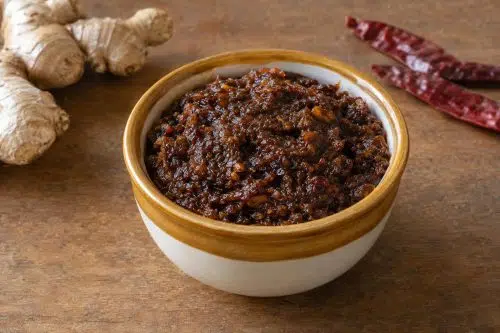
Puli Inji is a South Indian ginger and tamarind relish that sits somewhere between a pickle and a chutney. Also known as inji puli, it is made by grinding fresh ginger with thick tamarind extract and cooking that paste down with jaggery, asafoetida and a freshly ground spice powder. The result is a thick, dark condiment with a strong ginger bite, a sour tamarind base and a faint sweetness from the jaggery. It is a regular fixture in Kerala-style meals and is commonly served alongside tamarind-based dishes, idli, dosa and curd rice.
About the Recipe
This recipe uses a two-stage grinding method. The dry red chillies, mustard seeds and fenugreek seeds are fried briefly in a small amount of oil, then ground to a fine powder. The ginger is then ground separately with tamarind extract and salt into a smooth paste, with no added water.
Keeping water out of both grinds matters because it directly affects how long the finished relish stays usable. The paste is cooked in gingelly oil with jaggery and asafoetida until it thickens. Gingelly oil holds up well to the acidity of the tamarind without turning bitter.
Why You Will Love This Recipe
The strongest reason to make this at home is control over the ginger-to-tamarind ratio. Store-bought versions are often too mild or too sour, and the fresh ginger punch is usually the first thing to go. Here, 125 g of ginger goes in uncooked, so the flavour is direct and sharp.
The recipe also comes together with very few steps and no special equipment beyond a small grinder. Once stored in a ceramic or glass container, it is ready to use whenever you need it, and the flavour settles and rounds out after a day.
Cooking Tips
The most common beginner mistake is adding water while grinding the ginger and tamarind paste. This shortens the shelf life noticeably, so use only the tamarind extract as the liquid.
Keep the flame low once the paste goes into the pan. High heat will cause the tamarind to stick and scorch before the paste has had time to cook through. Stir regularly and watch for the paste to pull away from the sides of the pan and darken slightly. That is the sign it is ready.
Top Tips
- Do not add water when grinding the ginger with tamarind extract. The extract itself provides enough moisture to get a smooth paste.
- Fry the mustard seeds, fenugreek seeds and dry red chillies only for a minute or two. Over-frying fenugreek makes it bitter and that bitterness carries into the finished relish.
- Use thick tamarind extract, not thin or watery tamarind water. If your extract is thin, reduce it in a pan first before adding it to the grinder.
- Simmer the paste on a low flame and stir often. The jaggery makes it prone to sticking at the base of the pan.
- Store in a ceramic or glass container. Acidic tamarind can react with metal containers over time and affect the taste.
- The relish tastes better the next day once the ginger, tamarind and jaggery have had time to settle together.
Serving and Storing Suggestions
Serve Puli Inji as a side condiment with idli, dosa or curd rice. It also works well alongside a simple rice and sambar meal as a sharp contrast.
Store it in a clean, dry ceramic or glass jar with a tight lid. Kept at room temperature, it stays good for several days. Refrigerating it extends the shelf life further. Always use a dry spoon when serving to avoid introducing moisture into the jar.
Similar Recipes
- Tamarind Idiyappam (Puli Idiyappam)
- Temple Puliyodharai (Kovil Puliyodharai)
- Vendakkai Puli Kozhambu
- Pulippu (Tamarind) Kootu
Nutrient Benefits
Ginger provides manganese and small amounts of vitamin B6 and magnesium. Tamarind contributes some iron and potassium. Fenugreek seeds add a modest amount of dietary fibre and iron. Gingelly oil is a source of vitamin E and unsaturated fats. This relish is used in small quantities, so the contribution per serving is modest, but the ingredients are all whole and minimally processed.
Puli Inji
Ingredients
- 125 g Ginger
- 1 tsp Jaggery
- 1/4 tsp Asafoetida Powder
- 2 to 3 tbsp Thick Tamarind Extract
- 2 tbsp Gingelly Oil
- 2 to 3 Dry Red Chillies
- 1/2 tsp Mustard Seeds
- 1/2 tsp Fenugreek Seeds
- Salt as per taste
Instructions
- Heat 1/2 tsp oil in a pan.
- Fry the dry red chillies, mustard seeds and fenugreek seeds for a minute or two.
- Remove and grind them to a fine powder.
- Peel and finely chop the ginger.
- Combine this with salt, tamarind extract and grind to a thick, smooth paste, without adding water.
- Heat the remaining oil in the pan.
- Add the ground ginger paste, jaggery, asafoetida powder and chilli powder.
- Simmer over low flame until thickened.
- Remove and store it in a ceramic (or a bottle container).
- Serve with idli, dosa or curd rice.
Notes
Sign up for our newsletter
Add Awesome Cuisine as a Preferred Source

Frequently Asked Questions
What is the difference between Puli Inji and Inji Puli?
They are the same relish. Puli means tamarind and inji means ginger in Tamil and Malayalam. The word order changes depending on regional or personal preference. Both names refer to this ginger and tamarind condiment cooked with jaggery and spices.
Can I use regular cooking oil instead of gingelly oil?
Gingelly oil, which is sesame oil, is the traditional choice and it gives the relish a distinct flavour that regular cooking oil cannot replicate. If you do not have it, a neutral oil such as refined sunflower oil can be used, but the finished flavour will be noticeably different and somewhat flat.
Why should I not add water when grinding the ginger paste?
Water reduces the shelf life of the relish significantly. Since this is meant to be stored and used over several days, keeping the moisture content low is important. The tamarind extract already provides enough liquid to bring the ginger to a smooth paste in a grinder, so no additional water is needed.
How do I know when the paste is cooked enough?
Watch for the paste to thicken and pull away from the sides and base of the pan as you stir. The colour will deepen slightly and the oil will begin to separate at the edges. At that point, the moisture has cooked off sufficiently and the relish is ready to be removed from the heat.
Can Puli Inji be made ahead for an occasion like Onam?
Yes, it is well suited to being made a day or two ahead. The flavour actually improves as the ginger, tamarind and jaggery have time to come together in the jar. Store it in a clean, dry ceramic or glass container at room temperature or in the refrigerator, and use a dry spoon each time you serve it.