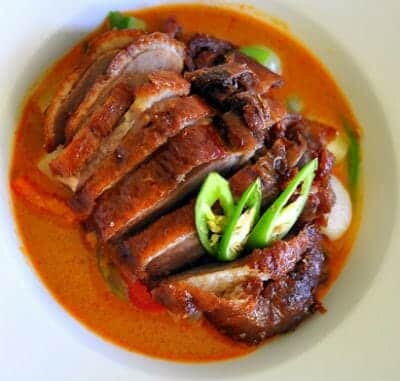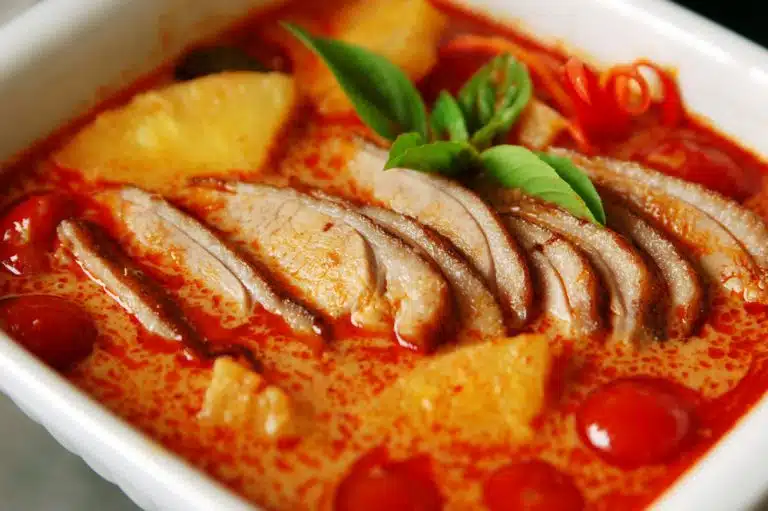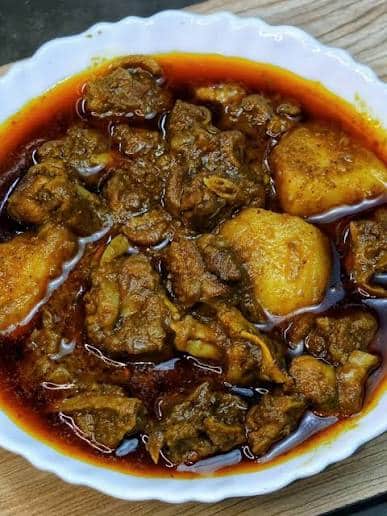
Duck Curry with Coconut Milk is a dish I learned from my mother in law during my first visit to Kerala. She made it for Sunday lunch, and I remember the kitchen smelling of cinnamon and curry leaves by mid morning. Duck was not something I grew up eating in Mumbai, so the richness of the meat surprised me. It has more fat than chicken, which means the curry tastes deeper and coats the rice better.
I make this now whenever I find good duck at the market, usually once every couple of months. The tempering step at the end is something I always do separately because it gives the curry a freshness that you lose if you add everything at once.
About the Recipe
This recipe takes about an hour and a half from start to finish, with most of that time spent simmering the duck until it softens. The ingredients are easy to find if you shop at an Indian grocer, though duck itself may require a trip to a butcher or a well stocked supermarket. I make this when I have time on a weekend or when guests are coming and I want something that feels special without being fussy. The spice paste does most of the work, and the coconut milk smooths everything out at the end.
Why you will love this recipe
The coconut milk goes in after the duck is almost cooked, which means it does not curdle or separate the way it can when added too early. That gives you a smooth, thick gravy that clings to the meat. The tempering with mustard seeds and curry leaves adds a sharp, nutty layer right before serving, which balances the richness of the duck fat.
I like how the vinegar works with the spices to cut through the heaviness without making the curry taste sour. It is a dish that holds up well if you need to make it a few hours ahead, which is useful when you are cooking for more than two people.
Cooking Tips
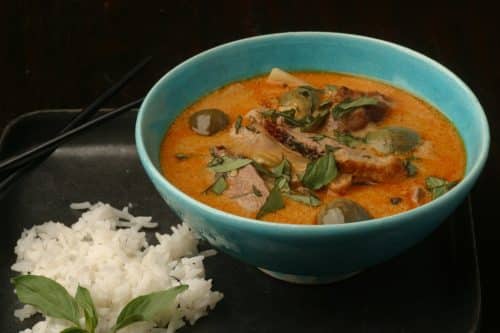
Duck releases a lot of fat as it cooks, so do not worry if the pan looks oily halfway through. You can skim some off before adding the coconut milk if you prefer a lighter gravy. The most common mistake is adding the coconut milk too early or letting it boil hard, which causes it to split. Once you pour it in, keep the heat low and let it simmer gently.
If the duck is still tough after thirty minutes, add a splash more water and cover the pan again. Some cuts take longer than others, especially if the pieces are large.
Top Tips
- Use duck legs or thighs if you can, as they stay tender during long cooking. Breast meat can dry out.
- Grind the spice paste smooth with just enough water. A coarse paste will not coat the duck evenly.
- Simmer on low heat after adding coconut milk. High heat will cause it to separate and look grainy.
- If you cannot find small onions for tempering, use shallots or one regular onion chopped fine.
- This curry tastes better the next day once the flavors settle, so consider making it a few hours ahead.
Serving and Storing Suggestions
This recipe serves four people with steamed rice or appam. Prep time is about fifteen minutes, and cooking takes around ninety minutes. Serve the curry hot, with the tempering added just before bringing it to the table. Leftovers keep well in the fridge for up to three days.
Reheat gently on low heat, adding a tablespoon of water if the gravy has thickened too much. The flavors deepen overnight, so the second day is often the best. Do not freeze this curry, as the coconut milk texture changes once thawed.
Similar Recipes
- Chicken Chettinad
- Kerala Fish Curry
- Mutton Coconut Curry
- Goan Pork Vindaloo
- Malabar Prawn Curry
Nutrient Benefits
Duck is high in protein and contains iron, which supports energy levels and healthy blood. The coconut milk provides medium chain fatty acids that are easier to digest than other fats. Ginger and garlic offer anti inflammatory properties, while turmeric adds antioxidants. Black pepper helps with nutrient absorption, especially when paired with turmeric. This is a rich dish, so portion sizes matter, but the spices and aromatics bring more than just flavor to the table.
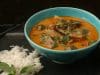
Duck Curry with Coconut Milk
Ingredients
- 500 gms Duck (cut into bite sized pieces, washed and dr)
- 1 tbsp Oil
- 1 Onion (sliced)
- Ginger (chopped)
- 5 to 6 cloves Garlic (chopped)
- 3 Green Chillies (slit)
- 2 tsp White Vinegar
- 1/2 tsp Salt
- 1 cup Coconut Milk (thick)
Grind to a fine paste:
- Cinnamon (1 two inch piece, broken into pieces)
- 2 tto 4 Cloves
- 2 White Cardamoms (peeled)
- 1 tsp Coriander Powder
- 1 tsp Red Chilli Powder
- 1/4 tsp Turmeric Powder
- 1/4 tsp Black Pepper Powder
- 1 tbsp Water
For Tempering:
- 1/2 tsp Ghee
- 1/2 tsp Mustard Seeds
- 2 Small Onions (chopped)
- Curry Leaves (few)
Instructions
- Heat oil in a pan.
- Add sliced onions, ginger, garlic and green chillies.
- Fry till onions turn translucent.
- Add duck, vinegar, salt, ground paste and 1/2 cup of water.
- Cover pan with a lid.
- Cook over low heat till duck is half cooked.
- Pour in coconut milk and bring to a boil.
- Lower heat and simmer gently till duck is cooked and gravy thickens.
- Heat ghee for tempering in a small pan.
- Fry the mustard seeds till it starts spluttering.
- Add the remaining tempering ingredients and fry till small onions turn brown.
- Pour this into curry and mix well.
- Serve with rice.
Sign up for our newsletter
Add Awesome Cuisine as a Preferred Source

Frequently Asked Questions
Can I use chicken instead of duck if I cannot find it?
Yes, chicken works, but reduce the cooking time. Chicken thighs will be tender in about twenty to twenty five minutes after adding the spice paste. Duck takes longer because the meat is denser and benefits from slow simmering.
My coconut milk split and looks curdled. Can I fix it?
Once it splits, you cannot fully reverse it, but you can minimize the appearance by stirring in a tablespoon of fresh coconut milk off the heat. Next time, add it on low heat and avoid boiling the curry hard after the coconut milk goes in.
The curry tastes too rich and heavy. What went wrong?
Duck releases a lot of fat, which makes the curry rich. Skim off excess oil from the surface before adding coconut milk. You can also add a squeeze of lime juice at the end to cut through the richness.
How do I know when the duck is fully cooked?
The meat should pull apart easily with a fork and feel tender when you bite into it. If it still feels chewy after forty minutes of simmering, add more water, cover, and cook for another ten to fifteen minutes.
Can I make this curry without vinegar?
Vinegar adds acidity and helps tenderize the duck, but you can use lime juice instead. Add it at the same stage, using about one and a half tablespoons of lime juice in place of the two teaspoons of vinegar.