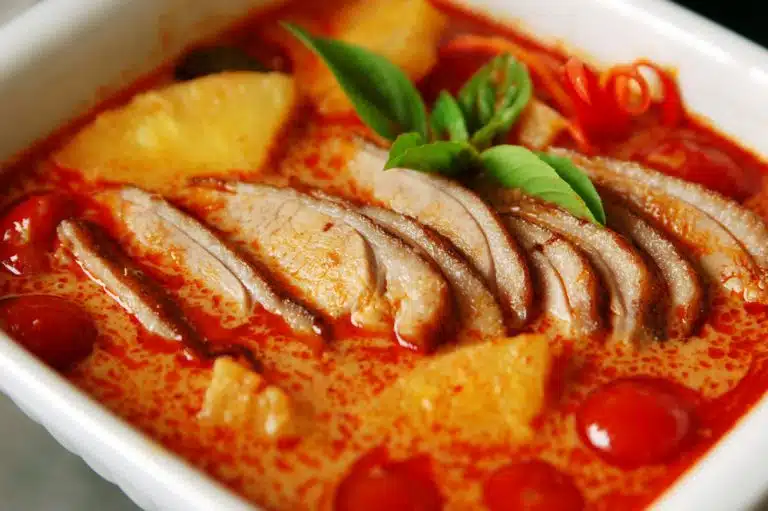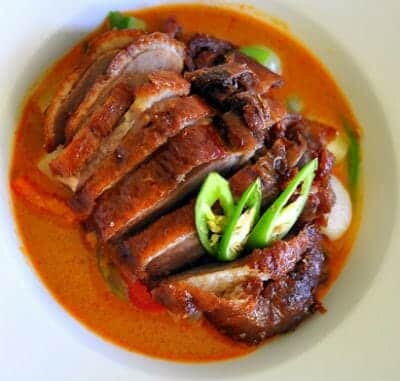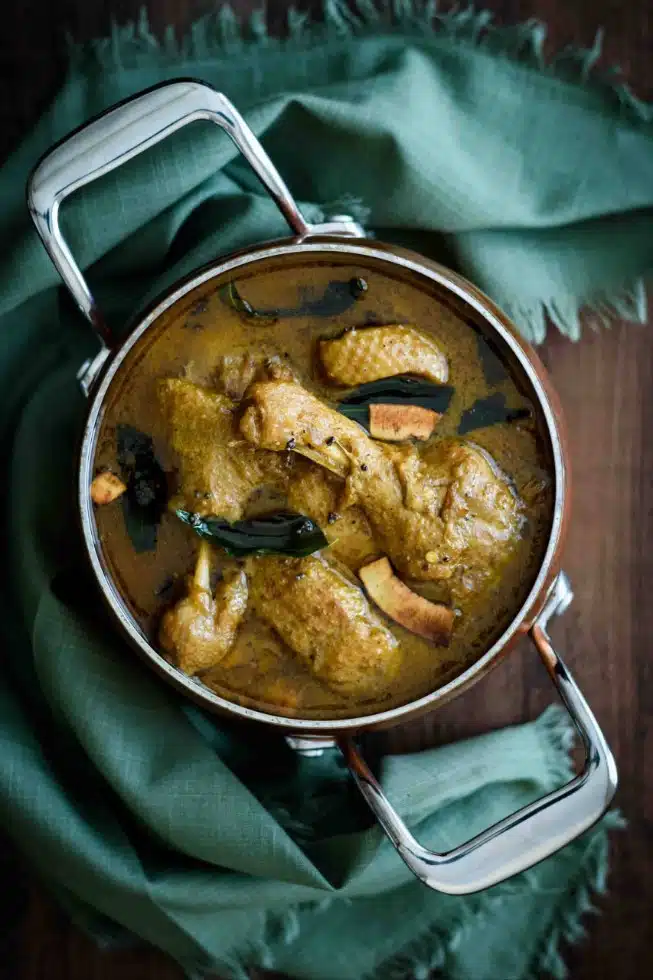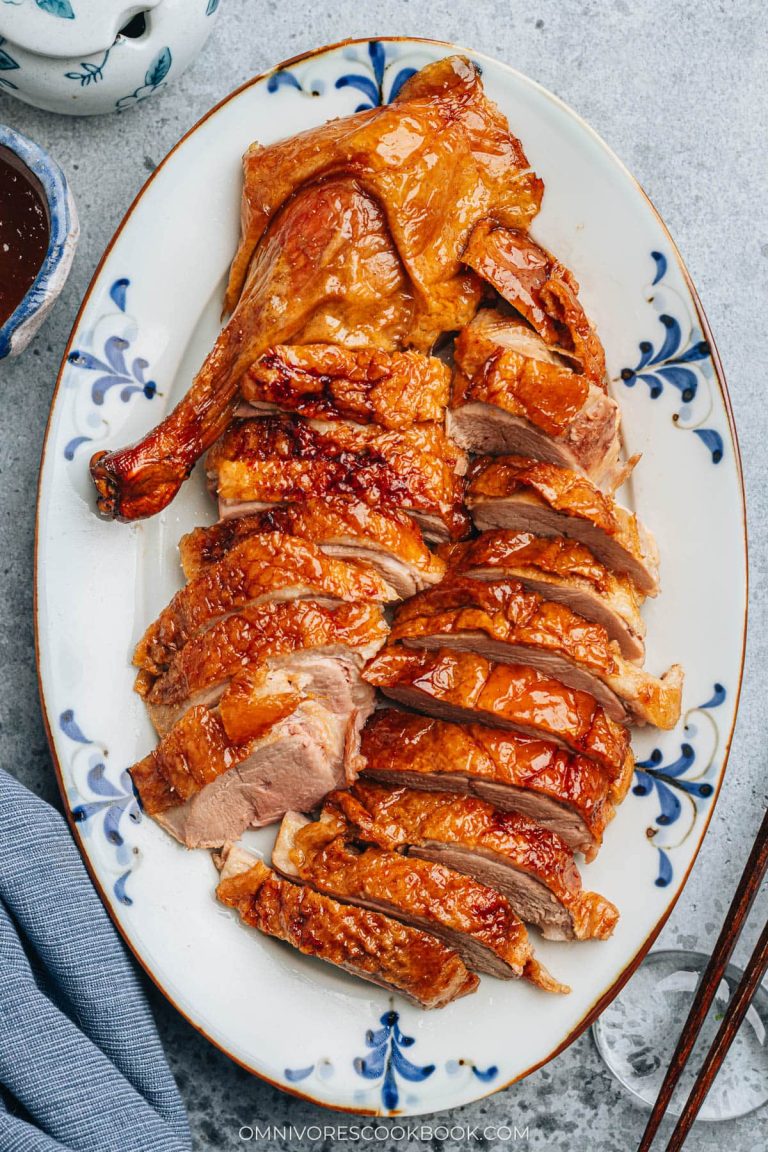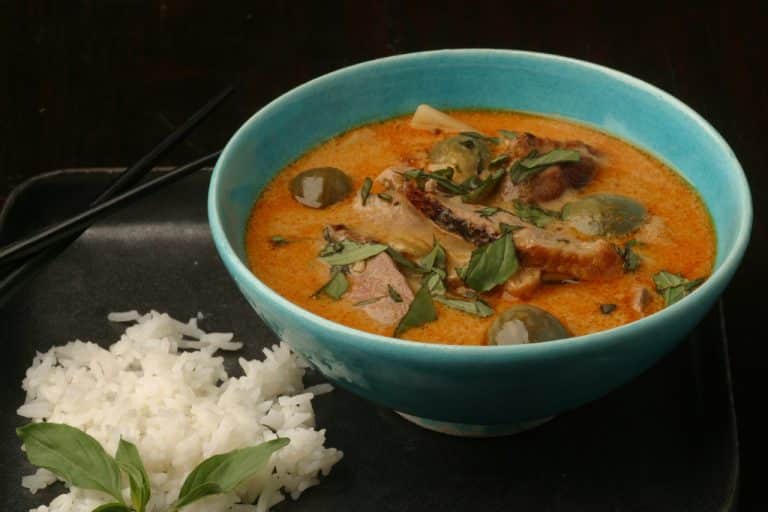
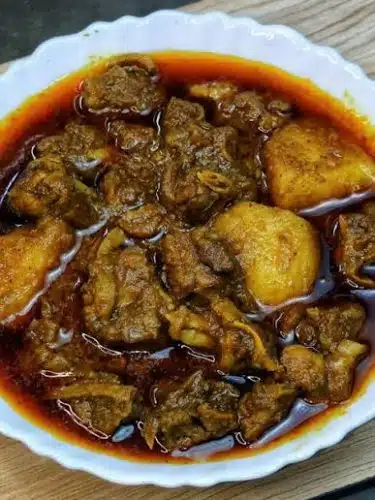
Kerala Style Duck Roast has been the subject of a low-grade argument in my household for at least five years. My husband insists his family version uses no coconut milk at all — just the reduced spice gravy clinging to the duck. His aunt made it that way, dark and dry, almost like a fry.
My version, which I learned from a cookery column torn out of a magazine and cooked probably forty times since, goes in the other direction. The coconut milk goes in right at the end, off the heat, so it barely cooks through and leaves a faint creaminess rather than a thick curry base. That last step is what keeps me coming back to this recipe. It changes the texture completely, and the moment that cup of coconut milk hits the hot pan, the whole kitchen smells like something between a Christian household feast and a Sunday that is going to stretch long and slow.
About the Recipe
Making this takes roughly two hours from start to finish, including the time the duck spends cooking in its own spiced liquid. Most of the ingredients — coriander powder, chilli powder, cinnamon, cloves, cardamom — sit in the average South Indian kitchen already.
The vinegar is easy to find in any general store, and the duck itself is available at most wet markets or butcher shops in Kerala and in cities with a good meat section. I make this on days when I know I have time on my hands and someone worth cooking for — a family gathering, a Sunday lunch that deserves the effort, or anytime I want the house to smell extraordinary for two hours straight.
Why you will love this recipe
The spice paste does a lot of work here. Grinding whole peppercorns, aniseed, cinnamon, cloves, and cardamom together with garlic gives you something far more complex than any pre-made masala powder, and it coats the duck deeply during the initial cooking.
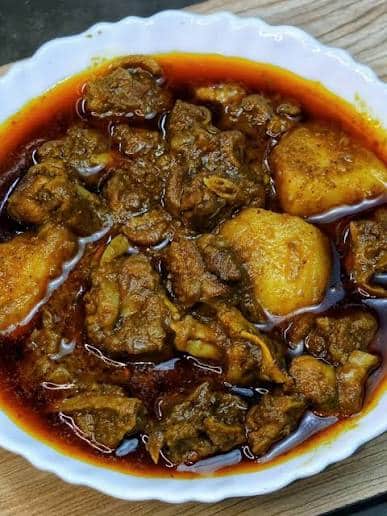
Because the duck cooks covered in the spiced water, the meat stays moist while the flavour concentrates in the liquid — that same liquid becomes the gravy later, so nothing is wasted. The fried potatoes soaking up some of that gravy when you serve them alongside is, honestly, one of the better things about this dish. The layering of frying, braising, and finishing with coconut milk gives you three distinct textures in a single plate: tender duck, lightly crisped skin, and soft potato with that faint coconut edge underneath everything.
Cooking Tips
The most common beginner mistake here is not separating the duck from the gravy before frying. If you try to fry wet duck pieces, they will steam instead of sear and you will lose that slightly crisped exterior. Pat the cooked duck dry before it goes into the hot oil. Another thing — do not add the coconut milk while the pan is still on the flame.
High heat will split it and you will end up with a greasy, grainy finish rather than the smooth, mellow coating the recipe is going for. Pull the pan off the heat, wait thirty seconds, then pour.
Top Tips
- Grind the whole spices very fine. A coarse paste will leave gritty bits in the gravy and the spices will not distribute evenly across the duck.
- Soak the sliced onion in salt water for at least ten minutes and squeeze it properly dry before frying — this keeps it from releasing water and going soggy in the pan.
- Parboil the potatoes just until a knife slides in with a little resistance. Fully cooked potatoes will fall apart when you fry them in the ghee.
- Use a heavy-bottomed pan or a wide kadai for frying the duck pieces. The duck needs space and steady heat; a crowded pan will lower the temperature and the pieces will not colour properly.
- If you are making this ahead, hold off on adding the coconut milk until you reheat and are ready to serve. It keeps the texture cleaner after storage.
Serving and Storing Suggestions
Serves four to six people. Total time from prep to table is about two hours, with active cooking time around one hour. Serve with appam, Kerala parotta, or plain white rice. Arrange the fried potatoes around the duck when you plate it so they pick up the gravy from the bottom of the serving dish.
Leftovers keep well in the refrigerator for up to two days in a sealed container. Reheat gently on a low flame and add a small splash of water if the gravy has thickened too much overnight.
Similar Recipes
- Kerala Chicken Roast
- Chettinad Duck Curry
- Kerala Beef Fry
- Goan Duck Vindaloo
Nutrient Benefits
Duck is higher in fat than chicken but most of that fat sits under the skin rather than running through the meat, so it renders out during cooking. The whole spices in this recipe — cinnamon, cardamom, cloves, and pepper — contain compounds known to support digestion, which is useful given how rich this dish is. Coconut milk adds medium-chain fatty acids, and the potatoes contribute a decent amount of potassium and fibre to what is otherwise a high-protein plate.
Kerala Style Duck Roast
Ingredients
- 1 kg Duck
- 2 tbsp Coriander Powder
- 2 tsp Chilli Powder
- 1/2 tsp Turmeric Powder
- 1 tsp Peppercorns
- 1 tsp Aniseed
- Cinnamon (2 inch piece)
- 9 Cloves
- 2 Cardamom Pods
- 8 cloves Garlic
- Ginger
- 1 tbsp Vinegar
- Salt to taste
- 2 cups Hot Water
- 3 Potatoes (parboiled and quartered lengthwise)
- 2 tbsp Ghee
- 1/4 cup Refined Vegetable Oil
- 1/2 cup Onion (sliced, soaked in salt water and squeezed dry)
- 1 cup Thick Coconut Milk
Instructions
- Wash and clean the duck.
- Cut into large pieces.
- Grind coriander powder, chilli powder, turmeric powder, peppercorns, aniseed, cinnamon, cloves, cardamom and garlic into a fine paste.
- Add vinegar and salt.
- Apply this paste on the duck pieces.
- Add 2 cups of hot water and cook the duck, covering the pan with a tigh-fitting lid.
- When the duck is cooked, separate the pieces from the gravy.
- Fry the potatoes in ghee and oil. Drain and keep aside.
- In the same pan, fry onion and keep aside.
- Fry the cooked pieces of duck in the remaining oil, adding more if necessary. Drain and keep aside.
- Drain the oil from the pan.
- Pour the masala gravy into the same pan and add the fried onion.
- When this boils, add the fried pieces of duck and cook until all the gravy has been absorbed.
- Add the coconut milk.
- Remove from fire and serve the roast with the potatoes around it.
Sign up for our newsletter
Add Awesome Cuisine as a Preferred Source

Frequently Asked Questions
My duck turned out tough even after cooking it covered with water. What went wrong?
Duck needs low, steady heat and enough time to break down properly. If your flame was too high, the water would have evaporated quickly and the duck would have cooked unevenly. Keep the heat at medium-low once it comes to a boil, and check around the forty-five minute mark. If the water has reduced too fast, add a small amount of hot water and continue cooking with the lid on.
Can I use chicken instead of duck for this recipe?
Yes, though the cooking time changes considerably. Chicken pieces will cook through in twenty to twenty-five minutes rather than forty-five to sixty. The flavour will be lighter since chicken has less fat than duck, so the spice paste will be more prominent. Everything else in the recipe stays the same.
The coconut milk looked curdled when I added it. Is it ruined?
This usually happens when the pan is still on high heat or the coconut milk goes in while the contents are actively boiling. Take the pan completely off the flame, let it settle for thirty seconds, then add the coconut milk slowly while stirring. If it has already split, a small amount of fresh coconut milk added off the heat and stirred in gently can sometimes bring it back to a smoother consistency.
How fine does the spice paste need to be, and can I use a ready-made masala instead?
The paste should be genuinely smooth — when you rub it between your fingers, it should feel more like a thick cream than a rough powder. A grainy paste does not coat the duck evenly and you will get uneven flavour. A ready-made garam masala will not give the same result because the balance of spices here is specific, particularly the aniseed and the high quantity of cloves. If you are short on time, a Kerala-specific meat masala powder comes closer than a generic garam masala, but the fresh ground paste makes a real difference.
Can I make this the night before a gathering?
Yes, and it actually tastes better the next day once the spices have had more time to settle into the meat. Make the full recipe up to the point of adding the coconut milk, then refrigerate the duck and gravy separately. When you are ready to serve, reheat the gravy, add the duck pieces to warm through, then take it off the heat and stir in the coconut milk at that point.