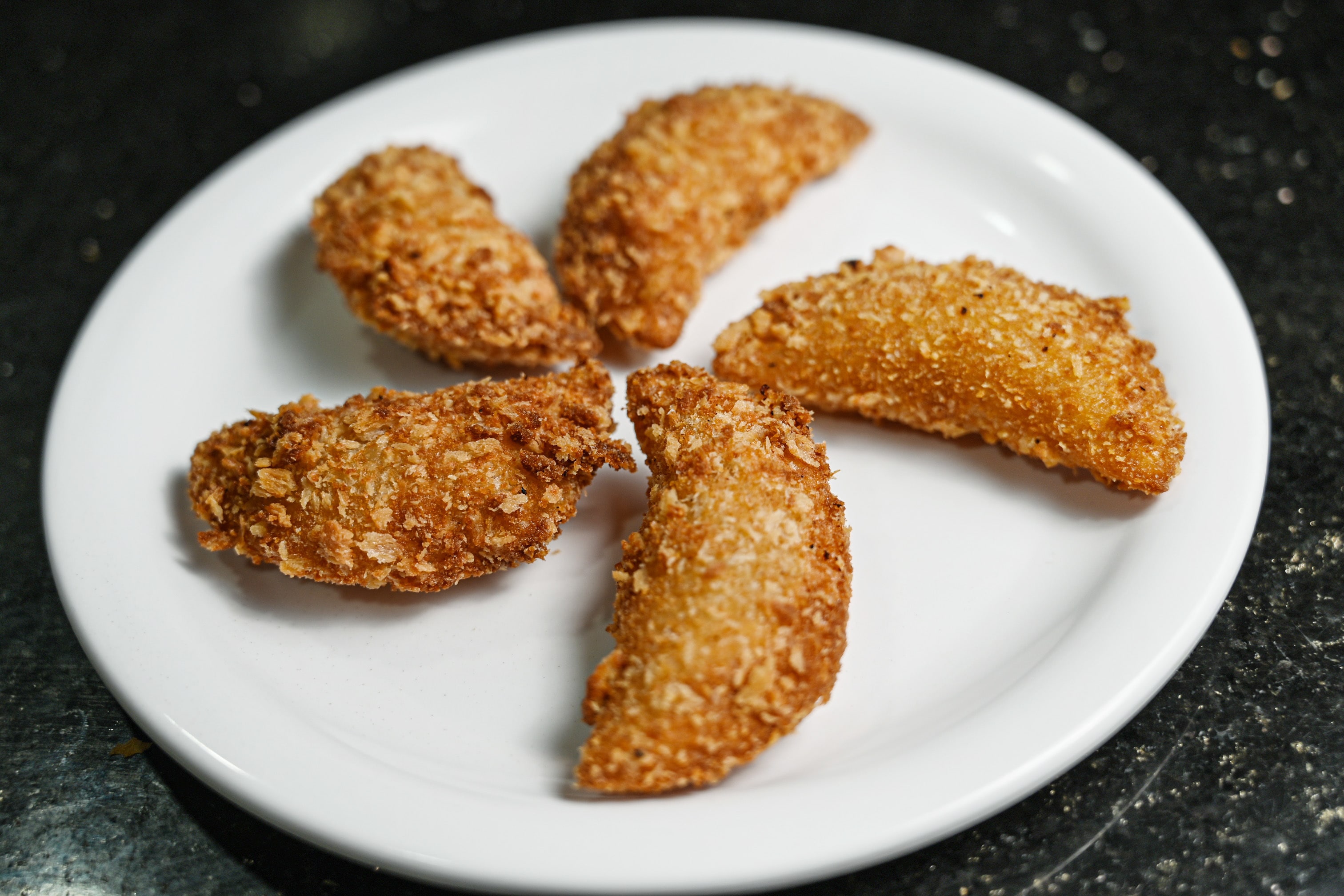
Prawn Rissois have been a small point of argument in my household for years. My husband insists that the filling should be made only with milk, no stock, because that is how his Goan relatives made them. I disagree completely. Using prawn stock alongside the milk is what makes the filling taste like something, rather than just a bland white paste wrapped in dough.
I started saving the water from boiling prawns specifically for this recipe, and I have never gone back. The detail I keep returning to is the pastry itself, which is a cooked dough rather than a raw one. That might sound odd the first time, but it is what gives these rissois their smooth, pliable shell that holds the filling without cracking when you fold it. Once you understand the dough, everything else falls into place.
About the Recipe
All the ingredients here are easy to find at any grocery store, and nothing requires advance sourcing. The prawn stock comes from boiling the prawns themselves, so there is no extra effort involved. From start to finish, expect to spend about 60 to 75 minutes, including the 30-minute rest for the dough.
I make this when guests are coming over and I want something substantial to serve with drinks, because it can be shaped and coated ahead of time and fried just before serving. The filling and dough can both be made separately, which breaks the work into manageable steps.
Why you will love this recipe
The filling here is a proper white sauce built with prawn stock, and that stock does real work. It carries a concentrated seafood flavour through every bite in a way that plain milk alone cannot. Combined with the golden, seasoned breadcrumb crust and the soft cooked dough, each piece delivers a clear contrast between crunch and filling.
Because the dough is made by cooking flour directly in boiling butter water, it becomes pliable and smooth without any chilling or resting in the refrigerator, apart from the 30-minute covered rest. That texture is specific to this method and it is one reason I keep returning to this recipe rather than reaching for readymade pastry sheets. It also travels well, which makes it one of the few deep fried snacks I actually pack for short trips or picnics.
Cooking Tips
The most common mistake with the pastry is not stirring fast enough after adding the flour. You have to work quickly and vigorously, or you will get lumps that do not smooth out later. Keep the heat medium to low after the flour goes in. With the filling, do not rush the flour and butter stage before adding the liquids.
If you add the stock too fast, you will get a lumpy sauce instead of a thick, smooth one. Add it gradually and stir constantly. I keep a wooden spoon dedicated to this because it gives better control than a whisk in a small pan.
Top Tips
- Save the prawn boiling water before you add any seasoning to it – that is your stock, and it makes a genuine difference to the flavour of the filling.
- The dough should feel smooth and slightly firm after kneading, not sticky. If it sticks to your hands, knead it for another two to three minutes on the board before resting it.
- Cut your shapes after folding, not before – fold the pastry over the filling first, press the edges firmly, then cut with a round cutter or a glass rim to seal cleanly.
- Coat each piece in egg and then breadcrumbs just before frying, not hours ahead, or the coating turns soggy before it hits the oil.
- Fry in batches of four to five pieces at a time on medium heat. Overcrowding the pan drops the oil temperature and leaves you with a pale, greasy crust rather than a golden one.
- The filling must be fully cooled before you spoon it onto the pastry. Warm filling softens the dough and makes it difficult to fold without tearing.
Serving and Storing Suggestions
Prep time is about 75 minutes including resting time. This recipe makes roughly 20 to 24 pieces, serving 6 to 8 people as a starter or snack. Serve hot, straight from the oil, with a simple green chutney or a squeeze of lime. If you have shaped and coated the rissois but not yet fried them, place them on a tray lined with parchment and refrigerate for up to 4 hours. Fried rissois do not reheat particularly well, so fry only what you plan to serve immediately.
Similar Recipes
- Goan Prawn Cutlets
- Crab Croquettes
- Fish Koliwada
- Prawn Patties
- Bread Crumbed Fish Fingers

Prawn Rissois
Ingredients
For the pastry
- 1 cup Flour
- 1 cup Water
- 1 tbsp Butter
- Salt as per taste
For the filling
- 10 to 12 Prawns (boiled)
- 1 Onions (chopped)
- 3 tbsp Butter
- 4 to 5 tbsp Flour
- 3 cups Prawn stock
- 2 cups Milk
- Nutmeg (a pinch, grated)
- Salt as per taste
- Pepper as per taste
For finishing
- 4 Eggs (lightly beaten)
- 1 cup Breadcrumbs (seasoned with salt and pepper)
- Oil as per required
Instructions
For the filling
- Cut the prawns into small pieces after peeling them.
- In a pan, saute the onions in butter and gradually add the flour. Mix well.
- Next, pour in the stock and the milk and cook for 2 minutes, stirring continuously all the while.
- Now, add the salt, pepper and nutmeg. Mix and then keep aside.
For the pastry
- Take water and butter in a pan and boil. Just as the butter melts away, add salt.
- Next, add the flour quickly and stir vigorously till the mixture moves away from the side of the pan and forms a small ball.
- Once this is done, transfer the mixture to a board and knead it well. Keep this covered for about half an hour.
- Now, with a rolling pin rotate the pastry dough, so that it becomes fine and smooth.
- Next, place a spoonful of the filling on the pastry and after folding it, cut in the desired shape.
- Dip pieces in the beaten eggs and coat them with the breadcrumbs.
- Deep fry till golden brown and serve.
Sign up for our newsletter
Add Awesome Cuisine as a Preferred Source

Frequently Asked Questions
My pastry kept tearing when I tried to fold it. What went wrong?
Most likely the dough was not kneaded long enough, or it was not covered properly during the 30-minute rest. The rest period is important because it allows the dough to relax and become pliable. Also make sure the filling is fully cool before placing it on the pastry – warm filling softens the dough from underneath and causes it to split.
Can I use plain water instead of prawn stock for the filling?
You can, but the filling will taste noticeably flat. The prawn stock carries the seafood flavour through the sauce, and water does not replace that. If you have run out of stock, use a small amount of fish sauce diluted in water, or at minimum season the filling more generously with salt and pepper to compensate.
My breadcrumb coating fell off during frying. How do I prevent that?
This usually happens when the egg coating is too thin or the rissois go into the oil before the coating has had a moment to set. Press the breadcrumbs firmly onto the surface after coating rather than just rolling loosely. Also check that your oil is hot enough before adding the pieces – if the oil is too cool, the coating absorbs oil before it can crisp and bond.
Can I make these ahead of time and freeze them?
Yes. Shape and coat the rissois, then arrange them in a single layer on a tray and freeze until solid. Transfer to a container or bag and store for up to one month. Fry directly from frozen on medium heat, adding an extra two minutes to the frying time. Do not thaw first or the coating turns wet.
The filling turned out lumpy rather than smooth. Can I still use it?
A lumpy filling usually means the stock or milk was added too quickly before the flour was fully incorporated into the butter. For this batch, pass it through a sieve while it is still warm, pressing it through with the back of a spoon. For next time, add the liquid one ladle at a time, stirring thoroughly before adding more.