
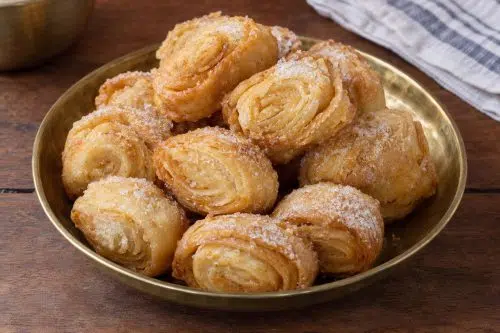
Chiroti is a crisp, layered sweet that is popular in Karnataka and across several South Indian households, particularly during festivals and celebrations. The recipe uses a simple dough of maida and chiroti rava, which is a very fine semolina. The dough is rolled out, coated with a ghee and rice flour paste, stacked in layers, rolled into a tight cylinder and then sliced before frying. Each cut piece opens up into a delicate, flaky round once it hits the hot oil. Finished with coarsely powdered sugar, chiroti is a proper sweet that looks more involved than it actually is.
About the Recipe
The key to this recipe is the ghee and rice flour mixture that is spread between the chapati layers. Rice flour keeps the layers from sticking together and helps them separate cleanly during frying, giving chiroti its characteristic flakiness. Chiroti rava, also called chiroti sooji, is a finer grind than regular sooji or plain rava. If you cannot find it, plain rava works but the texture will be slightly coarser. The dough must be stiff, not soft, so add cold water gradually and stop as soon as the dough comes together.
Why You Will Love This Recipe
The layering method in this recipe is what makes chiroti genuinely satisfying to prepare. Stacking four or five ghee-coated chapatis, rolling them tightly and cutting them into rounds takes only a few minutes, yet the result after frying is a visibly layered, crisp pastry that looks like it required far more effort. There is no special equipment needed, and the ingredient list is short. The sugar goes on after frying, so each piece stays crisp rather than becoming sticky. If you enjoy making Maida Gujiya or similar maida-based sweets, this recipe follows a familiar logic and is just as rewarding.
Cooking Tips
The most common beginner mistake is making the dough too soft. A soft dough will not hold its layers and the pieces will absorb more oil during frying. Keep the dough stiff. When rolling the stacked chapatis into a cylinder, roll firmly so the layers do not slide apart when you cut. Fry on a medium flame. High heat browns the outside before the inside layers cook through. If the oil is not hot enough, the pieces turn greasy rather than crisp.
Top Tips
- Add cold water in small amounts when making the dough. Stop as soon as it comes together into a stiff, firm ball.
- Rest the dough covered with a wet cloth for the full 30 to 40 minutes. This makes rolling easier and the layers more distinct.
- Spread the ghee and rice flour mixture thinly and evenly across each chapati. Too much and the cylinder will not hold its shape when cut.
- Press the cut pieces lightly with your palm before frying to help them hold their round shape in the oil.
- Fry on medium heat and turn the pieces gently. They should take a few minutes to reach a light golden brown.
- Sprinkle the powdered sugar only after the pieces have drained and cooled slightly, so the sugar does not melt into a glaze.
Serving and Storing Suggestions
Chiroti is best served at room temperature with sugar dusted on top just before serving. It is a common festival sweet and pairs well with a small bowl of warm ghee or even thickened milk on the side, though it is perfectly fine on its own. Once cooled completely, store in an airtight container at room temperature. It stays crisp for three to four days. Do not refrigerate as moisture will soften the layers.
Similar Recipes
Nutrient Benefits
Ghee provides fat-soluble vitamins and contributes to the richness of this sweet. Maida and rava are sources of carbohydrates that supply quick energy. Rice flour is naturally gluten-free on its own and adds a light texture to the layers. Because chiroti is a deep-fried sweet with added sugar, it is best enjoyed in small portions as an occasional treat rather than as an everyday food.
Chiroti
Ingredients
- 3 cup Maida
- 1 cup Chiroti Rava (or) Plain Rava
- 1 1/2 cup Sugar coarsely powdered
- 1 cup Raw Rice Flour
- 1 cup Ghee
- a large pinch Salt
- as required Oil (or Ghee)
Instructions
- Combine maida, rava, salt, 1/3 cup of ghee and little cold water in a bowl.
- Mix well to a stiff dough.
- Cover with a wet cloth and keep aside for 30 to 40 minutes.
- Knead once again and make small balls of the dough.
- Roll them out into small/medium chapatis.
- To the remaining ghee, add rice flour and mix well.
- Spread 1/2 tbsp of this ghee-rice flour mixture on the prepared chapatis.
- Keep 4 to 5 of the chapatis one top of the other and roll them tightly, like a cylinder.
- Cut them into 1 inch pieces.
- Heat oil in a deep frying pan.
- Deep fry the pieces until light golden brown.
- Remove and drain excess oil.
- Sprinkle sugar on top.
- Serve.
Notes
Sign up for our newsletter
Add Awesome Cuisine as a Preferred Source

Frequently Asked Questions
What is chiroti rava and can I substitute it?
Chiroti rava is a very finely milled semolina, finer than the regular sooji or plain rava you use for upma or halwa. It is sometimes labelled as chiroti sooji or fine rava at grocery stores. In this recipe, it is used in the dough to give chiroti a slightly firmer bite and a better texture after frying. If you cannot find chiroti rava, plain rava works as a substitute. The texture will be marginally coarser but the recipe will still produce a good result.
Why does the dough need to be stiff and not soft?
A stiff dough holds its shape when rolled thin and stacked. If the dough is soft, the chapatis will tear when you spread the ghee and rice flour mixture, and the layers will merge rather than separate during frying. Soft dough also absorbs more oil in the pan. Add cold water gradually, a little at a time, and stop as soon as the dough comes together. It should feel firm, similar to a poori dough.
What does the rice flour do in this recipe?
The rice flour is mixed with ghee and spread between the chapati layers before they are stacked and rolled. It acts as a barrier that keeps each layer separate. When the rolled and cut pieces fry in hot oil, the layers open up and crisp individually, which is what gives chiroti its flaky appearance. Without the rice flour, the layers would stick together and the pieces would fry more like a solid disc than a layered pastry.
How do I know the oil is at the right temperature for frying?
Drop a very small piece of dough into the oil. If it rises to the surface steadily within a couple of seconds, the oil is ready. If it sinks and stays at the bottom, the oil is not hot enough. If it shoots up instantly and browns within seconds, the oil is too hot. Frying on medium heat is important for chiroti because the pieces need enough time in the oil for the inner layers to cook through and crisp up, not just the outside.
Can I use oil instead of ghee in the dough and the rice flour mixture?
The recipe allows oil as a substitute for frying, but ghee is specifically used in the dough and in the rice flour mixture that goes between the layers. Ghee contributes to the flavour and to the way the layers separate during frying. Replacing ghee with oil in the dough and filling will change the taste noticeably. If you are substituting for dietary reasons, use a neutral oil, but expect a milder flavour in the finished chiroti.
Rava is semolina / sooji.
Thank you.