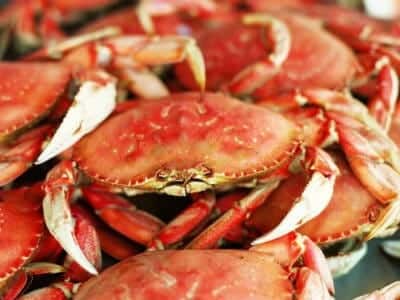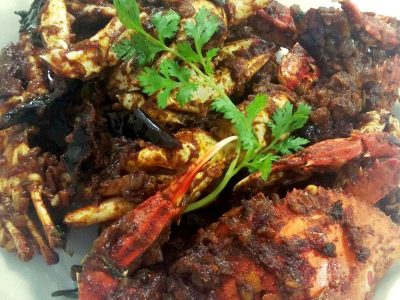
Crabs with Noodles is the kind of dish I come back to whenever I want to make something that feels like an occasion but still fits inside a regular Saturday evening. The practical reason it has stayed in my rotation is simple: it is one pot, and the stock does most of the heavy lifting.
I make the stock base early in the afternoon, let it cool in the pan, and then the actual cooking is maybe half an hour of active work. The detail that makes this recipe feel like mine is the brandy in the stock. Two teaspoons sounds almost decorative, but I notice when I leave it out. It gives the whole broth a faint warmth that sits underneath the oyster sauce and soy, and the cellophane noodles pull that flavour into every strand.
About the Recipe
One large casserole dish is all you need to pull this together. The ingredient list looks long at first glance, but most of it is pantry and fridge staples like soy sauce, garlic, ginger, and bacon. Cellophane noodles, also called glass noodles, are available at most Indian grocery stores that stock Southeast Asian products. From start to finish, you are looking at about 45 minutes, including the stock prep. I would make this for a small group of four on a weekend when I want something a little out of the ordinary without committing to an elaborate spread.
Why you will love this recipe
The cellophane noodles absorb the stock completely as they cook, which means you do not end up with a soupy base and separately flavoured noodles. Every bite carries the same depth of oyster sauce, fish sauce, ginger, and that faint note of brandy. The bacon adds a slight smokiness that works well with the sweetness of fresh crab, and the butter stirred in at the noodle stage gives the whole thing a quiet richness.
Because the lid stays on for the last 20 minutes, the steam does the work and the crab stays moist rather than toughening up from direct heat. I also like that this dish is its own complete meal, needing nothing more than a bowl and some napkins on the side.

Cooking Tips
The most common mistake with crab dishes is overcooking the crab while waiting for everything else to catch up. Here, the noodles and stock go in together with the crab, so time the 20 minutes carefully and check at the 15-minute mark. If the noodles have absorbed most of the stock and the crab shells are bright orange-red, it is done. A second thing beginners miss: crack the pincers before cooking, not after. Uncracked pincers will not absorb the stock properly, and trying to crack them at the table is messy and unsatisfying.
Top Tips
- Soak the cellophane noodles in cold water, not hot. Hot water makes them too soft before they even hit the pan, and they will turn mushy during the 20-minute covered cook.
- Crack the crab pincers with the back of a heavy knife or a rolling pin before adding them to the casserole. This lets the stock get into the meat and makes eating much easier.
- When stir-frying the garlic, watch it closely. It goes from golden to bitter in about 30 seconds on high heat, and bitter garlic will affect the entire dish.
- If you cannot find cellophane noodles, thin rice vermicelli works as a substitute, but reduce the covered cooking time to about 12 minutes since vermicelli softens faster.
- Make the stock base a few hours ahead and let it sit. The flavours settle and the stock tastes less sharp when it has had time to rest before you use it.
- I always keep the crab roe aside as instructed and stir it back in just before serving. It adds a rich, briny note that gets lost if you cook it for the full 20 minutes.
Serving and Storing Suggestions
Serves 2 to 3 as a main course. Preparation and cooking time is about 45 minutes total. Serve straight from the casserole dish, hot, with the spring onions and coriander scattered on top just before it reaches the table. Leftovers can be stored in a sealed container in the refrigerator for up to one day, though the noodles will continue to absorb liquid overnight.
Reheat gently on the stovetop with a small splash of water or stock to loosen things. Crab does not hold up well past 24 hours, so finish it the same day if possible.
Similar Recipes
- Crab in Coconut Milk Curry
- Butter Garlic Prawns with Vermicelli
- Thai Style Steamed Fish with Ginger and Spring Onion
- Glass Noodle Soup with Chicken and Mushrooms
- Stir-Fried Prawns with Oyster Sauce
Nutrient Benefits
Crab is one of the better sources of lean protein available, and it carries a reasonable amount of zinc and B12 without the saturated fat you would find in red meat. Cellophane noodles are made from mung bean starch and are lower in refined carbohydrates than wheat noodles. The ginger and white peppercorns are not just flavour additions; both support digestion, which is worth knowing when you are eating a fairly rich, protein-heavy pot dish.

Crabs with Noodles
Ingredients
- 2 Whole Crabs (cleaned and rinsed well with cold water)
- 1 tbsp Oil
- 7 cloves Garlic (peeled, whole)
- 2 slices Lean Bacon (cut into 1 inch pieces)
- 2 Coriander Roots (cut in half)
- Ginger (1 two inch piece, sliced)
- 1 tsp White Peppercorns (crushed)
- 250 gms Cellophane Noodles (soaked in cold water to soften for 5 minutes and drained)
- 1 tsp Butter
- 1 tbsp Soy Sauce
- 2 Sprin Onions (cut into 1 1/2 inch pieces)
- 1 sprig Coriander Leaves
For the Stock:
- 500 ml Thai Chicken Stock
- 2 tbsp Oyster Sauce
- 1 tbsp Soy Sauce
- 2 tsp Fish Sauce
- 1 tsp Sesame Oil
- 2 tsp Brandy
- 2 tsp Sugar
Instructions
- Mix all the ingredients for stock in a pan.
- Bring to a boil and simmer for 5 minutes.
- Remove from heat and keep aside.
- Cut the crab in half and halve it again.
- Chop off the pincers and crack them.
- Keep aside.
- Remove the shell, scrape it and keep aside any roe.
- Heat the oil in a large casserole dish.
- Stir-fry the garlic over high heat till lightly brown.
- Add bacon and stir-fry for a minute.
- Add the crab pieces, coriander, ginger and peppercorns.
- Stir-fry for 3 minutes.
- Add noodles, butter, soy sauce and stock.
- Mix well and cover with a lid.
- Cook over high heat for 20 minutes or until the crabs are cooked.
- Garnish with spring onions and coriander leaves.
- Serve hot.
Sign up for our newsletter
Add Awesome Cuisine as a Preferred Source

Frequently Asked Questions
The noodles absorbed all the stock and stuck to the bottom of the pot. What went wrong?
This usually happens when the heat is too high and the lid does not seal well. High heat with a loose lid lets steam escape too fast. Try reducing to medium-high after the first five minutes of covered cooking and check at the 15-minute mark. If the liquid looks low before the crab is cooked, add a small splash of hot water or extra stock.
Can I use frozen crab instead of fresh whole crabs?
Yes, but the flavour will be noticeably less sweet. If you use frozen, thaw the crab completely in the refrigerator overnight and pat it dry before cutting. Reduce the covered cooking time by about five minutes since frozen crab is often pre-cooked and just needs to heat through and absorb the stock.
I could not find fish sauce. Is there a substitute?
A mix of soy sauce and a small squeeze of tamarind paste comes close. Use one teaspoon of soy sauce and half a teaspoon of tamarind water in place of the two teaspoons of fish sauce. It will not be identical, but it keeps the balance of salty and sour that the stock needs.
My crab pieces smelled a little off after the covered cooking. Did I do something wrong?
Fresh crab should smell clean and oceanic, not sour or ammonia-like. If it smelled off after cooking, the crab was likely not fresh to begin with. Always buy live crab if you can, or ask your fishmonger when it came in. Rinsing thoroughly with cold water before cooking is important, but it will not fix crab that was already past its best.
The garlic turned dark and slightly bitter early in the process. Does that affect the whole dish?
It does, unfortunately. Dark, over-cooked garlic has a burnt bitterness that carries through the entire pot. If you catch it early, wipe out the pan, clean it, and start the garlic again with fresh oil on slightly lower heat. Lightly golden is what you are after, and it happens quickly on high heat, so stay close to the pan during that step.