
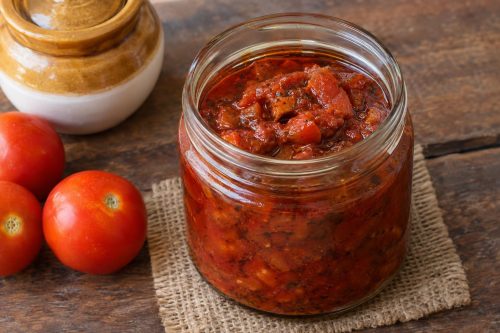
This tomato pickle recipe is a South Indian-style achar that sits somewhere between a cooked chutney and a proper pickle. Firm red tomatoes are sautéed in gingelly oil with asafoetida, then cooked down with tamarind extract, salt and red chilli powder until the water evaporates and the oil begins to float on top. That moment when the oil separates is the clearest sign the pickle is ready. Mustard powder and fenugreek powder are stirred in off the heat, which keeps their flavour clean without any bitterness. The result is a tangy, boldly flavoured tomato achar that works equally well as a side or a condiment.
About the Recipe
The recipe depends on two things: firm tomatoes and enough cooking time. Soft or overripe tomatoes release too much water, and the pickle takes far longer to reduce, sometimes turning mushy along the way.
Gingelly oil does more than cook the tomatoes. It carries the asafoetida through the whole batch and acts as a preservative. Tamarind extract adds the tartness that balances the chilli heat.
Cooking until the oil floats is the key visual cue. Mustard and fenugreek powder go in only after switching off the flame, which stops them from turning bitter.
Why You Will Love This Recipe
The strongest reason to make this pickle is how well it keeps. Once the oil floats and the moisture has cooked off, the pickle sits comfortably in a sterilised jar for several days without any loss of flavour.
There is no grinding involved. Everything goes into one pan in sequence, and the whole process is straightforward even for a first-time pickle maker.
The flavour is genuinely bold. Tamarind brings tartness, red chilli powder brings heat, and the fenugreek and mustard add a slightly earthy finish that you do not get from a fresh chutney.
Cooking Tips
The most common mistake is pulling the pan off the heat before the oil has fully separated. The pickle will look done before it actually is. Keep the flame at medium and keep stirring.
If the tomatoes are releasing a lot of water, do not raise the heat sharply or the bottom will scorch.
Add mustard and fenugreek powder only after switching off the flame. Adding them while the pan is still hot enough to fry will make them bitter in a way that is hard to fix.
Top Tips
- Use firm, ripe red tomatoes only. Soft or overripe tomatoes release excess water and make it harder to reach the right consistency.
- Cook until the oil visibly floats on the surface. This is the clearest sign the pickle is ready and will store well.
- Add mustard powder and fenugreek powder only after switching off the flame to keep their flavour clean.
- Use a clean, dry, sterilised jar. Any moisture in the jar will shorten the shelf life significantly.
- Gingelly oil is the right choice here. Other oils will change the flavour noticeably and may not preserve as well.
- Stir frequently during the final stage of cooking to prevent the mixture from sticking to the bottom of the pan.
Serving and Storing Suggestions
Serve this tomato pickle alongside curd rice, plain roti or dosa. It also works well as a side with plain steamed rice and dal.
Transfer the cooled pickle into a clean, sterilised glass jar and seal with a tight lid. Always use a dry spoon when serving to avoid introducing moisture into the jar. Stored this way, the pickle keeps well for several days at room temperature and longer in the refrigerator.
Similar Recipes
- Zucchini Pickle
- Sweet Mango Pickle
- Ten Pickles That Define an Indian Kitchen
- Tangy Tomato Curry
- Tamarind Idiyappam (Puli Idiyappam)
Nutrient Benefits
Tomatoes are a useful source of vitamin C and potassium. Tamarind contributes small amounts of iron and B vitamins. Fenugreek powder provides some fibre and minerals including magnesium. Because this pickle is served in small quantities, the contribution per serving is modest.
Tomato Pickle
Ingredients
- 250 g Firm Red Tomatoes washed and chopped
- 1 1/2 tsp Powdered Sea Salt
- 3 tsp Red Chilli Powder
- 1/3 cup Tamarind Extract
- 60 to 75 ml Gingelly Oil
- 1/2 tsp Mustard Powder
- 1/2 tsp Fenugreek Powder
- 1/2 tsp Asafoetida Powder
Instructions
- Heat oil in a pan over medium flame.
- Add asafoetida powder and stir for 10 seconds.
- Add the chopped tomatoes and saute well.
- Add tamarind extract, salt and red chilli powder
- Cook for a few minutes, until the water has almost evaporated and tomatoes have changed colour.
- Stir well and continue to cook until the oil starts to float.
- Add mustard powder, fenugreek powder and mix well.
- Switch off the flame.
- Transfer the pickle to a clean, sterilizted jar and cover with a lid.
- Serve with curd rice, roti or dosa.
Sign up for our newsletter
Add Awesome Cuisine as a Preferred Source

Frequently Asked Questions
How do I know when the tomato pickle is fully cooked and ready?
Watch for the oil to separate and float visibly on top of the mixture. Before that point, the tomatoes will still look wet and the oil will be absorbed into the mixture. Once you see a clear layer of oil on the surface and the tomatoes have changed colour and darkened, the pickle is ready. Pulling the pan off early means the pickle retains moisture, which shortens its shelf life and changes the texture.
Can I use any oil instead of gingelly oil?
Gingelly oil, which is cold-pressed sesame oil, is the traditional choice for South Indian pickles. It has a mild nutty flavour and acts as a natural preservative. You can use another neutral oil in a pinch, but the flavour will be noticeably different and the pickle may not keep as long. If you want the closest result to the original tomato achar, gingelly oil is worth using.
Why does the recipe add mustard powder and fenugreek powder only at the end?
Both powders turn bitter when exposed to prolonged heat in oil. Adding them after switching off the flame means they warm through gently and release their flavour without becoming harsh. If you add them while the pan is still actively cooking, the bitterness will come through clearly in the finished pickle.
How long does this tomato pickle last and how should I store it?
Transfer the cooled pickle into a sterilised glass jar with a tight-fitting lid. Always use a completely dry spoon each time you serve from the jar. Stored at room temperature in a cool, dry place it keeps for several days. Refrigerating the jar extends the shelf life further. The key factors are ensuring the oil has fully separated during cooking, using a sterilised jar and keeping moisture out during storage.
What can I serve with tomato pickle apart from curd rice?
The recipe suggests curd rice, roti and dosa, all of which work well because they are mild enough to let the pickle stand out. It also pairs naturally with plain steamed rice and dal, or as a sharp accompaniment to idli. If you enjoy tamarind-based dishes, it fits well alongside Tamarind Idiyappam as part of a South Indian meal.
nice