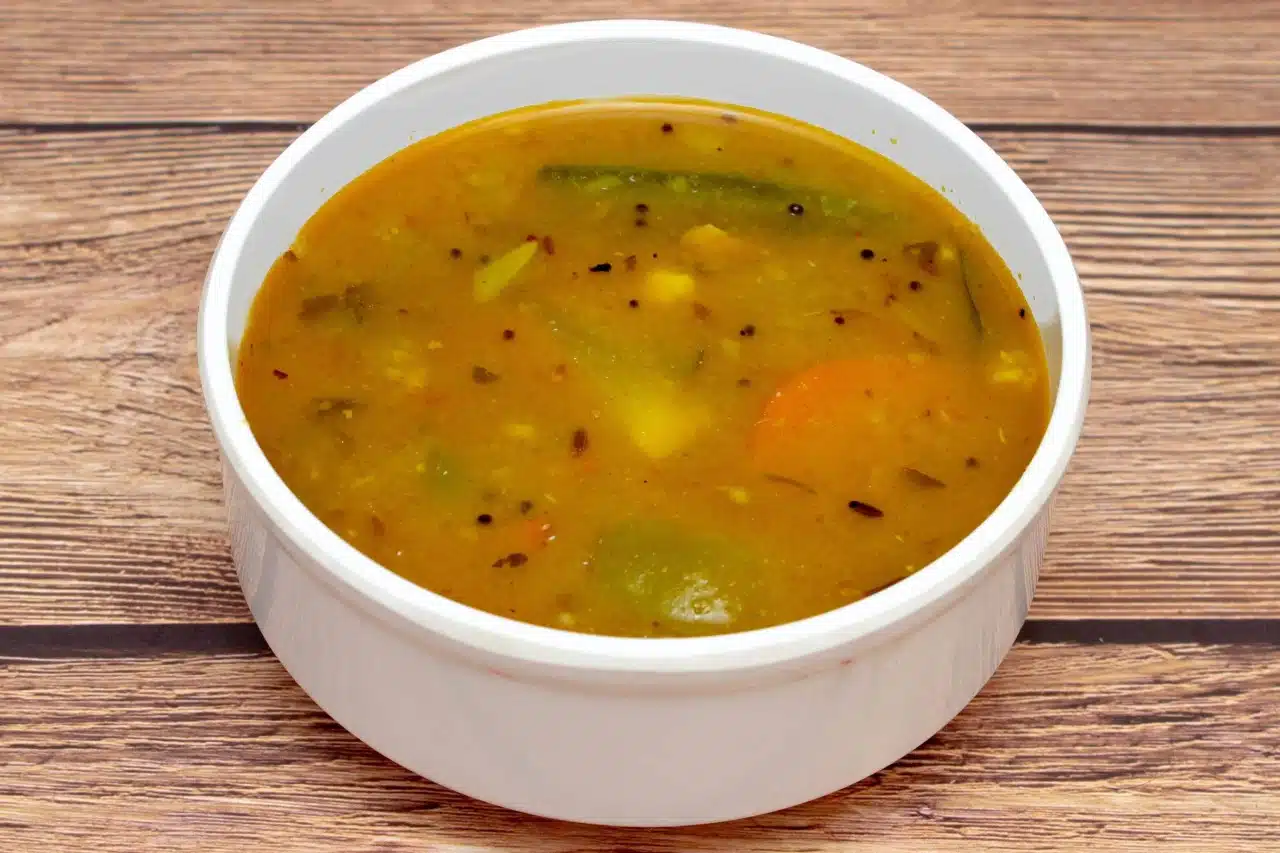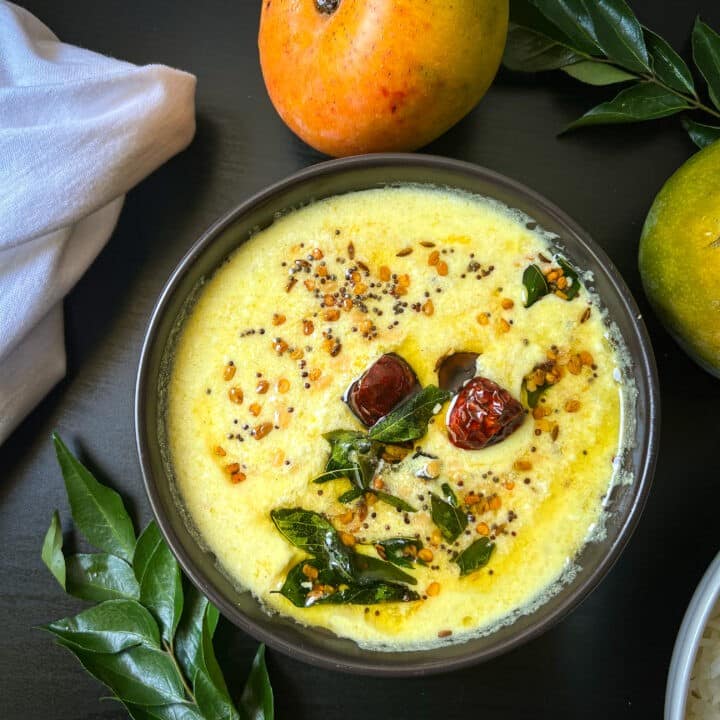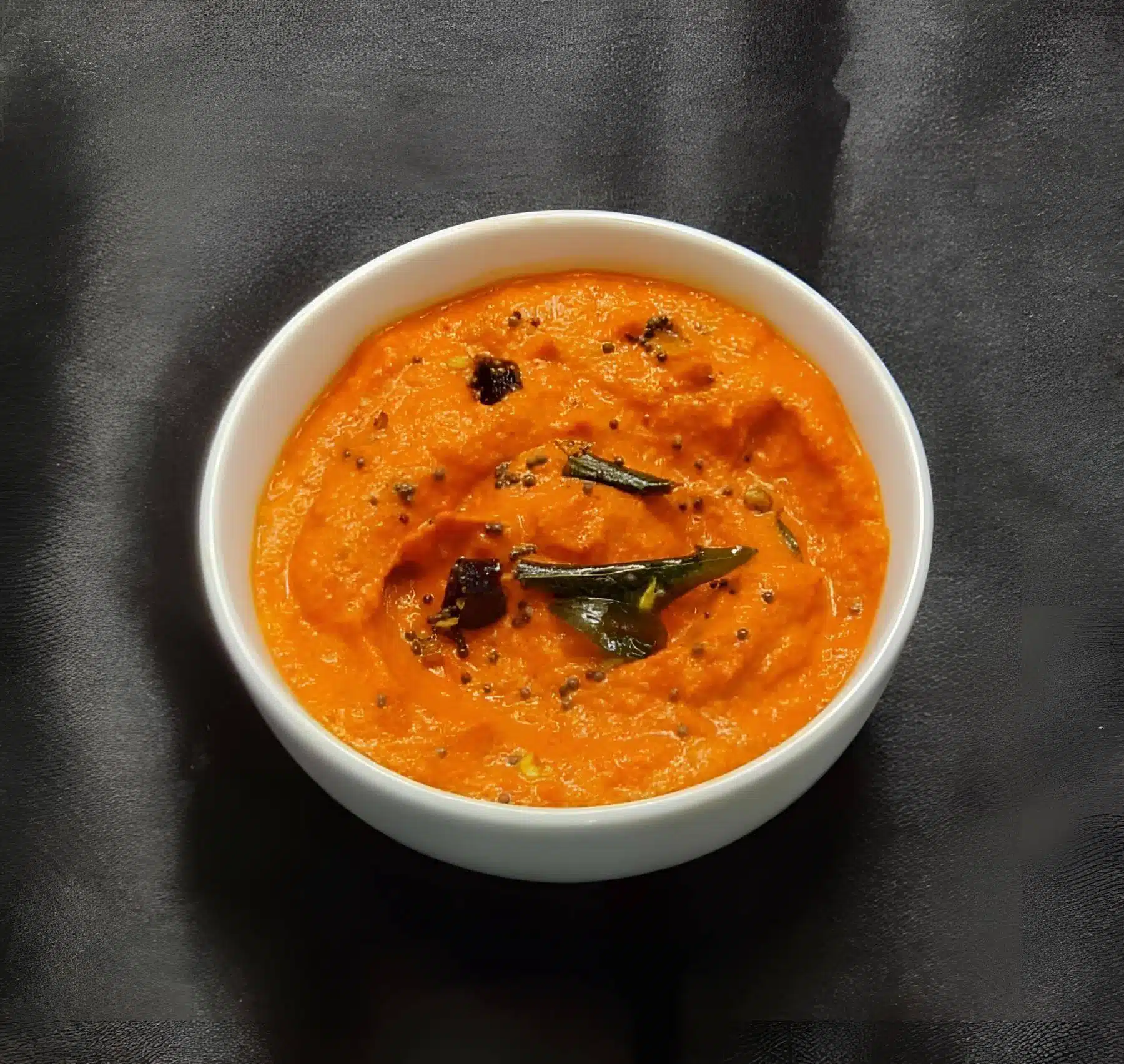
Pirandai Kuzhambu is something I started making after my aunt sent me a bag of fresh pirandai from her backyard. She told me it was good for joint pain and digestion, but honestly, I kept making it because it tastes good and does not need much attention once the spices go in.
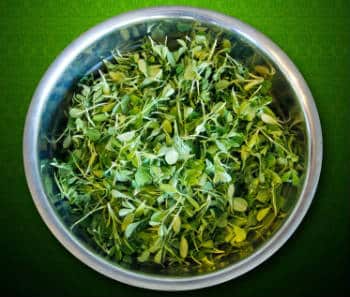
The pirandai itself looks intimidating with its fleshy, ridged stems, but it cooks down quickly and adds a unique slippery texture that thickens the gravy naturally. I like how the roasted spice powder brings warmth without making the kuzhambu too hot, and the small piece of jaggery at the end rounds out the tamarind without making it sweet. It is the kind of dish that sits well in your stomach and does not feel heavy after lunch.
About the Recipe
Pirandai is not always easy to find, but when you do spot it at the market, this recipe is worth keeping in your back pocket. The whole dish takes about thirty minutes from start to finish, and most of that time is hands off simmering. I make it on days when I have leftover rice and want something warm and tangy to go with it.
The ingredients are straightforward, and the roasted spice powder can be made in advance if you want to save time. It is not a party dish, but it is the kind of meal that feels nourishing without any fuss.
Why you will love this recipe
The roasted spice blend does most of the flavour work here, so you do not need a long list of aromatics or a complicated tempering. The pirandai breaks down into the gravy and thickens it naturally, which means you get a silky consistency without adding coconut or lentils. The tamarind gives a sharp tang that the jaggery softens just enough, and the whole thing tastes balanced without needing constant adjustments.
It reheats well, which makes it practical for meal prep, and it does not lose flavour the next day. The gingelly oil adds a nutty finish that ties everything together.
Cooking Tips
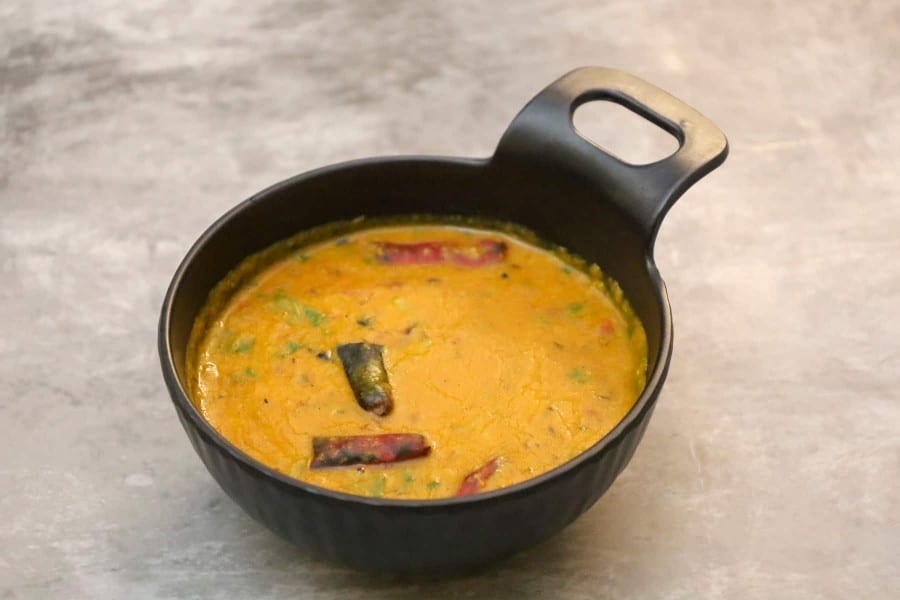
The pirandai can be sticky when raw, so wash it well and chop it on a damp cutting board to avoid mess. If you add the tamarind extract too early, the pirandai will not soften properly, so let it fry with the tempering first before adding the liquid. The ground spice powder can clump if the kuzhambu is too thick, so add a splash of warm water along with it and stir continuously for a minute. If the gravy tastes too sour, add a bit more jaggery rather than salt, which will only sharpen the tang.
Top Tips
- Choose tender pirandai stems that snap easily. Older, woody pieces will not soften even after long cooking.
- Roast the spices until they smell fragrant but not burnt. Overroasted coriander seeds will make the kuzhambu bitter.
- Add the tamarind extract after the pirandai has fried for a few minutes. This helps it cook through without staying rubbery.
- If the kuzhambu thickens too much while simmering, thin it with warm water rather than cold, which can split the gravy.
- The jaggery is added at the end so it does not burn or make the curry too sweet. A small piece is enough.
Serving and Storing Suggestions
This recipe serves three to four people and takes about thirty minutes to prepare and cook. Serve it hot with steamed rice, a spoonful of ghee, and a crispy papadam or potato fry on the side. The kuzhambu thickens as it sits, so you may need to add a little water when reheating. It keeps well in the fridge for up to three days and tastes even better the next day once the spices have had time to settle. Store it in an airtight container and reheat gently on the stove rather than the microwave, which can make the pirandai rubbery.
Similar Recipes
Nutrient Benefits
Pirandai is known in Ayurveda for supporting bone health and digestion. It contains calcium and iron, which can be helpful for joint strength and energy. The tamarind adds a dose of antioxidants and vitamin C, while the black peppercorns aid digestion and help your body absorb nutrients better. Gingelly oil is rich in healthy fats and has a mild anti inflammatory effect.
The jaggery provides iron and a bit of natural sweetness without the processed sugars. This kuzhambu is light on the stomach and works well as part of a balanced meal.

Pirandai Kuzhambu
Ingredients
- 1 cup Pirandai (tender)
- 20 gms Tamarind
- 1 tbsp Sambar Powder
- 4 Dry Red Chillies
- 2 Green Chillies
- Curry Leaves (few)
- 1 tsp Black Peppercorns
- 1 tsp Coriander Seeds
- 1/2 tsp Cumin Seeds
- 1/2 tsp Vendhayam
- Jaggery (a small piece)
- Salt as per taste
- 2 tsp Gingelly Oil
Instructions
- Heat 1 tsp oil in a pan.
- Fry the mustard seeds, red chillies, green chillies and curry leaves for 30 to 45 seconds.
- Clean and wash the pirandai.
- Chop it into small pieces and add to the pan.
- Stir well.
- Fry the peppercorns, coriander seeds, cumin seeds and vendhyam in little oil.
- Grind to a fine powder and add to the pan.
- Add some warm water to tamarind and take an extract.
- Add this to the pan along with some salt.
- Bring to a boil and add the ground powder.
- Simmer for a few minutes or until it has reached a sambar consistency.
- Add the jaggery and remaining oil.
- Stir well and serve hot with rice.
Sign up for our newsletter
Add Awesome Cuisine as a Preferred Source

Frequently Asked Questions
Can I use dried pirandai instead of fresh?
Yes, but soak it in warm water for at least an hour before chopping. Dried pirandai takes longer to soften, so add an extra five to ten minutes of simmering time.
My kuzhambu tastes too sour. How do I fix it?
Add a little more jaggery, one small pinch at a time, and let it simmer for another two minutes. Jaggery balances tamarind better than salt or sugar.
The gravy is too thin and watery. What went wrong?
You may have added too much tamarind extract or not simmered it long enough. Let it cook uncovered on low heat for a few more minutes. The pirandai will release its natural starch and thicken the gravy.
Can I skip the jaggery if I do not have it?
You can, but the kuzhambu will taste sharper and less rounded. A pinch of regular sugar works in a pinch, though it will not give the same depth.
How do I know if the pirandai is cooked through?
It should feel soft when you press it with a spoon and the gravy should look slightly thick and glossy. If it still feels rubbery, simmer for another five minutes with the lid on.