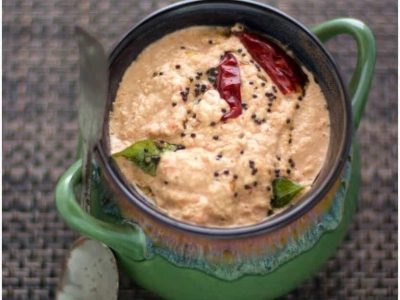
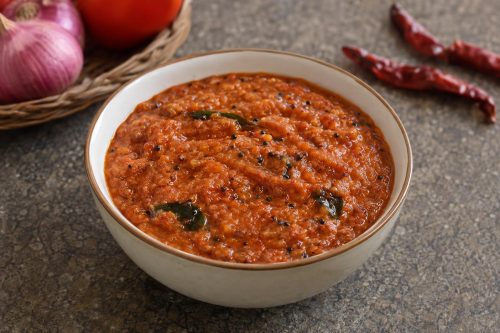
Kara Chutney is a South Indian chutney that delivers real heat and tang in a short amount of time. Kara means spicy or pungent in Tamil, and this chutney lives up to the name. Everything is ground raw, which gives the paste a sharp edge that mellows as it cooks in gingelly oil. The tamarind adds sourness, the dry red chillies bring heat, and the onions and tomatoes form the body. It works alongside idli and dosa just as well as it does with plain rice and a drizzle of oil.
About the Recipe
This kara chutney recipe uses a wet grind method. Onions, tomatoes, dry red chillies, tamarind and salt go into the grinder together with a little water. Grind until smooth before the paste goes into the pan. Gingelly oil holds up well against the strong ingredients and suits this chutney particularly well. The tempering of mustard seeds, urad dal and curry leaves goes in first, then the paste is added and cooked on low flame until the raw smell is completely gone.
Why You Will Love This Recipe
The main appeal here is how little effort it takes for the amount of flavour it produces. Everything except the tempering goes into the grinder at once, so there is no sequential cooking before the paste is ready.
The recipe also gives you flexibility with heat. Six to eight dry red chillies is the range, and you can adjust that number up or down without changing anything else. The finished chutney is bold enough to hold its own alongside a plain breakfast or a simple rice meal.
Cooking Tips
The most common mistake is taking the chutney off the flame too early. The raw smell of the onion and tomato paste needs to cook out fully, which takes about five minutes on low flame with regular stirring. If you rush this, the chutney will taste sharp and unfinished.
Keep the flame low after adding the paste so it does not stick or burn at the bottom. Gingelly oil gives the best result here. A neutral oil will work, but the flavour will be noticeably flatter.
Top Tips
- Grind the paste to a genuinely smooth consistency before cooking. A coarse paste will not cook evenly and may leave chunks of raw onion in the finished chutney.
- Use a lemon-sized ball of seedless tamarind. Too much tamarind will overpower the chillies and push the chutney towards sour rather than balanced.
- Keep the flame on low once the paste goes in. Medium or high heat causes the paste to splatter and stick to the pan.
- Wait until the raw smell completely disappears before turning off the flame. This is the most reliable sign the chutney is cooked through.
- Adjust the number of dry red chillies to suit your heat preference. Six gives moderate heat; eight makes it noticeably spicy.
- Let the mustard seeds fully splutter and the urad dal turn light golden before adding the paste. Under-tempered dal will taste raw.
Serving and Storing Suggestions
Kara Chutney works well as a side dish with idli, dosa or uttapam. It also pairs with plain steamed rice and a spoon of gingelly oil. Serve it at room temperature or slightly warm.
Store any leftover chutney in a clean, airtight container in the refrigerator for up to two days. Reheat gently in a pan on low flame with a small splash of water if it has thickened. Do not leave it at room temperature for more than a few hours, as the onion and tomato content causes it to spoil quickly.
Similar Recipes
Nutrient Benefits
Onions and tomatoes contribute vitamin C and potassium. Dry red chillies are a source of vitamin A. Tamarind provides iron and some B vitamins. Urad dal adds a small amount of protein and fibre.
Kara Chutney
Ingredients
- 4 to 6, depending on size, finely chopped Onions
- 4 to 5, depending on size, finely chopped Tomatoes
- 6 to 8 Dry Red Chillies
- 1 lemon sized ball, seedless Tamarind
- 1/4 cup Gingelly Oil
- 2 tsp Mustard Seeds
- 2 tsp Urad Dal
- Curry Leaves - few
- Salt as per taste
Instructions
- Combine the onions, tomatoes, red chillies, tamarind and salt.
- Add enough water and grind to a smooth paste.
- Heat oil in a pan over medium flame.
- Fry the mustard seeds, curry leaves and urad dal for 30 seconds.
- Add the ground paste and saute for 5 over low flame.
- When the raw smell of the chutney disappears, remove from flame.
- Serve as a side dish.
Sign up for our newsletter
Add Awesome Cuisine as a Preferred Source

Frequently Asked Questions
Can I make Kara Chutney without gingelly oil?
Yes, a neutral cooking oil such as sunflower or groundnut oil will work. The chutney will cook correctly either way, but gingelly oil has a nutty flavour that suits this chutney well. If you have it available, it is worth using.
How do I know when the chutney is fully cooked?
The clearest sign is that the raw smell of the onion and tomato paste disappears. This usually takes about five minutes on low flame. The colour of the paste will deepen slightly and the oil may begin to separate at the edges of the pan. Do not remove it from the flame before the raw smell is completely gone.
My chutney tastes too sour. What went wrong?
The tamarind quantity is most likely the cause. The recipe calls for a lemon-sized ball, which is a moderate amount. If your tamarind ball was larger than a lemon, or if the tamarind was very concentrated, the sourness will dominate. Next time, use a slightly smaller portion. You can also balance an overly sour batch by adding a small pinch of sugar while it is still on the flame.
Can I reduce the number of dry red chillies to make it less spicy?
Yes. The recipe gives a range of six to eight chillies. Dropping to four or even three will reduce the heat noticeably while keeping the rest of the flavour intact. The chutney will be milder but will still have the tang from the tamarind and the depth from the tempering.
Can Kara Chutney be made ahead and stored?
It can be stored in the refrigerator in an airtight container for up to two days. Because the base contains onion and tomato, it does not keep well at room temperature beyond a few hours. When reheating, add a small splash of water and warm it gently on low flame, stirring as it heats.