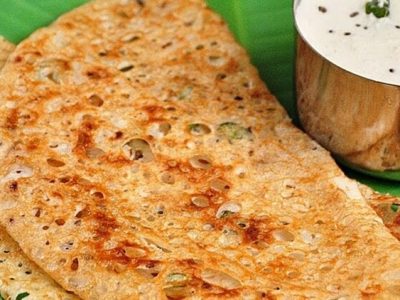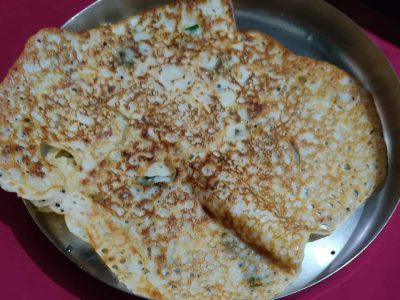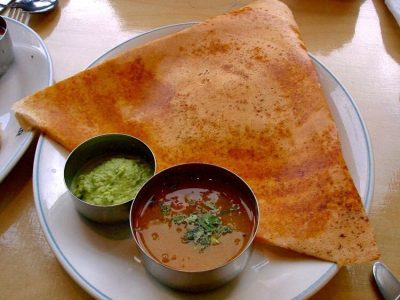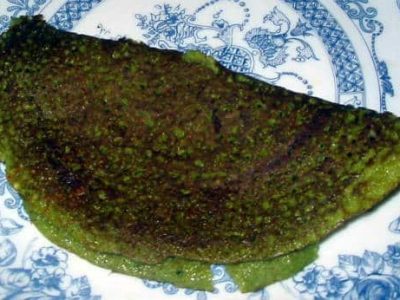
Ragi Rava Dosa brings together ragi flour and rava with ready idly batter to make a dosa that is slightly crisp at the edges and soft through the centre. The ragi gives it a deep brown colour and a mild, earthy flavour that goes well with coconut chutney or a tangy tomato chutney.
If you already keep idly batter at home, this is a straightforward way to use it differently. The batter takes only a few minutes to mix, and the 60-minute resting time does most of the work before you even light the stove.
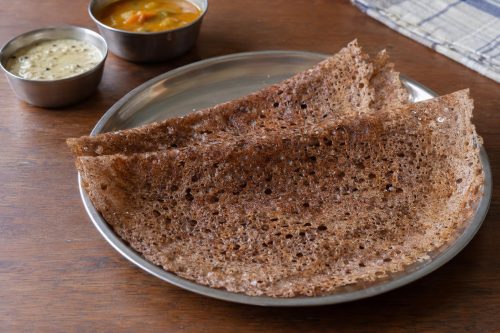
About the Recipe
The batter is a mix of ragi flour and rava soaked in water for 60 minutes, then combined with idly batter and salt. Soaking gives the rava time to soften, which helps the dosa spread evenly on the tawa without tearing.
The final batter should be pourable and slightly thinner than a regular dosa batter. Cooking on both sides gives the dosa an even texture throughout. Chopped onions can be added to the batter or scattered on the tawa before spreading, as the recipe tip suggests.
Why You Will Love This Recipe
Once the batter has rested, this recipe asks very little of you. The idly batter handles the binding and adds a gentle sourness, so you are not starting from scratch.
The rava adds a mild texture that keeps the dosa from being too soft, and ragi flour brings a distinctive colour and flavour that a plain dosa does not have. If you are used to making regular dosas, the technique here is almost identical, so there is very little new to learn.
Cooking Tips
The most common beginner mistake is making the batter too thick. It should pour and spread on its own with a light hand on the ladle. If the batter sits too long after mixing and thickens, add a splash of water and stir before each ladle.
Make sure the tawa is properly hot before you pour the batter or the dosa will stick. Medium flame works better than high heat here, as ragi can darken quickly on a very hot surface.
Top Tips
- Do not skip the 60-minute resting time for the rava and ragi mixture. The rava needs time to absorb water so it does not feel grainy in the finished dosa.
- The batter should be thin enough to pour and spread with a ladle. Test with a small amount first and adjust water if needed.
- Heat the tawa well before pouring the batter. Sprinkle a few drops of water on the surface and if they evaporate immediately, the tawa is ready.
- Add oil around the edges, not directly on top of the dosa, so the edges crisp up without making the surface greasy.
- If you want to add chopped onions, scatter them on the tawa just before pouring the batter so they cook into the dosa from the bottom.
- Flip only when the top surface looks dry and the edges begin to lift. Cooking on both sides gives the dosa an even texture.
Serving and Storing Suggestions
Serve the dosas hot off the tawa with coconut chutney, tomato chutney or sambar. They are best eaten straight away as they soften once they cool.
Leftover batter can be stored in the refrigerator for up to a day. Stir it well and add a little water before using it again as it tends to thicken on standing. Cooked dosas do not store well, so it is better to make only as many as you need at one time.
Similar Recipes
Nutrient Benefits
Ragi flour is a good source of calcium and iron, and it contains dietary fibre that keeps you feeling full through the morning. Rava contributes some protein and B vitamins.
If you are looking for more ways to use ragi, the Ragi Benefits article on Awesome Cuisine covers its nutritional profile in detail.
Ragi Rava Dosa
Ingredients
- 2 cups Idly (or Dosa) Batter
- 1/2 cup Rava (Sooji)
- 2 cups Ragi Flour
- Salt as per taste
- Oil as required
Instructions
- Mix the ragi flour and rava in a bowl.
- Add enough water and mix well.
- Keep it aside for 60 minutes.
- After 60 minutes, add the idly batter and enough salt.
- Sprinkle some water and mix well to a pourable batter.
- Heat a tawa over medium flame.
- Pour a ladleful of the batter and spread evenly.
- Add oil around the edges and cook on both sides.
- Remove and transfer to a serving plate.
- Serve with chutney and sambar of choice.
- Tip
- You can also add chopped onions if desired.
Sign up for our newsletter
Add Awesome Cuisine as a Preferred Source

Frequently Asked Questions
Can I make this dosa without idly batter?
The idly batter helps bind the dosa and adds a slight sourness that balances the earthy flavour of ragi. If you do not have idly batter, plain dosa batter works as an alternative. Making the dosa without any fermented batter is possible, but the texture will be less cohesive and the dosa may not hold together as well on the tawa.
Why is my ragi rava dosa sticking to the tawa?
This usually happens when the tawa is not hot enough before the batter is poured, or when the batter is too thick. Make sure the tawa is properly preheated on medium flame before you start, and check that the batter is thin and pourable. A well-seasoned iron tawa or a non-stick pan both work well for this recipe.
How thin should the batter be?
The batter should be thinner than a regular dosa batter. When you pour a ladle onto the tawa, it should spread on its own or with very light circular movements. If you have to press or push the batter to spread it, the batter is too thick. Add water a little at a time and stir well until you reach the right consistency.
Can I prepare the batter the night before?
You can mix the ragi flour and rava with water and let it rest overnight in the refrigerator. Add the idly batter and salt just before you plan to cook. Stir the batter well and adjust the consistency with a little water, as it will thicken after refrigeration. This makes it convenient for a quick breakfast the next morning.
What chutneys go well with ragi rava dosa?
Coconut chutney is the most common pairing and works very well with the mild, earthy flavour of ragi. Tomato chutney and onion chutney are also good choices. Sambar on the side adds a savoury, tangy contrast. If you enjoy ragi-based breakfasts, you might also like Ragi Dosa and Ragi Adai.