
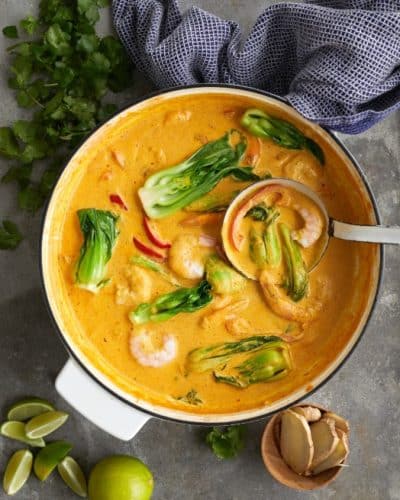
Thai King Prawn Curry is one of those dishes I kept coming back to during a stretch when I was craving something that was not quite Indian, not quite Chinese, but had that same depth of spice and coconut that I grew up eating. The cinnamon stick was the detail that hooked me the first time I made it.
I had not expected it in a Thai curry, but it rounds out the heat from the paste in a way that feels almost familiar, like a distant cousin of the korma my mother used to make on cold evenings. I have made this dozens of times now, and I always use the same small, heavy-based saucepan because it holds the heat evenly without scorching the coconut milk. That 15-minute simmer is where the whole broth comes together, and I never rush it.
About the Recipe
Every ingredient in this curry is available at a standard supermarket, which is one reason I make it so often. The Thai curry paste does a lot of the heavy lifting, so you are not building a spice base from scratch. From start to finish, you are looking at around 30 minutes, including prep. I tend to make this on Friday evenings when I want something that feels like a treat but does not leave me with a pile of washing up or a kitchen full of smoke.
Why you will love this recipe
Fifteen minutes is all it takes for the broth to go from a loose mixture of coconut milk and paste to something layered and deeply aromatic. That is the part that keeps drawing me back, because the payoff feels disproportionate to the effort. The prawns themselves only need five minutes under the lid, and the pak choi goes in at the same time, so there is no juggling of separate pots or timings.
The fresh coconut, basil and lime at the end do real work too, cutting through the richness so the bowl does not feel cloying by the last spoonful. For anyone who cooks regularly, having a curry this good in your back pocket for busy evenings is genuinely useful.
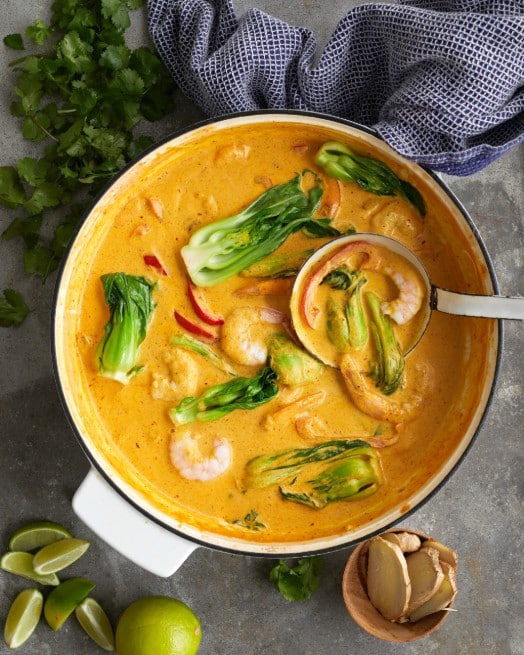
Cooking Tips
The most common mistake with this curry is rushing the 15-minute simmer. If you skip or shorten it, the broth tastes thin and the individual spices have not had time to settle into each other. Keep the heat low enough that the coconut milk barely bubbles rather than boiling hard, which can cause it to split and turn greasy. I have also seen beginners add the prawns too early.
Raw king prawns are done the moment they turn pink all the way through, which only takes a few minutes. Overcooking them makes them rubbery, and there is no coming back from that.
Top Tips
- Crush the cardamom pods lightly with the flat of a knife before adding them. You want the seeds exposed so the flavour comes out during the simmer, but you do not need to break them apart fully.
- Use full-cream coconut milk, not the light version. The fat content is what gives the broth its body and stops it tasting watery.
- If your lemongrass is tough and fibrous, bruise the stalk before chopping it. This helps release the oils and means you get more flavour from a shorter cooking time.
- Raw king prawns straight from the fridge will cool the curry down quickly when you add them. Let them sit at room temperature for about 10 minutes before they go in so the sauce recovers its temperature faster.
- The garnishes are not optional decoration. The fresh lime juice and basil change the balance of the finished dish, so have them ready before you start cooking.
Serving and Storing Suggestions
This recipe serves two generously and takes around 30 minutes from start to finish, including about 10 minutes of prep. Serve it straight from the pan into wide, shallow bowls with steamed jasmine rice alongside. Leftovers keep in the fridge for one day in a sealed container, but the prawns will tighten up on reheating, so warm it gently over a low heat rather than blasting it in the microwave. I would not freeze this one because the coconut milk tends to separate and the texture of the prawns suffers.
Similar Recipes
- Thai Green Chicken Curry
- Coconut Prawn Masala
- Lemongrass and Ginger Fish Curry
- Malaysian Prawn Laksa
- Sri Lankan Coconut Crab Curry
Thai King Prawn Curry
Ingredients
- 1/2 tsp Vegetable Oil
- 1/2 tsp Sesame Oil
- 2 Garlic Cloves (chopped)
- 3 cm Root Ginger (peeled and chopped)
- 1 stick Lemon Grass (chopped)
- 1 tbsp Red Thai Curry Paste (heapted)
- 400 gms Full Cream Coconut Milk
- 2 Cardamom Pods (crushed)
- 1 stick Cinnamon
- 1 tbsp Thai Fish Sauce
- 4 Lime Leaves
- Juice of 1/2 Lime
- 400 gms Raw King Prawns (shelled and de-veined)
- 2 Pak Choi (small and cut in half)
To Serve:
- Slices of fresh coconut
- 1 chopped red chilli
- 1 lime quartered
- Fresh basil leaves
Instructions
- Heat the oils over a medium heat in the pan.
- Gently fry the garlic, ginger and lemon grass together for a couple of minutes.
- Add the Thai curry paste, coconut milk, cardamom pods, cinnamon stick, fish sauce and lime leaves.
- Bring to a gentle simmer and cook for 15 minutes.
- Stir in the lime juice, prawns and the pak choi.
- Place on the lid and cook for 5 minutes until the prawns are pink.
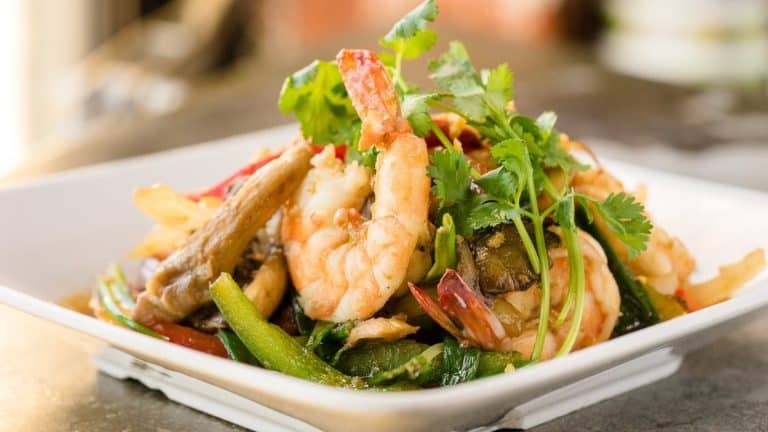
- To finish add the fresh coconut, chopped chilli, lime quarters and basil leaves.
- Serve hot.
Sign up for our newsletter
Add Awesome Cuisine as a Preferred Source

Frequently Asked Questions
My coconut milk split and the broth looks oily. What went wrong?
This usually happens when the heat is too high during the simmer. Full-cream coconut milk is stable at a gentle simmer but breaks when it boils hard. If it has already split, lower the heat immediately and stir in a small splash of cold water. It will not fully come back together, but it will improve. Next time, keep the flame low enough that you see only the occasional small bubble on the surface.
Can I use cooked prawns instead of raw king prawns?
You can, but the result will not be the same. Cooked prawns only need a minute or two in the hot broth to warm through. Any longer and they turn tough and squeaky. With raw prawns, the flesh absorbs a little of the sauce as it cooks, which cooked prawns just will not do.
I could not find lime leaves. Is there a substitute?
A strip of lime zest works reasonably well as a stand-in. Use the zest of half a lime and add it at the same stage as you would the leaves. It will not give you that same slightly floral note, but it keeps the citrus presence in the broth. Remove the strip before serving.
The curry tasted quite sweet and mild. How do I get more heat into it?
The level of heat depends heavily on the brand of Thai red curry paste you use. Some supermarket versions are quite mild. You can add a second heaped tablespoon of paste, or stir in half a teaspoon of dried chilli flakes along with the paste at the start. The chopped fresh chilli served on top also adds heat if people want to adjust it in the bowl.
Can I make the broth ahead of time and add the prawns later?
Yes, and this is actually how I handle it when I am cooking for more people. Make the broth up to the end of step four and leave it covered off the heat for up to a few hours. When you are ready to eat, bring it back to a gentle simmer over a medium heat, then add the prawns and pak choi and continue from step five. The broth often tastes better for the extra resting time.
1 comment
Simple, healthy, and absolutely delicious!