
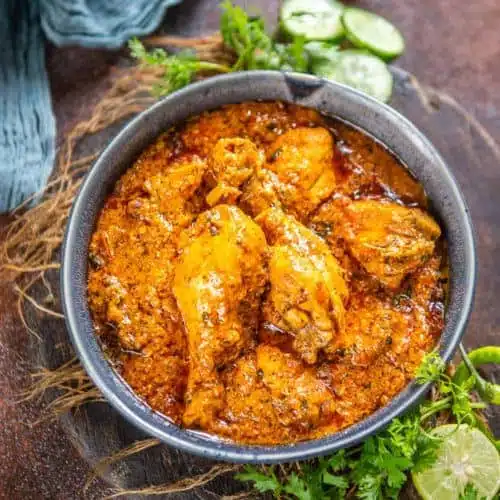
Sookha Chicken has caused more than one argument in our house. My husband is convinced the way is to cook everything in one pan, low and slow, without a pressure cooker anywhere in sight. I tried his version twice. Both times the chicken was beautifully charred on the outside and slightly underdone near the bone.
So I kept coming back to this method — marinate first, pressure cook, then fry down until all the moisture is gone. The specific detail I keep returning to is that moment when the oil separates in the pressure cooker. It sounds minor, but that is your signal that the marinade has cooked into the chicken rather than just sitting on top of it. Once I started watching for that, the final fry-down became much more controlled.
About the Recipe
Every ingredient in this recipe comes from a standard Indian kitchen — nothing obscure, nothing that requires a special trip. The cashew nuts are the one item you might debate keeping, but they add a quiet richness to the masala without making it heavy. From start to finish, including the marination hour, the whole process takes about one and a half to two hours.
I make this when guests are coming on a weeknight and I want something that looks like effort but does not require me to stand at the stove the whole time. The pressure cooker stage handles itself.
Why you will love this recipe
A dry chicken dish that holds its shape and its spice coat even after sitting in a serving dish for twenty minutes is more useful than most people realise. Saucy curries soften and spread; this one stays put. The combination of whole spices — cinnamon, bay leaves, cumin seeds — building a base, and then the dry powders finishing the masala, gives the chicken a layered spice coat rather than a single flat heat.
Black pepper alongside red chilli powder adds a different kind of warmth, one that you notice at the back of the throat rather than just on the tongue. The lemon juice at the end cuts through the oil just enough to make the whole thing feel lighter than the five tablespoons of oil might suggest.
Cooking Tips
The most common beginner mistake here is adding water during the final fry. I understand the instinct — the chicken looks like it might catch — but adding water at that stage undoes the whole point. If it looks like it is catching, lower the heat and keep stirring. The other thing to watch is the pressure cooker stage: check that oil has separated before you open it. If you skip past that and the chicken is still sitting in liquid, the final fry will take much longer and the spices will not cling properly.
Top Tips
- Marinate for a full hour, not less. Thirty minutes will leave the centre of thicker pieces under-seasoned, which no amount of frying will fix later.
- When you fry the onions in the second pan, take them to a proper golden-brown. Pale onions will make the masala taste raw and slightly bitter.
- Do not skip the ginger cut into small pieces — it is different from the paste and adds short bursts of heat and texture in the finished dish.
- Add the pressure-cooked chicken to the pan using a slotted spoon or tongs so you are not dragging excess liquid into the dry fry.
- Cashew nuts are optional if you do not have them, but if you do use them, add them early enough to soften slightly in the oil so they blend into the masala rather than sitting on top as a garnish.
- Lemon juice goes on at the very end, off the heat. Cooking it in will lose the brightness entirely.
Serving and Storing Suggestions
Serving size is 4 to 5 people. Total time including marination is about 1 hour 45 minutes, with roughly 45 minutes of active cooking. Serve hot with chapatis, rumali roti, or plain rice and a simple onion-tomato salad on the side. Leftovers keep well in the refrigerator for up to two days in a sealed container. Reheat on a low flame in a pan with a tablespoon of oil rather than microwaving — microwaving tends to make the dry masala coat go sticky and uneven.
Similar Recipes
- Chicken Sukka (Mangalorean style)
- Andhra Kodi Vepudu (dry pepper chicken)
- Kadai Chicken (semi-dry version)
- Chettinad Chicken Fry
- Hariyali Chicken Tikka (oven-roasted dry chicken)
Nutrient Benefits
Chicken, particularly bone-in pieces, provides a solid amount of protein per serving along with phosphorus and B vitamins, especially B6 and B12. Ginger and turmeric both have well-documented anti-inflammatory properties, and using them in the marinade means they penetrate the meat rather than just sitting in a sauce.
Black pepper contains piperine, which research suggests improves the absorption of curcumin from the turmeric. For a meat-based dish, the nutritional profile here is reasonably straightforward and not heavily processed.

Sookha Chicken
Ingredients
- 1 1/2 kg Chicken (cut into 1 - 2 inch pieces)
- 1/2 tsp Cumin seeds
- 2 tsp Red chilli powder
- 1 Green chillies (finely chopped)
- 2 Red chillies (dry)
- Salt as per taste
- 1/4 tsp Turmeric powder
- 2 tsp Ginger-garlic paste
- Fresh ginger - 2 inch piece, peeled and cut into very small pieces
- 1 tsp Coriander powder
- 1/2 tsp Garam masala
- 1 Onion (chopped)
- 1 Onion (cut into long pieces)
- Cinnamon sticks (1 inch piece)
- 2 Bay leaves
- 1/2 tsp Black pepper
- Cashew nuts (few pieces)
- 1 tsp Lemon juice
- Chopped coriander leaves for garnishing
- 5 tbsp Vegetable oil
Instructions
- Mix red chilli powder, salt, turmeric powder and the ginger garlic paste and marinate the chicken in it for about one hour.
- Place the marinated chicken in a pressure cooker and cook the same for about 1/2 hour. Check to see that the oil is left in the water after it is cooked.
- Add the cumin seeds, onions and green chillies in a pan after heating some oil in it and fry till the onions turn brown in colour.
- As this is done, add the remaining ginger-garlic paste, coriander powder, bay leaves, cashew nuts, salt, chilli powder and chopped green chillies and fry for some more time.
- Next add the steamed chicken and fry. Remember not to add any more water at this stage.
- Keep stirring for some time and then cover the pan to let it cook for about 15 minutes.
- Garnish with coriander leaves and lemon juice.
Sign up for our newsletter
Add Awesome Cuisine as a Preferred Source

Frequently Asked Questions
My chicken turned out watery after the pressure cooker stage. What went wrong?
This usually means it cooked with too much water or not for long enough to let the liquid reduce. When you marinate and pressure cook chicken with no added water, the meat releases its own moisture. Give it an extra five minutes in the cooker with the lid off after pressure releases, on a medium flame, until you can see oil pooling separately from the liquid. That is the point you want to reach before moving the chicken to the frying pan.
Can I skip the pressure cooker and just fry the marinated chicken directly?
You can, but you will need to cook it low and slow in a covered pan for at least 30 to 35 minutes to make sure the pieces near the bone cook through fully. Add a splash of water only if it looks like it is burning, and remove the lid for the last 10 minutes to dry it out. The texture will be slightly different — less fall-off-the-bone, more firm — but the flavour holds up.
The masala stuck to the pan and started burning. How do I handle that?
Lower the heat immediately and add the chicken pieces if you have not already — the moisture in the chicken will loosen what is stuck. If the chicken is already in, a single tablespoon of water and a quick stir will clear the bottom. After that, keep the heat at medium-low rather than high, and stir every two to three minutes during the covered 15-minute cook.
Can I use boneless chicken instead of bone-in pieces?
Boneless works, but reduce the pressure cooker time by about half, roughly 12 to 15 minutes rather than 30, or the chicken will overcook and go dry before you even get to the frying stage. Bone-in pieces hold moisture better through the double-cooking process, which is why the original recipe calls for them.
How do I know when the final fry is done and the chicken is ready to serve?
The surface of the chicken pieces should look dry and slightly caramelised, not wet or saucy. The masala should be clinging to the pieces rather than pooling at the bottom of the pan. You will also hear the sizzle shift — it starts as a wet, spluttering sound and gradually becomes a quieter, drier fry. That shift in sound, along with the oil beginning to separate around the edges of the pan, is a reliable sign that the dish is ready.


nice 1