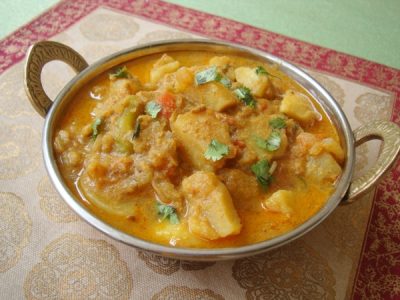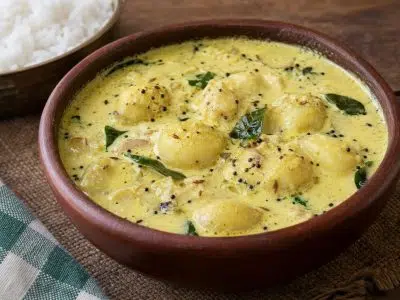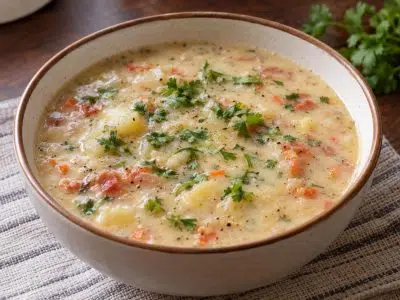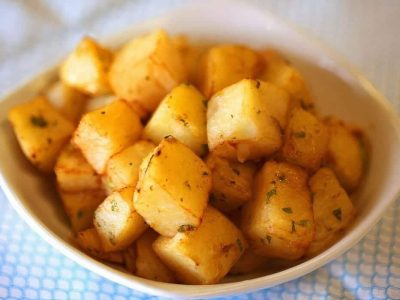
Curried Potatoes came into my regular rotation because of a specific request. My neighbour’s daughter, who had just moved into her own flat, kept asking me for something she could cook on a Sunday afternoon and eat through the week. Not a weeknight recipe. Something with a little effort that still felt comforting and reliable.
This is what I made for her first. What I remember most about that afternoon is the smell of poppy seeds, coriander, and fennel hitting the hot oil, all at once. It fills the kitchen quickly and settles into the walls. I have made this curry probably forty or fifty times since, and I still pause for that moment.
The spice paste is what I keep coming back to. Everything else in the recipe is honest and straightforward, but that paste does something to the potatoes that no bottled masala can replicate.
About the Recipe
Most of the ingredients here are pantry staples if you cook Indian food regularly. Dried red chillies, coriander seeds, fennel seeds, and roasted bengal gram are things I keep in my kitchen at all times. Fresh coconut is the one item that requires a bit of planning, but a small wedge from a market does the job well.
From start to finish, the whole process takes about 45 to 50 minutes, including the 30-minute cashew soaking time. I would make this on a Sunday when I have lunch at home, or on any day I want something ready that will reheat well the next morning.
Why you will love this recipe
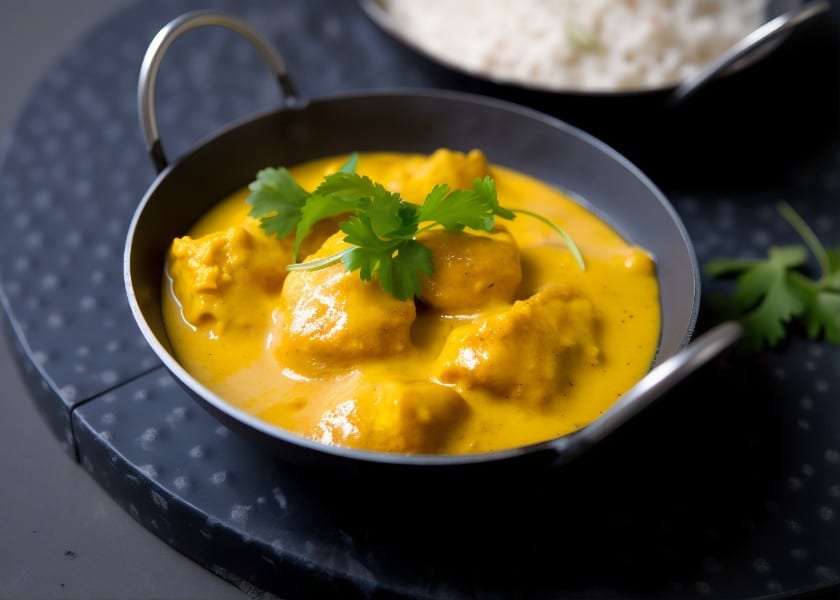
The spice paste is genuinely different from what most potato curries ask you to make. Grinding soaked cashews with coconut, fennel, and poppy seeds gives the curry a body that coats the potatoes without making things heavy or stodgy. The ghee and whole spices, the bay leaf, cloves, and cinnamon, go in at the beginning and set a warm, slightly sweet base before the onions even hit the pan.
By the time the paste comes in, the kitchen already smells like something slow-cooked, even though this is a 45-minute dish. I always press a potato cube against the side of the pan with a wooden spoon at the 10-minute mark to check if it is tender. If it gives without much resistance, it is ready. That small test has saved me from underdone potatoes more than once.
Top Tips
- Soak the cashew nuts first, before you do anything else. The 30 minutes go by while you chop onions and prep the potatoes, so nothing is wasted.
- Dry roast the spices for the paste carefully. The moment they smell fragrant, take the pan off the heat. Another 30 seconds and the chillies will turn bitter.
- If you do not have a wet grinder, a standard mixer jar works fine for the spice paste. Add the water gradually so the paste does not become too loose.
- Fresh coconut gives the best result here. If you must use desiccated coconut, soak it in a tablespoon of warm water before adding it to the grinder.
- Pressure cooking the potatoes, as the note suggests, is something I do when I am short on time. Five minutes on pressure and they are perfectly done without any guesswork.
- The curry thickens as it sits. When reheating, add a small splash of water and stir over low heat until it loosens to the right consistency.
Serving and Storing Suggestions
This recipe serves 4 people comfortably as a main dish alongside roti or puri. Total prep time is about 15 minutes, plus 30 minutes for soaking the cashews. Cooking takes around 30 to 35 minutes. Leftovers keep well in the refrigerator for up to 2 days in an airtight container.
The flavour deepens overnight, so day-two servings are often better than the first. Reheat gently on the stovetop over low heat with a little added water. I would not recommend freezing this, because the coconut in the paste can turn grainy after thawing.
Similar Recipes
- Aloo Masala (dry spiced potatoes for dosa)
- Potato Kurma with peas
- Egg Kurma
- Mixed Vegetable Kurma
- Chana Masala
Nutrient Benefits
Potatoes get unfairly dismissed, but they carry meaningful amounts of potassium, vitamin C, and dietary fibre, particularly when the skin is retained. This recipe peels them, so some of that fibre is lost, but the cashew nuts and coconut in the paste add healthy fats and a small amount of plant protein. For a potato-based dish, it holds its nutritional ground reasonably well.

Curried Potatoes
Ingredients
- 1 kg potatoes
- 2-3 tbsp ghee
- 1 bay leaf
- 2-3 cloves
- 1 inch stick cinnamon
- 3 medium sized onions (finely chopped)
- 1/2 tsp turmeric powder
- 1 1/2 tsp salt (to taste)
- 1 sprig curry leaves
- Spice paste
- 6-8 cashew nuts
- 1 tbsp oil
- 1 tbsp poppy seeds (powdered)
- 2 tsp coriander seeds
- 1 tbsp fennel seeds (saunf)
- 5-6 dried red chillies
- 2 tsp roasted bengal gram
- 1 inch piece ginger (finely chopped)
- 3-4 tbsp grated fresh coconuts
- Garnish
- 2 tbsp finely chopped coriander leaves
Instructions
- Wash potatoes, peel and cut into 1/ 2 inch cubes.
- Soak cashew nuts for spice paste in 1/2 cup warm water for 30 minutes. Drain well and set aside.
- Heat oil for spice paste in a frying pan over moderate heat. Add poppy seeds, coriander seeds, fennel seeds and red chillies and fry, tossing gently, till fragrant.
- Remove from heat and mix in cashew nuts and remaining ingredients for spice paste. Grind to a smooth consistency, gradually adding 1/4 cup water.
- Heat ghee in a frying pan over moderate heat. Add bay leaf, cloves and cinnamon and toss for a minute.
- Add onions and fry till golden.
- Blend in spice paste and fry for 3-4 minutes over low heat, stirring continuously.
- Mix in potatoes, turmeric powder, salt, curry leaves and 2 cups water. Simmer for at least 10-12 minutes, stirring frequently, till potatoes are tender. Add 1/2 cup water if kurma is too thick.
- Garnish with coriander leaves and serve hot with roti or puri.
Note: Instead of simmering the potatoes, they can be cooked under pressure for 5 minutes.
Sign up for our newsletter
Add Awesome Cuisine as a Preferred Source

Frequently Asked Questions
My spice paste turned out grainy instead of smooth. What went wrong?
Most likely the grinder needed more water, or the cashews were not soaked long enough. Make sure the cashews have soaked for the full 30 minutes, and add the water to the grinder gradually, a tablespoon at a time, until the paste moves freely and looks smooth.
Can I use oil instead of ghee?
Yes, a neutral oil like sunflower or refined groundnut oil works. The flavour will be slightly different because ghee adds a particular richness to the base, but the curry will still taste good. I would not use coconut oil here as it can compete with the coconut already in the spice paste.
The curry tastes a bit raw even after simmering for 12 minutes. What happened?
This usually means the spice paste did not get enough time in the pan before the potatoes went in. The paste needs a full 3 to 4 minutes of frying over low heat, stirring the whole time, so the raw flavour of the ground spices cooks out properly. If you are already at the simmering stage and it still tastes sharp, let it go another 5 minutes on low heat with the lid slightly ajar.
I could not find roasted bengal gram. Can I leave it out?
Roasted bengal gram, also called dalia or pottu kadalai, adds a slightly nutty thickness to the paste. If you cannot find it, add one extra tablespoon of grated coconut and a few more cashew nuts to compensate for the body it provides. The taste will shift a little but not considerably.
Can I make the spice paste ahead of time?
Yes, and it actually helps. You can grind the paste up to a day in advance and refrigerate it in a covered bowl. Give it a stir before adding it to the pan because it tends to settle and separate slightly as it sits.