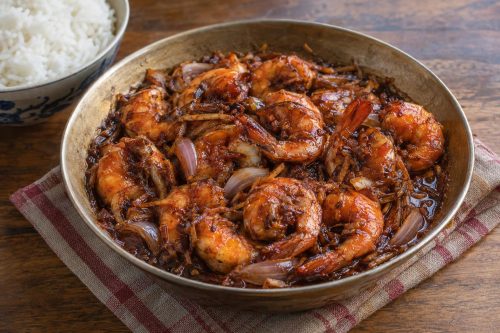
Assam Spicy Shrimp is a Southeast Asian-style preparation where tamarind does the heavy lifting. The word assam refers to tamarind in Malay cooking, and here it forms the base of both the marinade and the sauce. Blachan, a fermented shrimp paste, adds a deep savoury note that is hard to replicate with anything else. Ginger, garlic, red onions and three separate sauces build on top of that. The result is a thick, glossy coating that clings to the shells and delivers heat, sourness and a touch of sweetness in every bite.
About the Recipe
The recipe is easy to create in two steps. First, the shrimp sit in a tamarind, oyster sauce and chilli marinade for a full hour so the flavour has time to penetrate. Second, the sauce is built separately by warming blachan and combining it with the remaining sauces and tamarind liquid.
When the shrimp go into the hot pan, they need only about three minutes to turn orange-red before the sauce is poured over. High heat then reduces it quickly so it thickens and coats the shells rather than sitting as a watery pool.
Why You Will Love This Recipe
The sauce is the main reason to make this dish. After eight minutes at a brisk bubble, it reduces to a sticky, deeply flavoured crust on the shrimp shells. You get sourness from the tamarind, salt and umami from the oyster and soy sauces, heat from the chilli, and a faint sweetness from the brown sugar added at the end.
The blachan is the other reason. It smells strong when it heats in the pan, but once cooked into the sauce it adds a background depth that makes the whole dish taste more complete. If you enjoy Prawns in Spicy Coconut Sauce, this will suit your palate well.
Cooking Tips
The most common beginner mistake is rushing the tamarind. Give it a full ten minutes on a low flame so the pulp separates cleanly from the seeds, then press it through a sieve properly. Watery or seedy tamarind liquid will thin the sauce and make it hard to reduce.
Do not crowd the shrimp in the pan. If the pan is small, fry them in two batches so they colour rather than steam. High heat in the final stage is what gets the sauce to thicken and crust onto the shells.
Top Tips
- Soak and boil the tamarind for the full ten minutes before pressing through a sieve. Under-cooked tamarind gives you a thinner, less flavourful liquid.
- Marinate the shrimp for the full hour. Less time means the tamarind and sauces stay mostly on the surface rather than flavouring the shrimp.
- Heat the blachan gently in a dry non-stick pan before adding any liquid. This develops its flavour without burning it.
- Keep the heat high during the final eight minutes of cooking. This is what reduces the sauce to a thick, shell-coating consistency.
- Add the onion wedges and brown sugar only at the very end. They are there to adjust the balance of sweet, sour and spice, so taste before adding the full quarter cup of sugar.
- If blachan is unavailable, a small amount of fish sauce can be used in its place, though the flavour will be noticeably lighter.
Serving and Storing Suggestions
Serve the shrimp immediately with steamed white rice, which absorbs the sauce well. A plain cucumber salad or a simple stir-fried vegetable on the side helps balance the intensity.
Leftovers can be stored in an airtight container in the refrigerator for up to two days. Reheat gently in a pan with a splash of water to loosen the sauce. Avoid microwaving for too long as the shrimp can turn rubbery. This dish does not freeze well because the sauce texture changes on thawing.
Similar Recipes
- Prawns in Spicy Coconut Sauce
- Malabar Shrimp Fry
- Spicy Seafood Soup
- Braised Whole Fish in Chilli and Garlic Sauce
Nutrient Benefits
Shrimp are a good source of protein and provide iodine, selenium and vitamin B12. Tamarind contains iron and potassium. The dish is moderately high in sodium due to the oyster and soy sauces, so those watching their salt intake may want to reduce the dark soy sauce slightly.

Assam Spicy Shrimp
Ingredients
- For marinating:
- 2 pounds Headless cleaned shrimp
- 1 tbsp Oyster sauce
- 1/2 tsp Hot chilli sauce
- 6 ounces Soy sauce, tamarind
- 1 1/2 cups Water
- For cooking:
- 3 ounces Ginger root
- 4 each Garlic cloves
- 1 tsp Blachan
- 2 each Small red onions
- 3 tbsp Oyster sauce
- 1 tbsp Dark soy sauce
- 1 tbsp Hot chilli sauce
- 3 tbsp Vegetable oil
- 1/4 cup Packed brown sugar
Instructions
- Soak the tamarind in water and boil on a low flame for about 10 minutes or until the pastry coating separates from seeds.
- Discard the seeds and press through a sieve or food mill to extract the entire pulp and soupy liquid.
- Marinate the cleaned and rinsed shrimps with 1 tbsp of this tamarind liquid, oyster sauce and hot chilli sauce for 1 hour.
- Peel and finely sliver the ginger, garlic and onions.
- Heat gently the blachan in a non-stick pan for 3 to 4 minutes to develop the flavors.
- Add oyster, soy, chilli sauces and the remaining tamarind liquid with blachan and mix well.
- Fry ginger and garlic in 2 tbsp of hot oil in a large bowl for 3 to 4 minutes or until they get golden brown.
- Now add the marinated shrimps and extra oil (if required) to fry them further for about 3 minutes to turn the shrimps orange red.
- Add sauces all over the shrimps and cook for about 8 minutes at a brisk bubble over high heat, until shrimps are aromatic and sauces have reduced and thickened to crust the shells.
- Now add the onion wedges and sugar to adjust seasoning, sweetening and spice.
- Serve with rice.
Sign up for our newsletter
Add Awesome Cuisine as a Preferred Source

Frequently Asked Questions
What is blachan and can I skip it?
Blachan is a fermented shrimp paste used widely in Southeast Asian cooking. It has a very strong smell when raw but mellows considerably once heated in the pan. It adds a deep, savoury background to the sauce that is difficult to replicate. If you cannot find it, a small amount of fish sauce is the closest substitute, though the flavour will be lighter. Try not to skip it entirely if you can help it, as it is one of the defining ingredients in this dish.
Can I use tamarind paste from a jar instead of whole tamarind?
Yes. Dissolve about one to two tablespoons of ready-made tamarind paste or concentrate in one and a half cups of warm water and taste for sourness before using. Ready-made paste varies in strength between brands, so adjust the quantity accordingly. The recipe calls for boiling whole tamarind to extract the pulp, which gives a fresher, slightly less concentrated liquid. Either form will work, but start with less paste and add more if needed.
My sauce is not thickening at the end. What went wrong?
The most likely reason is that the heat was not high enough during the final eight minutes. The recipe calls for a brisk bubble over high heat. If the pan is too small or the heat too low, the liquid steams rather than reduces. Another cause is excess water in the tamarind liquid. Make sure you boil the tamarind properly and press out the pulp fully. If the sauce is still too loose, cook it for another two to three minutes uncovered on high heat.
Do I need to peel the shrimp before cooking?
The recipe uses headless cleaned shrimp but does not specify peeling. In many Southeast Asian preparations, shrimp are cooked with the shells on because the sauce is meant to crust and coat them. If you prefer peeled shrimp, you can remove the shells before marinating, but the sauce will coat the flesh directly rather than forming a shell crust. Both approaches work.
How spicy is this dish and can I reduce the heat?
The recipe uses half a teaspoon of hot chilli sauce in the marinade and one tablespoon in the cooking sauce, which makes it noticeably spicy. You can reduce both quantities to suit your preference. The brown sugar added at the end also helps soften the heat, so taste before adding it and adjust the amount. If you want more heat rather than less, increase the chilli sauce in the cooking stage rather than the marinade, as this gives you more control over the final flavour.