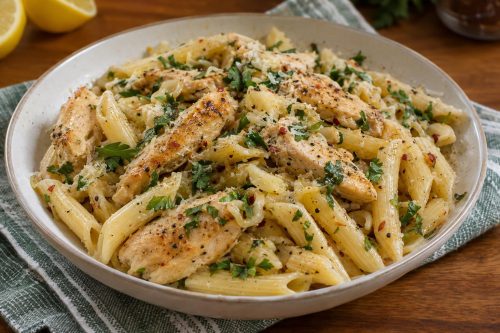
This lemon chicken pasta is a no-cream recipe that gets its body from a reduced white wine and lemon juice sauce. The chicken is pounded thin, dusted in flour and cooked in the same pan that builds the sauce, so the browned bits left behind add flavour as the garlic and wine reduce. The pasta is then tossed directly in that mixture along with grated cheese and fresh coriander or basil. The result is a light, well-seasoned plate that still has enough going on to be satisfying.
About the Recipe
The order of steps are important. Pounding the chicken to an even quarter-inch thickness means it cooks through in two to three minutes per side without drying out. Dredging in flour gives the surface a light crust and helps the sauce cling later.
The garlic goes into the same pan after the chicken is removed, and the wine is added while the heat is still active so the liquid picks up all the browned bits. Lemon juice goes in last before the pasta is tossed through. Keep some reserved pasta water nearby in case the toss feels too dry.
Why You Will Love This Recipe
The sauce is built entirely from white wine, lemon juice and a small amount of starchy pasta water, so the dish stays light without tasting thin. The grated cheese melts into the warm pasta and adds enough body to coat each piece properly.
Red chilli flakes and black pepper give it a mild heat that balances the lemon well. If you want a white wine chicken pasta that does not leave you feeling heavy, this one fits that exactly.
Cooking Tips
The most common mistake is skipping the pounding step. Uneven chicken thickness means one part overcooks before the other is done. Keep the flame at medium throughout, not high, or the garlic will turn bitter before the wine goes in.
Do not skip reserving pasta water before draining. The starch in that water helps the sauce bind to the pasta when everything is tossed together. Add it a little at a time so the pasta does not become wet.
Top Tips
- Pound the chicken to an even quarter-inch thickness before cooking. This is not optional if you want it to cook evenly in two to three minutes per side.
- Shake off excess flour thoroughly. Too much flour left on the chicken will make the sauce gluey rather than light.
- Add the wine when the garlic has had just 30 seconds in the pan. Any longer and the garlic starts to colour too much and turns sharp.
- Reserve at least a quarter cup of pasta water before draining. Add it one spoon at a time when tossing so you can control the consistency.
- If you do not have white wine, use a splash of chicken stock with a small extra squeeze of lemon juice. The sauce will be slightly less complex but still works.
- Toss the pasta while it is still hot so the cheese melts into it properly rather than clumping.
Serving and Storing Suggestions
Serve the chicken sliced over the pasta on a wide plate and spoon the remaining garlic and lemon mixture from the pan over the top. A little extra grated cheese and a few fresh coriander leaves finish it well.
This dish is best eaten immediately. If you have leftovers, store them in an airtight container in the refrigerator for up to one day. Reheat gently in a pan with a splash of water, as the pasta will absorb the sauce as it sits and will need a little liquid to loosen.
Similar Recipes
- Chicken Penne Arrabbiata
- Chicken in Wine Sauce
- Creamy Pasta with Vodka
- Homemade Pasta Sauce
- Garlic and Chicken Pepper Stir Fry
Nutrient Benefits
Chicken breast is a lean source of protein, which helps keep the portion filling. Olive oil contributes unsaturated fat in a small quantity. Lemon juice provides vitamin C, and the pasta supplies carbohydrates for energy. Because there is no cream or butter in this recipe, the fat content stays relatively modest compared to most chicken pasta dishes.
Lemon Chicken Pasta
Ingredients
- 2 Chicken Breasts boneless, skinless
- 125 g Pasta
- 1/4 cup Plain Flour (Maida)
- 1 1/2 tbsp Olive Oil
- 5 to 6 Garlic Cloves peeled, sliced
- 1/2 cup White Wine
- 3 tsp Lemon Juice
- 1/4 cup Cheese grated
- handful Coriander Leaves or Basil chopped
- 1/4 tsp Black Pepper Powder
- 1/4 tsp Oregano
- 1/4 tsp Red Chilli Flakes
- as per taste Salt
Instructions
- Using a rolling pin, pound the chicken breasts to 1/4 inch thickness.
- Sprinkle some salt and pepper powder on top.
- Dredge it in the flour on both sides and shake off any excess.
- Cook the pasta as per packet instructions for al dente.
- Heat 3 tsp of oil in a pan over medium flame.
- Cook the chicken until it is no longer pink, about 2 to 3 minutes on each side.
- Remove and keep it warm.
- To the same pan, add the remaining oil.
- Stir-fry the garlic over medium flame for 30 seconds.
- Add wine and cook until the liquid is reduced by half, stirring to loosen the browned bits from the pan.
- Add lemon juice and stir.
- Drain the pasta and transfer to a large bowl. Reserve some of the pasta water.
- Add the oregano, chilli flakes, grated cheese, coriander leaves, garlic mixture, salt and pepper powder.
- Toss well and add a little of the pasta water if it is too dry.
- Transfer the chicken and the pasta to a serving plate.
- Drizzle some of the remaining garlic mixture and garnish with coriander leavs.
- Garnish with cheese if desired and serve.
Sign up for our newsletter
Add Awesome Cuisine as a Preferred Source

Frequently Asked Questions
Can I make this lemon chicken pasta without white wine?
Yes. Replace the white wine with an equal quantity of chicken stock and add an extra teaspoon of lemon juice to compensate for the acidity. The sauce will be slightly milder in flavour but the technique stays the same. Cook the stock down until reduced by half, just as you would the wine.
What type of pasta works best for this recipe?
Any short or medium pasta shape works well. Penne, fusilli or farfalle hold the garlic and lemon sauce in their ridges or folds. Spaghetti or linguine also work if that is what you have. The key is to cook the pasta al dente as the recipe instructs, because it will continue to absorb the sauce when tossed. Overcooked pasta will turn soft and lose its texture.
Why is the chicken pounded before cooking?
Pounding the chicken to a quarter-inch thickness ensures it cooks evenly in two to three minutes per side. A chicken breast at its natural uneven thickness will be done on the thin end while the thicker part is still undercooked. Pounding removes that problem and also helps the flour coating adhere more evenly across the surface.
Can I use basil instead of coriander leaves?
Yes, the recipe lists both as options. Basil gives a slightly sweeter, more Italian-style finish. Coriander leaves add a sharper, more herbal note. Both work well with the lemon and garlic in the sauce. Use whichever you prefer, or a small amount of both if you have them.
My sauce looks too dry after tossing the pasta. What should I do?
Add the reserved pasta water a tablespoon at a time while tossing. The starch in the pasta water helps the sauce coat the pasta without making it watery. Avoid adding plain tap water as it will dilute the flavour. If you forgot to reserve pasta water, a very small splash of warm water with a squeeze of lemon juice can help loosen things slightly, though the result will not be quite the same.