
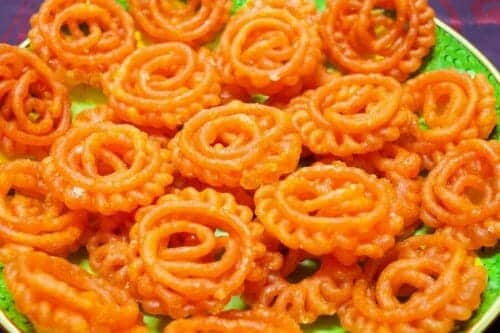
Jangiri is a popular South Indian sweet that looks similar to jalebi but is made from urad dal rather than maida, giving it a distinct texture and a mildly earthy flavour. Often called South Indian jalebi, it is a fixture at weddings and sweet shops across Tamil Nadu. The batter is ground from soaked urad dal and raw rice, piped through a cloth cone into hot ghee, then soaked briefly in sugar syrup. Getting the batter smooth enough to pipe cleanly and the syrup to exactly one-string consistency are the two things that make the difference.
About the Recipe
This recipe uses 250 g of urad dal with just 3 teaspoons of raw rice. The rice helps the batter hold its shape when piped. The sugar syrup is cooked to a one-string consistency, firm enough to coat the Jangiri without making it soggy. A teaspoon of milk goes into the boiling syrup to draw out impurities, and cardamom powder is added at the end so the fragrance stays fresh.
The batter is ground in two stages: coarse first, then smooth after sprinkling a little water. This gives you better control over the final texture.
Why You Will Love This Recipe
Making Jangiri at home means you control the texture. Shop-bought versions are often too sweet or turn hard before you get to eat them. When you make it yourself, you can pull each piece from the ghee while it is still soft and soak it for just a minute or two so it stays tender.
The cardamom-flavoured syrup is light and not cloying. If you enjoy Rava Kesari or Aval Coconut Kesari at home, Jangiri is a natural next step for festival sweet-making.
Cooking Tips
The most common beginner mistake is frying the Jangiri until it turns crisp. It should come out of the ghee soft and pliable. If it crisps up, the syrup will not soak in properly. Keep the flame at medium throughout.
The batter must be smooth enough to flow through the nozzle without breaking the spiral. Too thick and the shape will be uneven. If the sugar syrup goes past one-string, the Jangiri will end up coated in a hard shell rather than a light glaze.
Top Tips
- Soak the urad dal and rice for the full 45 minutes so the grind is easier and the batter turns smooth.
- Grind in two stages: coarse first, then add a little water and grind to a smooth paste. Skipping the first stage makes the final paste harder to control.
- Test the sugar syrup by pressing a drop between your thumb and forefinger. It should form a single thread. Pull it off the heat as soon as it reaches this stage.
- Add milk to the boiling syrup and skim off the foam that rises. This keeps the syrup clear and prevents an off taste.
- Do not crowd the pan when frying. Pipe two or three Jangiris at a time so the ghee temperature stays steady.
- Soak each Jangiri in the warm syrup for one to two minutes only. Longer soaking makes them heavy and overly sweet.
Serving and Storing Suggestions
Jangiri is best eaten on the day it is made, while it is still soft and the syrup coating is fresh. Serve at room temperature as part of a festival spread or as an after-meal sweet.
If you need to store leftovers, keep them in an airtight container at room temperature for up to two days. Refrigerating Jangiri makes it firm and changes the texture. Warm briefly before serving if it has been stored.
Similar Recipes
Nutrient Benefits
Urad dal provides plant protein, B vitamins, iron and magnesium. Because this recipe uses ghee for frying and a generous quantity of sugar for the syrup, Jangiri is an occasional treat. The protein from the dal does make it more filling than sweets made purely from refined flour.

Jangiri
Ingredients
- 250 g Urad Dal
- 3 tsp Raw Rice
- 1 1/4 kg Sugar
- 500 g Ghee
- 500 ml Water
- 1/4 tsp Cardamom Powder
- 1/4 tsp Kesari Powder
Instructions
- Soak the dal and rice for 45 minutes.
- Grind together coarsely and add kesari powder.
- Boil the water and sugar till it reaches a one string consistency.
- Add 1 tsp of milk and remove the impurities that rise up.
- Remove and add cardamom powder. Stir well.
- Sprinkle a little water on the coarse batter and grind to a smooth paste.
- Heat ghee in a pan over medium flame.
- Add some of the dough to a cone shaped jangiri cloth with a small nozzle. You can also find readymade jangiri cones in the market these days.
- Gently press over the hot ghee to a jangiri shape and cook till done on both sides.
- Ensure the jangiri is not crisp.
- Remove and put it in the sugar syrup.
- Allow it to soak for a minute or two.
- Remove and transfer to a plate.
- Serve.
Sign up for our newsletter
Add Awesome Cuisine as a Preferred Source

Frequently Asked Questions
Jalebi is made from a maida-based batter that is fermented before frying. Jangiri is made from ground urad dal and raw rice with no fermentation. The texture of Jangiri is softer and denser, and the flavour has a mild earthiness from the dal. Both are soaked in sugar syrup, but Jangiri is a South Indian sweet while jalebi is found across India.
Take a small drop of the boiling syrup on a spoon and let it cool for a few seconds. Press it between your thumb and forefinger and pull them apart slowly. If a single thread forms and holds without breaking, the syrup is ready. If no thread forms, it needs more boiling. If the thread breaks immediately or the syrup looks crystallised, it has gone too far.
The batter is likely too thick. After the first coarse grind, sprinkle a little water and grind again to a smooth paste. The batter should be firm enough to hold its shape when piped but soft enough to flow without forcing. If it still does not flow, add a few drops of water and mix well before trying again. Avoid adding too much water at once.
You can fry Jangiri in refined oil if ghee is not available, but the flavour will be noticeably different. Ghee gives the sweet its aroma and a slightly richer taste. If you do use oil, choose a neutral one with a high smoke point so it does not overpower the cardamom in the syrup.
There are two likely reasons. First, the Jangiri may have been fried until crisp rather than soft. A crisp Jangiri will not absorb the syrup evenly and will stay hard. Second, the sugar syrup may have been cooked past one-string consistency. A thicker syrup sets hard on the surface rather than soaking in. Check both the frying time and the syrup stage next time.
Hi thanks 4 all these delicious recipes regret 4 the lateness 2 discover this.