Table of Contents
Key Highlights
- Makar Sankranti marks the sun’s transition into Capricorn, symbolizing longer days, renewal, and positivity.
- It is one of the few Hindu festivals based on the solar calendar and usually falls on January 14.
- The festival celebrates harvest, gratitude toward nature, and agricultural abundance.
- Rituals include holy baths, charity, fasting, and sharing sesame and jaggery sweets.
- Celebrations vary across India, including kite flying, Pongal, Magh Bihu, and regional harvest customs.
- Pongal is the South Indian harvest expression of Makar Sankranti, honoring the sun and farmers.
- The festival remains relevant today for its focus on renewal, generosity, community bonding, and mindful living.
As winter fades and daylight gradually increases, India welcomes Makar Sankranti, a festival that marks an important seasonal and spiritual transition. Celebrated primarily as a harvest festival, Makar Sankranti is a time to express gratitude for nature’s abundance and to begin a new phase with positive intent.
Across the country, the festival is observed in different ways. From kite flying and holy river baths in the north to the celebration of Pongal in the south, and the sharing of sesame and jaggery sweets nationwide, regional traditions vary but share a common purpose: welcoming prosperity and harmony.
This guide explains what Makar Sankranti is, why it is celebrated, its cultural significance, when it is observed, and how it is celebrated across different parts of India today.
What Is Makar Sankranti and Why Is It Celebrated?
Makar Sankranti is a Hindu festival that marks the sun’s transition into the zodiac sign Makara, or Capricorn. This solar shift signals the end of the winter solstice phase and the beginning of longer, warmer days. Unlike most Indian festivals, Makar Sankranti follows the solar calendar, giving it a fixed seasonal and astronomical significance.
At its core, the festival represents a movement toward light, growth, and positivity. It coincides with the sun’s northward journey, known as Uttarayan, considered highly auspicious in Hindu tradition and symbolizing progress and renewal.
Here’s why Makar Sankranti is celebrated:
- Seasonal and astronomical importance: The sun’s transition into Capricorn marks the shift from shorter days to longer daylight hours, symbolizing clarity, warmth, and forward movement.
- Agricultural and harvest significance: The festival aligns with harvest season in many regions, making it a time to thank nature for crops and to celebrate abundance and livelihood, especially within agrarian communities.
- Spiritual and cultural meaning: Holy river baths, charity, fasting, and sharing food are believed to promote purification, discipline, and positive intentions for the year ahead.
Makar Sankranti is celebrated under different names across India, each reflecting local culture and traditions:
- Punjab, it is observed as Lohri, marked by bonfires, traditional songs, and energetic folk dances.
- Tamil Nadu, the festival takes the form of Pongal, where farmers worship the Sun God and cattle and prepare a special dish called Pongal as a symbol of gratitude.
- Assam celebrates Magh Bihu with community feasts, games, and traditional dances
Together, these regional expressions highlight the unity of belief behind Makar Sankranti while embracing India’s cultural diversity, each celebration centered on gratitude, generosity, and new beginnings.
When Is Makar Sankranti Celebrated?
Makar Sankranti is celebrated every year around January 14, marking the sun’s entry into the zodiac sign Makara, or Capricorn. Because it follows the solar calendar, the date remains consistent, unlike many Hindu festivals that shift each year.
In 2026, Makar Sankranti is observed on January 14. In some regions, celebrations may extend over multiple days, especially where the festival is linked with harvest rituals or regional observances like Pongal.
The fixed timing of Makar Sankranti highlights its close connection to natural cycles, seasonal change, and agricultural rhythms, reinforcing its importance as both a spiritual and harvest festival across India.
What Is the Religious and Cultural Significance of Makar Sankranti?
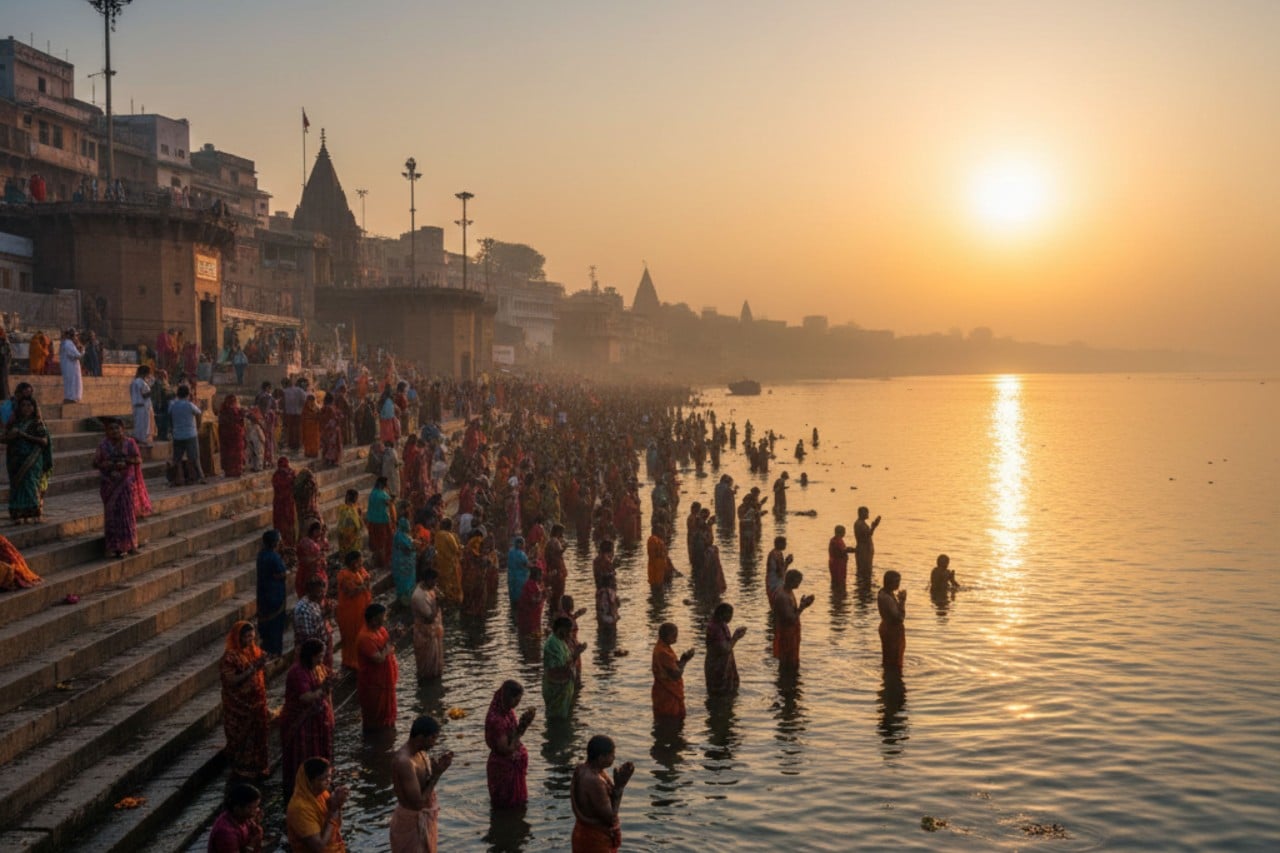
Makar Sankranti is more than a seasonal festival. In Hindu tradition, it represents a moment of spiritual clarity, gratitude, and conscious living. As the sun begins its northward journey, the day is believed to carry heightened spiritual energy, making it ideal for reflection, discipline, and positive action.
- Religious importance in Hindu scriptures
- The sun is revered as a source of life and wisdom, and its transition into Makara symbolizes divine order and renewal.
- Uttarayan is considered a spiritually favorable period, often linked to growth, learning, and inner transformation.
- Importance of holy dips, charity, and fasting
- Bathing in sacred rivers is believed to cleanse both physical and spiritual impurities.
- Fasting and prayer encourage self-restraint and mental focus.
- Acts of charity, especially food and essential donations, are seen as powerful ways to reduce ego and cultivate compassion.
- Cultural values of gratitude, sharing, and community bonding
- Exchanging sesame and jaggery sweets reflects warmth, unity, and goodwill.
- Celebrations bring families and communities together, strengthening relationships.
- The festival reinforces gratitude toward nature, farmers, and shared heritage.
Through these traditions, Makar Sankranti becomes a reminder to live with intention, generosity, and harmony, values that continue to resonate across generations.
How Is Makar Sankranti Celebrated Across India?
Makar Sankranti is celebrated in many unique ways across India, but the underlying theme remains gratitude, renewal, and togetherness. Understanding how to celebrate Makar Sankranti begins with appreciating both traditional rituals and regional customs.
1. Northern and Western India
- Kite flying is a major highlight, symbolizing freedom, joy, and rising aspirations.
- People take holy dips in rivers and offer prayers at temples.
- Sesame and jaggery sweets like tilgul are exchanged to promote harmony and goodwill.
2. Southern India
- The festival is closely linked with the Pongal harvest celebrations.
- Homes are cleaned, rangoli designs are created, and freshly harvested rice is cooked and offered in gratitude.
- Cattle are honored as a symbol of agricultural prosperity.
3. Eastern and Northeastern India
- Communities celebrate the end of the harvest season with traditional foods and cultural gatherings.
- Ritual bathing, community feasts, and folk customs mark the occasion.
Despite regional differences, Makar Sankranti everywhere emphasizes thankfulness to nature, social bonding, and the welcoming of a prosperous new phase.
What Traditional Foods Are Eaten on Makar Sankranti?
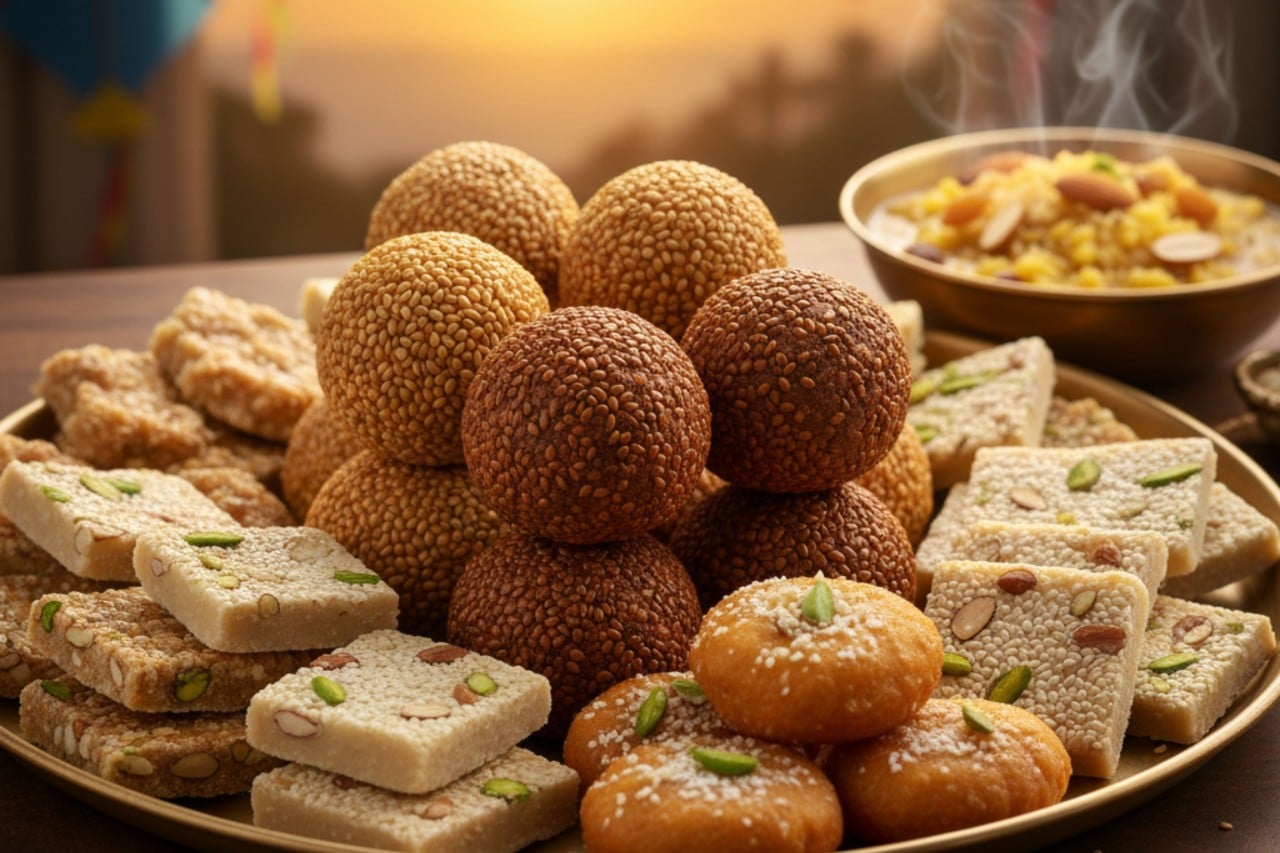
Traditional Makar Sankranti foods are closely tied to seasonal produce, regional harvests, and symbolic ingredients like sesame and jaggery. These dishes are prepared to celebrate abundance, warmth, and togetherness.
Here Are Some Popular Makar Sankranti Foods Across India:
- Tilgul (sesame and jaggery balls) is shared in Maharashtra with the message of harmony.
- Til ladoo and rewri made from sesame seeds and jaggery.
- Peanut Chikki is enjoyed in western India.
- Khichdi is prepared with rice, lentils, and ghee, especially in Uttar Pradesh and Bihar.
Regional specialties include:
- Sakkarai Pongal in Tamil Nadu, made with rice, jaggery, milk, and ghee.
- Ven Pongal, a savory rice and lentil dish offered during Pongal celebrations.
- Pitha varieties in Assam and eastern India, made from rice flour and jaggery.
- Makara Chaula in Odisha, prepared using freshly harvested rice, coconut, and jaggery.
These authentic dishes reflect regional identity while reinforcing the festival’s deeper values of gratitude, sharing, and celebration of the harvest.
What Is Pongal and How Is It Linked to Makar Sankranti?
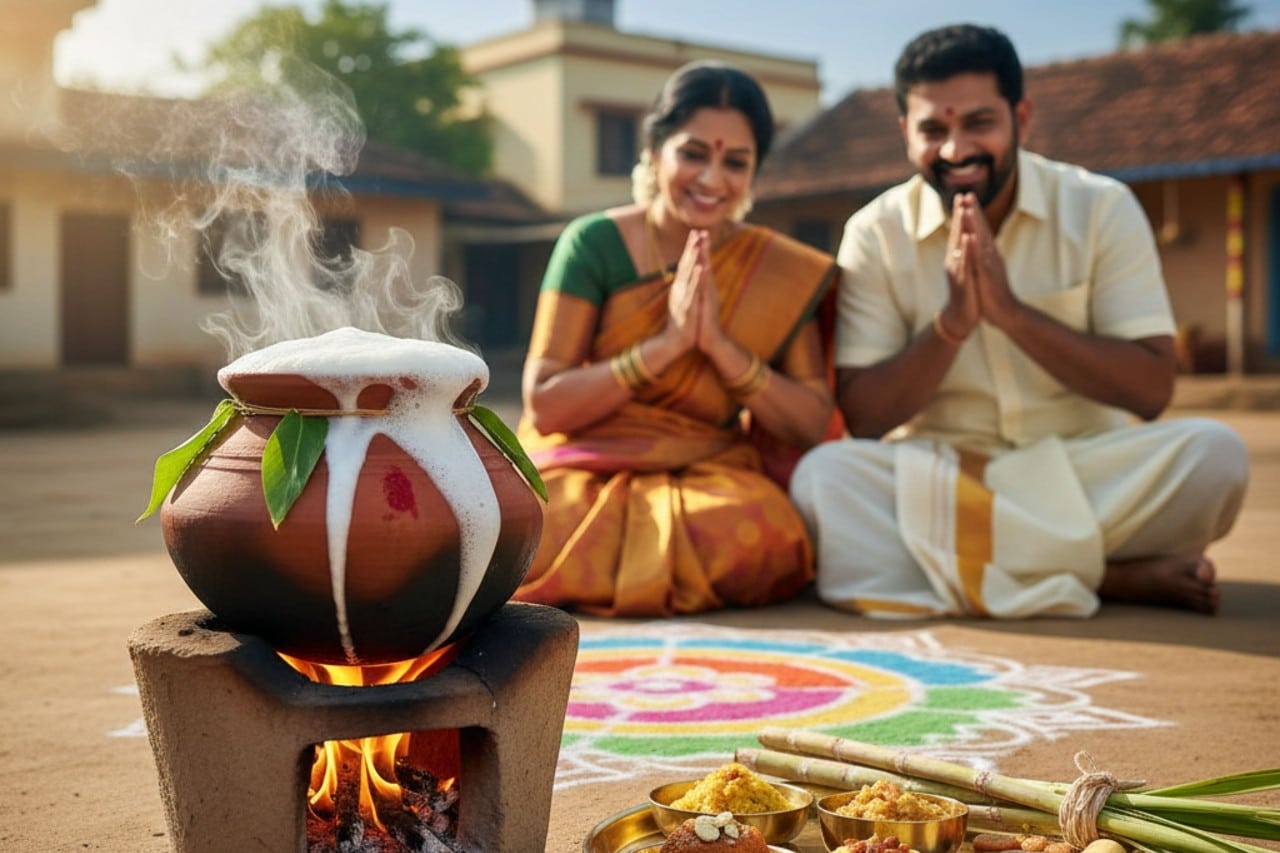
Pongal is a traditional harvest festival celebrated mainly in Tamil Nadu and other parts of South India. It is observed at the same time as Makar Sankranti and is rooted in the same solar event, the sun’s transition into the zodiac sign Makara. While Makar Sankranti marks this transition across India, Pongal represents its regional expression, shaped by South India’s agricultural culture.
Pongal refers both to the multi-day festival and the traditional dish prepared during the celebration. The dish is made using newly harvested rice, milk, and jaggery, and is first offered to the sun as an expression of gratitude. The word “Pongal” means “to boil over,” symbolizing abundance, prosperity, and good fortune, values closely tied to agrarian life and seasonal cycles.
Connection between Pongal and Makar Sankranti:
- Both festivals are celebrated at the same time and honor the sun’s movement into Makara.
- Pongal reflects the South Indian way of observing Makar Sankranti.
- Rituals emphasize nature worship, harvest thanksgiving, and respect for farming traditions.
Together, Pongal and Makar Sankranti highlight India’s deep connection with nature, agriculture, and seasonal renewal, expressed through diverse yet closely connected traditions.
What Is the First Day of Pongal Known As & What’s Its Relevance Today?
The first day of the Pongal festival is known as Bhogi Pongal. It marks the beginning of the four-day celebration and is dedicated to renewal, cleansing, and preparation for the harvest festivities that follow. The day centers on letting go of the old to welcome fresh beginnings.
This sense of renewal is reflected in a set of traditional practices observed across households:
- Homes are cleaned thoroughly to remove clutter and negativity.
- Old or unused items are discarded as a symbol of renewal.
- Bonfires are lit at dawn, symbolizing purification and new beginnings.
- Traditional kolam designs are drawn to invite positivity and order.
The meaning of Bhogi Pongal extends beyond ritual and connects closely with the broader message of Makar Sankranti. In today’s world, these traditions continue to offer relevant life lessons.
Final Words
Makar Sankranti marks a meaningful turning point, both in nature and in mindset. As the days grow brighter, the festival encourages a quiet reset, letting go of the old, acknowledging abundance, and choosing to move forward with intention. Its traditions, rooted in gratitude and renewal, remind us to stay connected to the rhythms of nature even in modern life.
What gives Makar Sankranti lasting relevance is not just how it is celebrated, but what it stands for. Through simple acts of sharing, reflection, and community, the festival reinforces values that remain essential across generations: balance, generosity, and conscious progress.
Frequently Asked Questions
What are some common wishes or messages shared on Makar Sankranti?
Common Makar Sankranti wishes share warm wishes for prosperity, health benefits, and happiness, honoring the sun god Surya, longer days, the end of winter, and the celebration of Makar Sankranti. Messages mention new clothes, kite festival joy, songs, and fruits of the harvest.
Is Makar Sankranti always on 14 January?
Makar Sankranti usually falls on January 14th because it follows the movement of the sun and transition of the sun into the zodiac sign of Capricorn. Based on the Gregorian calendar and northern hemisphere cycle, dates may rarely shift globally.
What is the history of Makara Sankranti?
The history of the Makar Sankranti festival traces its origins to the worship of Lord Surya, the sun god, and the movement of the sun across the Indian subcontinent. Closely linked to agriculture in rural areas, it marked harvest cycles and seasonal renewal through rituals, folk songs, and community traditions.
How is Pongal related to Makar Sankranti?
Pongal is the Indian harvest form of Makar Sankranti, celebrated by Tamil people and Sri Lankan Tamils. Thai Pongal honors the sun god Surya with sweet rice in clay pots, followed by Mattu Pongal for farm animals, and Kaanum Pongal fourth.
In which state is Makar Sankranti celebrated?
Makar Sankranti is celebrated across India, including Andhra Pradesh, North India, Assam as Magh Bihu, and Gujarat with the International Kite Festival. It is among the major festivals, marked by traditional songs, Vishwakarma Puja, and community gatherings in residential areas nationwide today.
What is the meaning of Makar Sankranti, and why do we celebrate Makar Sankranti?
Makar Sankranti means the sun’s transition into Capricorn, an auspicious day of religious significance in Hindu observance. It symbolizes renewal, harvest gratitude, and positivity, celebrated with mango leaves, leaves of Azadirachta indica, flowers of the season, mixture of treats shared.
How many countries celebrate Makar Sankranti?
While Makar Sankranti is primarily an Indian festival, similar solar harvest celebrations are observed in about five countries, including Nepal, Sri Lanka, Bangladesh, Myanmar, and Thailand, reflecting shared traditions across South and Southeast Asia linked to the sun’s seasonal transition.
What to do on Makar Sankranti?
On Makar Sankranti, begin with a morning bath, wear clean clothes, offer prayers to the sun, prepare sesame and jaggery dishes, donate food or clothes, fly kites where customary, share sweets with family, and spend time expressing gratitude and positivity.