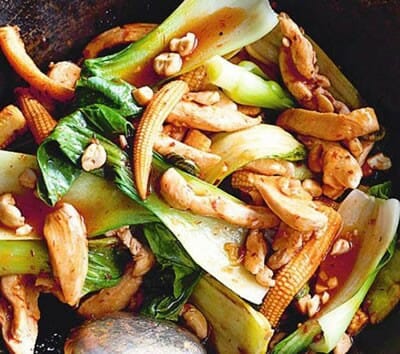
Chicken in Wine Sauce became a regular in my kitchen because of my husband. He is not someone who asks for the same thing twice, so when he came back a third time with “make that Chinese-style chicken again,” I knew I had something worth holding onto. What I like most about this recipe is the marinade step — not because it is complicated, but because it genuinely changes the texture of the chicken.
After 15 to 20 minutes in vinegar, sherry, and soy sauce, the slices absorb enough liquid to stay tender through the high-heat stir-fry without drying out. I use a flat-bottomed kadhai when I make this, which gives me enough surface area to actually stir-fry rather than steam the pieces. That one detail makes a real difference to how the final dish looks and tastes.
About the Recipe
Most of the ingredients here are pantry staples if you cook Indo-Chinese food even occasionally. Soy sauce, cornflour, vinegar — these are not hard to source. Sherry and white wine may feel unfamiliar, but both are available at most liquor stores or large supermarkets, and a small bottle will last you several batches.
The prep and cooking together take around 45 minutes, with most of that being passive marination time. I would make this on a weeknight when I want something that feels a little different from the usual, without adding much extra effort.
Why you will love this recipe
A double stir-fry method — cooking the chicken first, setting it aside, then bringing everything together — keeps each component properly cooked rather than mushy. The capsicum holds its slight crunch, the ginger stays fragrant, and the chicken gets a proper sear rather than braising in its own moisture. The sauce, thickened with cornflour and sharpened with white wine, coats every piece without going gluey.
There is also something about the sherry in the marinade that adds a faint sweetness you cannot quite identify on the plate, but would notice if it were missing. For a dish with this much going on, the active cooking time is genuinely short.

Cooking Tips
The most common beginner mistake here is crowding the pan. If your chicken slices go in all at once and overlap, they will release steam and stew rather than stir-fry. Work in two batches if needed, and make sure the oil is hot enough to hiss the moment the chicken touches it.
Also watch the sauce closely once it hits the pan — cornflour thickens fast over high heat, and if you leave it 30 seconds too long, it turns into a paste. Pour it in, keep stirring, and take it off the heat the moment it coats the back of a spoon.
Top Tips
- Cut your chicken slices as evenly as you can — roughly half a centimetre thick — so they cook at the same rate and you do not end up with some pieces overdone while others are still pink.
- Mix the sauce ingredients in a separate bowl before you start cooking, not during. Once the stir-fry is moving, you will not have time to measure anything out.
- If you cannot find dry sherry, a dry white wine works as a substitute in the marinade. The flavour will be slightly lighter but still good.
- Do not skip the step of rolling the marinated chicken in cornflour. That thin coating gives the pieces a slight crispness and helps the sauce cling to them later.
- Keep a close eye on the ginger as it hits the hot oil — it goes from golden to burnt very quickly, and bitter ginger will follow you through the entire dish.
- I always prepare the spring onions and capsicum before I start frying the chicken, so I am not scrambling to chop while something is already on the heat.
Serving and Storing Suggestions
Serves 3 to 4 people. Preparation and marination time is about 25 minutes, and cooking takes roughly 20 minutes. Serve this hot, straight from the pan, with plain steamed rice or fried rice. The sauce does not hold well if it sits too long — it continues to thicken as it cools.
Leftovers can be stored in a covered container in the refrigerator for up to one day. Reheat gently on a low flame with a splash of water or chicken stock to loosen the sauce back to the right consistency.
Similar Recipes
- Chicken in Black Bean Sauce
- Sweet and Sour Chicken
- Ginger Chicken Stir-Fry
- Chicken with Oyster Sauce
- Kung Pao Chicken
Nutrient Benefits
Chicken breast, used here in thin slices, provides a solid amount of protein per serving with relatively low fat, especially since the stir-fry method uses a moderate amount of oil rather than deep frying. Capsicum adds vitamin C and a small amount of fibre. Ginger has long been used in Indian cooking for its digestive properties. The sodium content is on the higher side given the quantity of soy sauce, so if you are watching salt intake, use a reduced-sodium soy sauce and skip adding extra salt to the sauce mixture.

Chicken in Wine Sauce
Ingredients
- 500 gms Chicken (cut into long, thin slices)
- 2 tsp Wine
- 1 1/2 tsp Soya Sauce
- 1 1/2 tbsp Sherry
- 1 1/2 tbsp Vinegar
- 1 1/2 tbsp Cornflour
- 5 tbsp Oil
- Ginger - 1 inch piece, finely chopped
- 4 Spring Onions (chopped)
- 1 Capsicum (seeded and diced)
- Salt as per taste
- Pepper as per taste
For the Sauce:
- 3 tsp Soya Sauce
- 3 tsp Cornflour
- 5 tbsp White Wine
- 3/4 cup Chicken Stock
- 11/2 tbsp Sugar
- Salt as per taste
Instructions
- Mix the sauce ingredients in a bowl.
- Put the chicken into another bowl.
- Add the vinegar, soya sauce, sherry, pepper, salt and wine.
- Mix thoroughly.
- Apply on the chicken slices and leave to marinate for 15 to 20 minutes.
- Remove the meat from the marinade.
- Roll them in the cornflour and keep aside.
- Heat half the oil in a frying pan till it starts to smoke.
- Reduce heat.
- Add the chicken slices and stir-fry for 5 minutes.
- Remove the chicken pieces and add the rest of the oil to pan.
- When the oil is hot, stir-fry the onion, ginger and capsicum for 4 minutes.
- Put the chicken back into the oil and stir-fry for another 4 to 5 minutes.
- Remove and place on a serving plate.
- Pour the sauce into the fryng pan.
- When it begins to boil, add the cornflour to thicken the sauce.
- Pour the sauce over the chicken and vegetable.
- Serve hot.
Sign up for our newsletter
Add Awesome Cuisine as a Preferred Source

Frequently Asked Questions
My sauce turned out too thick and almost paste-like. What went wrong?
This usually happens when the cornflour is added to sauce that is already at a full boil, or when it is left on high heat for too long. Mix the cornflour into the sauce mixture before it goes into the pan, not after, and keep the heat at medium once you pour it in. Stir continuously and take the pan off the heat the moment the sauce thickens to a coating consistency.
Can I use regular cooking wine instead of dry sherry and white wine?
Yes, but check the label before you use it. Cooking wines often contain added salt, which will throw off the seasoning of both the marinade and the sauce. If that is all you have, reduce or skip the added salt in both steps and taste as you go.
The chicken came out tough and a bit chewy. What should I fix next time?
Two things could cause this. First, the slices may have been too thick — aim for about half a centimetre. Second, the marination time matters more than it seems. Under 15 minutes does not give the vinegar and sherry enough time to work into the meat. Also check that you removed the chicken from the pan before it was fully cooked in the first round of stir-frying, because it goes back in for another 4 to 5 minutes later.
I do not drink alcohol. Can I leave out the wine and sherry entirely?
You can, though the flavour will be noticeably flatter. For the marinade, replace the sherry with a tablespoon of apple cider vinegar mixed with half a teaspoon of sugar. For the sauce, substitute the white wine with an equal amount of chicken stock and add a small squeeze of lemon juice. It will not be identical, but it holds together reasonably well.
How far in advance can I marinate the chicken?
15 to 20 minutes is the sweet spot. If you go much beyond an hour, especially with vinegar in the marinade, the chicken can start to turn slightly mushy on the outside rather than firm and tender. If you want to prep ahead, cut and store the chicken in the refrigerator, then add the marinade no more than 30 minutes before you plan to cook.