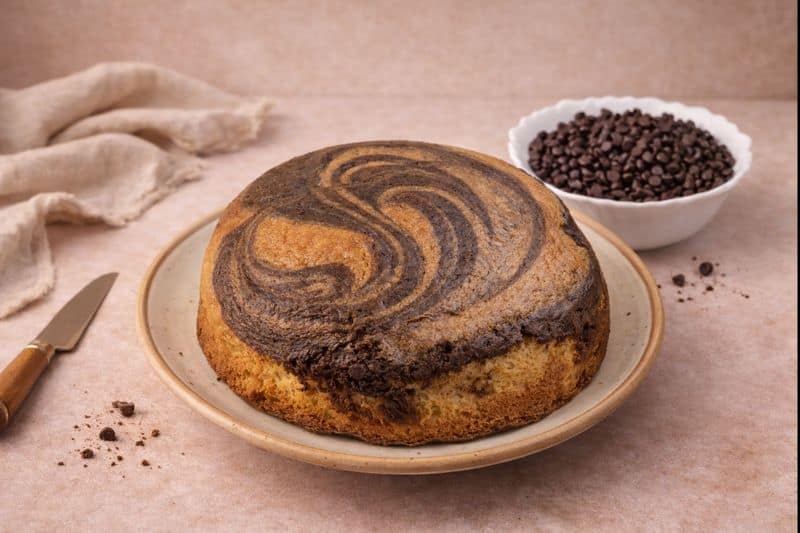
Marble Cake was the first proper cake I learned to make without my mother hovering over my shoulder, back when I was still nervous about whether eggs would actually thicken over steam. I remember watching the pale yellow mixture turn glossy and ribbony, convinced I had done something wrong because it looked too good.
The marbling part felt like cheating because it required no skill, just a back and forth motion with a butter knife, yet it always impressed whoever saw the sliced cake. I still make this when I want something that looks fancy but does not demand creaming butter to precise temperatures or worrying about split batters. The absence of butter also means the cake tastes clean, letting the cocoa and vanilla speak without a heavy backdrop.
About the Recipe
Everything in this recipe sits in most Indian kitchens already, except maybe the strawberry essence if you prefer orange. The active work takes about twenty minutes, then the oven does the rest for forty five minutes. I make this when relatives visit unannounced or when I need a birthday cake base that I can dress up with frosting later.
The sabayon method, where you beat eggs and sugar over heat, gives structure without creaming butter, so the mixing feels faster and less fussy. You do need a hand whisk or beater and a bit of patience while the eggs warm and thicken, but once that step is done, the rest is just folding and swirling.
Why you will love this recipe
The sabayon base gives you a cake that rises reliably and stays soft for days without needing butter or oil to keep it moist. Dividing the batter into two halves means you get the visual drama of marble swirls without making two separate cakes or dirtying extra bowls.
The cocoa half stays deep and faintly bitter, while the vanilla half picks up the strawberry or orange essence, so each bite alternates between the two flavors rather than blending into one muddled taste. The vinegar and baking soda react just before baking, giving a final lift that keeps the crumb open and light. I also appreciate that this cake does not demand precision with butter temperatures or worry about curdling, which makes it much less stressful on a warm day when butter softens too fast.
Cooking Tips
The egg mixture must reach ribbon stage, meaning it falls in thick, slow ribbons when you lift the beater, or the cake will not rise properly and you will end up with a dense, flat layer. Do not skip the hot water bath under the bowl because the gentle heat helps the eggs hold more air without scrambling. When folding in the flour, stop as soon as you see no more dry streaks.
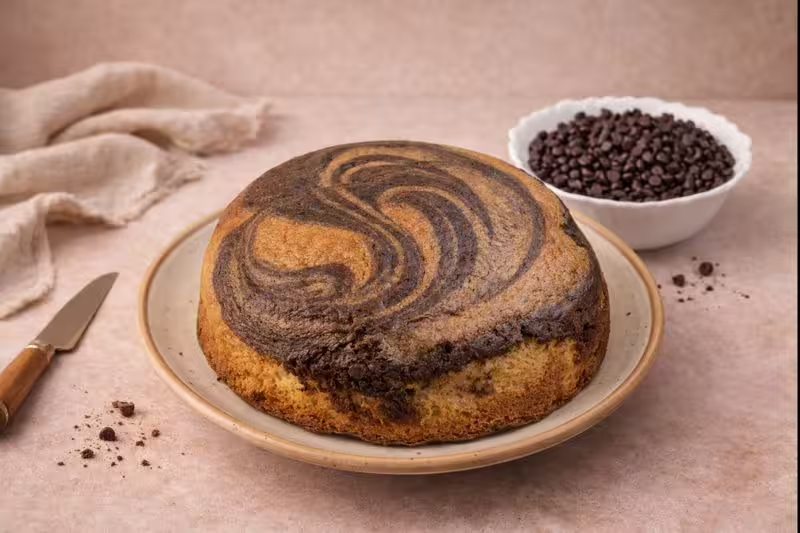
Over mixing at this stage deflates the batter and makes the cake heavy. If your marbling looks messy after the first few swirls, resist the urge to keep dragging the knife through because too much motion blends the batters into a muddy brown instead of distinct swirls. The cake is done when a skewer comes out clean and the top springs back lightly when pressed.
Top Tips
- Beat the eggs over simmering water, not boiling, so the mixture thickens without turning into scrambled bits along the edges.
- Use a large metal spoon or spatula for folding because it cuts through the batter gently and preserves the air you worked to build.
- Drop the two batters in random spoonfuls rather than neat rows so the marbling looks more organic and less striped.
- Check the cake at forty minutes because ovens vary and overbaking dries out the crumb fast.
- Let the cake cool in the tin for ten minutes before turning it out or it may crack from releasing too soon.
Serving and Storing Suggestions
This recipe makes about twelve to fourteen slices depending on how thick you cut them. The prep and mixing take roughly twenty minutes, and baking adds another forty five. Serve the cake plain with tea or dust it lightly with icing sugar if you want a cleaner look. It also takes frosting well if you need a birthday cake base.
Store in an airtight container at room temperature for up to three days, or refrigerate for a week if the weather is very humid. The texture stays soft because the eggs hold moisture, but the top may dry slightly, so cover it with a clean cloth or plastic wrap.
Similar Recipes
- Eggless Vanilla Sponge Cake
- Chocolate Loaf Cake
- Orange Butter Cake
- Zebra Cake
- Coffee Walnut Cake
Nutrient Benefits
Eggs provide a balanced mix of protein and B vitamins, especially B12, which supports energy metabolism and nerve function. The cocoa powder adds flavonoids and a small amount of iron, though the quantity here is modest. Refined flour offers quick energy from carbohydrates but lacks the fiber of whole grain alternatives.
Sugar provides immediate fuel but should be balanced with other nutrient dense foods throughout the day. This cake is not a health food, but the egg base gives it more protein than many butter based cakes, and the portion control from slicing helps manage intake.
Marble Cake
Ingredients
- 2 cups Refined Flour
- 1 1/2 tsp Baking Powder
- 1/4 tsp Baking Soda
- 2 tbsp Cocoa Powder
- 6 Eggs
- 2/3 cup Sugar
- 1/4 tsp Strawberry or Orange Essence
- 1/4 tsp Vanilla Essence
- Red or Orange Food Colour (a few drops)
- 1 tbsp Vinegar
Instructions
- Grease a 12 inch baking tin and dust lightly with flour. Keep aside.
- Sift the refined flour with baking powder and baking soda together.
- Divide the mixture into 2 halves.
- Add the cocoa powder to one half of the flour mixture and sift this mixture again.
- Beat the eggs with sugar, over a pan of hot water till thick and creamy.
- Divide the egg mixture into 2 halves.
- Fold in the cocoa mixture into one half of the egg mixture, a few tbsp at a time.
- Add 2 tbsp of water if necessary, to obtain a dropping consistency.
- Stir in the vanilla essence and vinegar.
- Fold in the plain flour mixture into the other half of the egg mixture, a few tbsp at a time.
- Add water, if necessary, to obtain a dropping consistency.
- Stir in the strawberry or orange essence and red orange food colour.
- Drop alternate spoonfuls of the cocoa and the plain flour mixture into the greased tin.
- Run a knife back and forth through the mixture to give a marbled effect.
- Bake at 180C for about 45 minutes, or till the cake is well risen.
- Cut into slices and serve.
Sign up for our newsletter
Add Awesome Cuisine as a Preferred Source

Frequently Asked Questions
Why did my egg mixture not thicken even after beating for ten minutes?
The water under the bowl was likely too hot and cooked the eggs slightly, or it was not warm enough to help them expand. Keep the water at a gentle simmer so you see small bubbles but no rolling boil. The bowl should feel warm to touch but not uncomfortably hot. If the eggs still do not thicken, they may be too cold to start with, so let them sit at room temperature for fifteen minutes before beating.
Can I skip the vinegar or does it actually do something important?
The vinegar reacts with the baking soda to create extra lift just before the cake goes into the oven, so skipping it will give you a slightly denser cake. If you do not have vinegar, use lemon juice in the same quantity because the acidity is what matters. Add it at the last moment so the reaction does not happen too early and lose its effect.
My marble pattern turned into a muddy brown mess. What went wrong?
You likely swirled the knife too many times or too vigorously, which blended the two batters instead of creating distinct ribbons. Run the knife through the batter just three or four times in a gentle zigzag or figure eight motion, then stop. It should look a bit messy and irregular, not perfectly blended.
The cake rose beautifully but sank in the middle after I took it out. Why?
The cake was underbaked in the center even though the top looked done. Insert a skewer into the deepest part and it should come out completely clean with no wet batter clinging to it. If it sinks every time, your oven temperature may be too high, causing the outside to set fast while the inside stays raw. Try lowering the temperature by ten degrees and baking a few minutes longer.
How do I store this cake if I need to keep it for more than three days?
Wrap individual slices tightly in plastic wrap and freeze them for up to a month. Thaw at room temperature for about thirty minutes before serving. The texture stays surprisingly soft because the eggs hold moisture well, but avoid freezing the whole cake unless you plan to use it all at once.