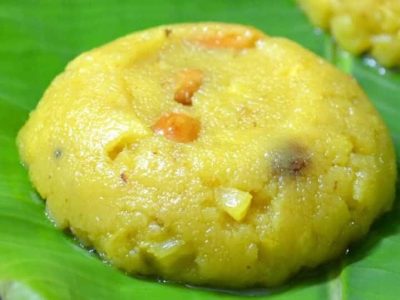
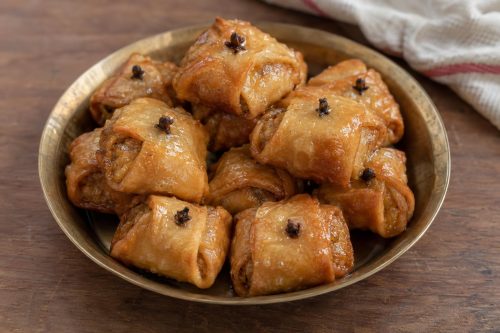
Lavang Latika is a traditional Indian sweet known in Bengali cooking and also made in parts of Karnataka. Small square parcels of dough are filled with a mixture of khoya, coconut powder, powdered sugar, cashews and raisins, then folded shut and secured with a single clove at the top. After frying to a golden crisp, each piece goes into warm sugar syrup for about a minute before being set aside to cool. The clove holds the folded edges together during frying and is not just for decoration. If you enjoy this style of sweet, the Lavang Lata recipe is worth a look as well.
About the Recipe
The dough uses both maida and wheat flour, kneaded with ghee, salt and water to a smooth, firm consistency similar to chapati dough. Resting it for 30 minutes makes it easier to roll out thin and even.
The filling combines unsweetened khoya with coconut powder, powdered sugar, cardamom, powdered cashews, pistachios and raisins. Everything is mixed raw and used cold.
The sugar syrup needs to reach one-string consistency before the fried latikas go in. Dipping them for just one minute keeps the outer shell from turning soggy.
Why You Will Love This Recipe
The crisp fried shell against the soft, mildly sweet khoya filling makes this sweet genuinely satisfying. The khoya is unsweetened and the sugar is already measured into the filling, so nothing is overpowering.
The clove pressed into each parcel releases a faint warmth into the dough as it fries, which comes through in every bite.
The one-minute syrup dip is short enough that the shell stays firm even after cooling. These hold up well on a plate for a few hours without turning limp.
Cooking Tips
The most common beginner mistake is rolling the puris too thick, which leaves the shell doughy after frying. Roll them thin but not so thin that they tear when folded.
Seal the edges firmly before pressing in the clove or the filling will leak into the oil. Keep the sugar syrup on low heat while you fry so it stays warm and fluid.
Do not leave the latikas in the syrup for more than a minute or the crust will soften.
Top Tips
- Rest the dough for the full 30 minutes before rolling. Under-rested dough springs back and is harder to roll thin.
- Keep the filling dry. If the khoya feels wet, cook it briefly on low heat and cool completely before using.
- Press the clove firmly through all the folded layers so the parcel stays closed during frying.
- Fry on medium heat. High heat browns the outside too fast while leaving the dough undercooked inside.
- Have the sugar syrup at one-string consistency before frying begins. Syrup that is too thin will not coat the latikas properly.
- Drain the latikas on a plate rather than a rack so the syrup settles evenly on the surface as they cool.
Serving and Storing Suggestions
Lavang Latika is best served at room temperature after it has cooled completely. The syrup coating sets as it cools and gives each piece a light glaze.
Serve on a flat plate for festivals, pujas or as a tea-time sweet.
Store leftovers in an airtight container at room temperature for up to two days. Refrigerating them can make the shell slightly chewy, so room temperature storage works better if you plan to finish them within 48 hours.
Similar Recipes
Nutrient Benefits
Khoya contributes calcium and protein from milk solids. Cashews and pistachios provide healthy fats and some protein. Coconut powder adds fibre and a small amount of iron. Raisins supply natural sugars and trace minerals. Because this is a fried sweet with added sugar, it is best enjoyed in moderate portions.

Lavang Latika
Ingredients
- 3 cups Maida
- 1 cup Wheat Flour
- 25 to 30 Cloves
- 3 tbsp Ghee
- 2 cups Sugar
- 1 cup Water
- 1/2 tsp Lemon Juice
- Cloves (few)
- Salt as per taste
- Oil for frying
For the filling:
- 400 gms Unsweetened Khoya
- 2 cups Coconut Powder
- 1/2 tsp Cardamom Powder
- 1 cup Sugar (powdered)
- 2 tbsp Cashew Nuts (powdered)
- Pistachios (few, shelled)
- Raisins (few)
Instructions
- Sieve the maida well.
- Apply ghee to a plate.
- Add salt, maida, wheat flour and little water.
- Mix well and knead to a chapati dough consistency.
- Cover and keep aside for 30 minutes.
- Mix all the filling ingredients and keep aside.
- Heat 1 cup of water over medium flame.
- Add sugar and stir well until fully dissolved.
- Bring to a boil and simmer until it reaches an one string consistency.
- Add lemon juice and stir well.
- Switch off the flame and keep warm.
- Make small balls of the dough.
- Roll them into small puris.
- Add a little filling to the centre of the puri and fold well.
- Fold them into a square and secure the edges with a clove on top.
- Cover with a cloth and keep aside.
- Heat oil for frying over medium flame.
- Add the prepared latikas and fry until crispy and golden.
- Remove and add to the sugar syrup.
- Remove after a minute and keep them on a plate.
- Allow it to cool.
- Serve.
Sign up for our newsletter
Add Awesome Cuisine as a Preferred Source

Frequently Asked Questions
What does the clove actually do in Lavang Latika?
The clove serves a practical purpose. After the dough parcel is folded into a square, the clove is pressed through the overlapping layers to hold them together during frying. Without it, the edges can open up in hot oil and the filling spills out. It also adds a faint spiced note to the dough around it as it fries.
My sugar syrup hardened before I finished frying. What should I do?
Keep the syrup pan on the lowest possible flame while you fry in batches. If it thickens too much, add one or two tablespoons of warm water and stir gently over low heat until it loosens. Avoid adding cold water as it can cause the syrup to crystallise unevenly.
Can I use store-bought sweetened khoya instead of unsweetened?
It is better to use unsweetened khoya because the filling already contains one cup of powdered sugar. Using sweetened khoya will make the filling noticeably over-sweet. If unsweetened khoya is not available, reduce the powdered sugar in the filling by half and taste before using.
How do I know when the sugar syrup has reached one-string consistency?
Take a small drop of syrup between your thumb and index finger and pull them apart slowly. If a single thin thread forms and holds without breaking immediately, the syrup is ready. If it breaks at once, simmer for another minute and test again. One-string is a light syrup stage, not a hard or thick one.
Is Lavang Latika the same as Lavang Lata?
They are very closely related and the names are sometimes used interchangeably. Both are deep-fried, clove-sealed parcels dipped in sugar syrup with a khoya-based filling. Minor differences exist in the exact filling ingredients or the shape depending on the region or the cook. The preparation method in this recipe follows the same core technique.