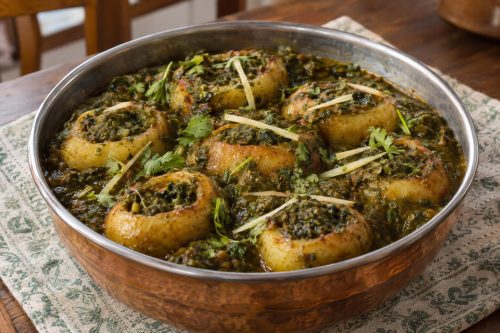
Jannat-e-numa is a preparation that asks for a little patience but rewards it well. The potatoes are scooped, fried until the shells turn golden and crisp, then filled before being set into a spinach gravy made with fenugreek leaves, tomatoes and a full measure of spices. The final dum stage, lasting about an hour, ties everything together. The shells soften just enough to absorb the gravy while holding their shape. This is not a quick weeknight dish, but it makes sense for a proper lunch or a dinner where you want something a little more considered on the table.
About the Recipe
The filling is a raw blended paste, so it goes into the fried shells without any prior cooking. The balance of mango powder, green chillies, cumin and raisins needs to taste right before you fill the potatoes.
The spinach gravy is built separately by sauteing spinach, fenugreek leaves and tomatoes in mustard oil with turmeric, then blending the cooked mixture smooth. Yoghurt and ghee go in during the dum stage, which keeps the gravy from splitting under direct heat. The spinach and fenugreek together give the sauce a slightly bitter edge that works well against the tangy filling.
Why You Will Love This Recipe
The contrast between the crisp fried potato shell and the soft, spiced filling, all sitting in a long-cooked gravy, is what makes this dish worth the effort. The mint, coriander and raisin filling is unusual. The raisins add small bursts of sweetness against the heat of the green chillies and the sourness of the mango powder, and that combination is specific to this recipe.
If you enjoy dishes where individual components each carry their own flavour before coming together, this one is worth the time it takes.
Cooking Tips
The most common beginner mistake is underfrying the potato shells. They need to be genuinely crisp and golden before you fill them, otherwise they will collapse when the gravy is poured over. Heat the mustard oil until it is smoking before adding the shells.
When making the spinach gravy, saute for the full 15 minutes so most of the moisture cooks off before blending. A watery gravy will make the filled potatoes soggy during the dum stage. Keep the dum heat low and steady throughout.
Top Tips
- Scoop the potatoes carefully so the walls are thick enough to hold the filling without breaking during frying.
- Taste the mint and coriander filling paste before stuffing. Adjust mango powder or salt at this stage, not after.
- Do not skip the dum cooking time. One hour on low heat is what allows the potato shells to absorb the gravy properly.
- Add yoghurt only during the dum stage and keep the heat low at that point so it does not curdle.
- If mustard oil is not available, use any neutral cooking oil, but the flavour of the gravy will be noticeably milder.
- Blend the spinach gravy only after it has cooled enough to handle safely, and blend it smooth for an even coating over the potatoes.
Serving and Storing Suggestions
Serve Jannat-e-numa hot, straight from the pan, with the ginger and coriander garnish added just before bringing it to the table. It goes well with plain steamed rice or a simple flatbread.
Leftovers can be stored in a covered container in the refrigerator for up to two days. Reheat gently on a low flame with a splash of water to loosen the gravy. The filling may soften further on reheating, but the flavour holds well.
Similar Recipes
Nutrient Benefits
Spinach and fenugreek leaves contribute iron, calcium and folate. Potatoes provide potassium and a useful amount of vitamin C. The yoghurt in the gravy adds protein and calcium. Mint and fresh coriander, used in generous quantities here, provide small amounts of vitamins A and C.
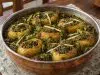
Jannat-e-numa (Stuffed Potatoes in Spinach Sauce)
Ingredients
- 1 kg Potatoes
- Mustard Oil for frying
- For the Filling
- 100 gms Mint Leaves
- 250 gms Green Coriander
- 50 gms Green Chillies
- 1 tsp Cumin Seeds
- 5 tsp Mango Powder
- 1/2 cup Raisins
- Salt to taste
- 1/2 cup Mustard Oil
- 2 1/2 tsp Turmeric Powder
- 200 gms, chopped Tomatoes
- 1 kg, washed Spinach
- 250 gms, washed Fenugreek Leaves
- 10 tsp Red Chilli Powder
- Salt to taste
- 5 tsp Coriander Powder
- 5 tsp Garam Masala
- 1/2 cup Yoghurt
- 2 tbsp Ghee
- 2 tbsp, chopped Green Coriander
- 1/2 inch piece, julienned Ginger
Instructions
- Peel and scoop out the inside portion of the potatoes, leaving the outer skin intact.
- Heat the mustard oil till smoking in a kadai.
- Deep fry the potato shells till crisp and golden.
- Remove with a slotted spoon and drain the excess oil on absorbent kitchen paper towels.
- For the filling, blend all the ingredients together to a smooth paste.
- Keep aside.
- Heat the oil till smoking in the same kadai.
- Add the turmeric powder, tomatoes, spinach and fenugreek leaves.
- Saute for 15 minutes or till the mixture thickens.
- Remove from heat and keep aside to cool.
- When cool, blend this spinach mixture.
- Fill the fried potato shells with the mint and coriander paste and put them on a frying pan.
- Pour the spinach gravy over the stuffed potatoes.
- Add the red chilli powder, salt, coriander powder, garam masala, yoghurt and ghee and cook the potatoes on dum for about 1 hour.
- Garnish with green coriander and ginger.
- Serve hot.
Sign up for our newsletter
Add Awesome Cuisine as a Preferred Source

Frequently Asked Questions
Can I bake the potato shells instead of deep frying them?
You can bake them, but the result will be different. Deep frying gives the shells a firm, crisp wall that holds up during the dum cooking stage. Baked shells tend to be softer and may break when the gravy is poured over and the dish cooks for an hour. If you do bake them, brush with oil and roast at a high temperature until the outside is well coloured before filling.
What size potatoes work best for this recipe?
Medium to large potatoes work best because they are easier to scoop and give you enough space for a proper amount of filling. Very small potatoes are difficult to hollow out without breaking the walls. Try to pick potatoes that are roughly even in size so they cook at the same rate during the dum stage.
The recipe uses 10 teaspoons of red chilli powder. Is that correct?
Yes, that is the stated quantity for 1 kg of potatoes and 1 kg of spinach, which is a large batch. This is a well-spiced dish. If you are making a smaller portion or prefer a milder result, reduce the red chilli powder to suit your preference. The green chillies in the filling also contribute heat, so taste as you go.
What does cooking on dum mean and how do I do it at home?
Dum cooking means sealing the pot and cooking the food on a very low flame so it finishes in its own steam. At home, place the stuffed potatoes and gravy in a heavy-bottomed pan with a tight-fitting lid and cook on the lowest flame your stove allows. You can also place a flat tawa or griddle under the pan to distribute the heat more evenly and reduce the risk of the bottom catching.
Can fenugreek leaves be left out if they are not available?
You can leave them out, but the gravy will taste noticeably different. Fenugreek leaves add a slight bitterness that balances the richness of the mustard oil and ghee. If fresh fenugreek is not available, dried fenugreek leaves (kasuri methi) can be used in a much smaller quantity, around one tablespoon, stirred in during the final cooking stage rather than sauteed at the beginning.