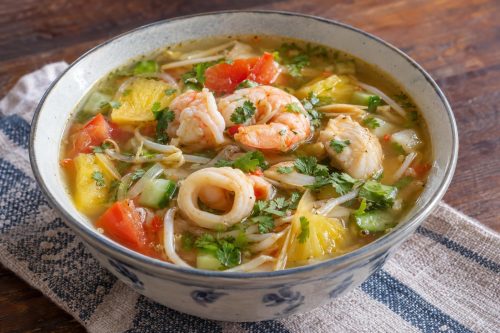
This Pineapple Seafood Soup brings together prawns, squid, shrimps and fish in a broth that is sour from tamarind, lightly sweet from pineapple and aromatic from lemongrass. The combination is common across Southeast Asian cooking, where pineapple turns up in savoury soups to add both acidity and a mild sweetness without overpowering the seafood. If you have come across Vietnamese fish soup with pineapple or similar tangy seafood broths, this recipe sits comfortably in that family. The soup is quick to make once the seafood is marinated and the stock is on the heat.
About the Recipe
The recipe uses two rounds of fish sauce: one in the marinade for the seafood and one added directly to the broth. This keeps the seafood well seasoned before it even enters the pot.
Tamarind extract provides the main sourness. Pineapple adds a secondary fruity acidity along with a little texture. Lemongrass is used only for its inner sliced portion, which gives the broth a clean, citrus-like aroma without any fibrous bits.
The seafood marinates for 10 to 20 minutes, which is enough time to prepare the broth base so everything comes together without waiting around.
Why You Will Love This Recipe
The broth balances itself well. Tamarind gives a clean sourness, pineapple adds sweetness and a little body, and fish sauce brings depth without making the soup taste heavily of the sea.
The seafood goes in right at the end and needs only one to two minutes to cook, so there is very little risk of overcooking if you keep an eye on the pot.
Beansprouts, cucumber and coriander leaves are added fresh at serving, so each bowl feels lighter and more textured than a slow-cooked soup.
Cooking Tips
The most common mistake here is overcooking the seafood. Once the marinated seafood goes into the simmering broth, it needs only one to two minutes. Leaving it longer makes prawns rubbery and squid tough.
Keep the broth at a gentle simmer rather than a rolling boil at that stage.
Taste the broth before adding the seafood and adjust the fish sauce and tamarind extract then. The seafood will release a little moisture as it cooks, which slightly dilutes the flavour, so it is easier to balance before it goes in.
Top Tips
- Use only the inner sliced part of the lemongrass stalk. The outer layers are fibrous and will not soften in a short cook time.
- Marinate the seafood while you build the broth so both are ready at the same time and you are not left waiting.
- Taste and adjust fish sauce and tamarind extract before adding the seafood, as the recipe tip suggests. It is easier to balance at that point.
- Add beansprouts directly into the bowl at serving rather than into the pot if you prefer them to stay crisp.
- Chop the pineapple into small, even pieces so it distributes through the broth rather than sitting in clumps.
- Do not marinate the seafood for longer than 20 minutes. The fish sauce will start to change the texture if left too long.
Serving and Storing Suggestions
Serve the soup warm, ladled into bowls with cucumber and coriander leaves added fresh on top. It works as a starter before a rice-based main or as a light meal on its own with plain steamed rice on the side.
The soup does not store well once the seafood is in it, as reheating will overcook the prawns and squid. If you want to prepare ahead, make the broth base and refrigerate it, then add the marinated seafood only when reheating to serve.
Similar Recipes
- Spicy Seafood Soup
- Hot and Sour Thai Prawn Soup
- Coconut Seafood Soup
- Creamy Asparagus and Crabmeat Soup
Nutrient Benefits
Mixed seafood including prawns, squid and fish provides a good amount of protein per serving. Pineapple contributes vitamin C along with some natural sugars. Beansprouts, when used, add a small amount of fibre and folate. The broth is relatively low in fat given the small quantity of oil the recipe uses.

Pineapple Seafood Soup
Ingredients
- 250 gms, cleaned, shelled and chopped (prawns, squid, shrimps and fish) Mixed Seafood
- 1 tsp Oil
- 2 tblsp, sliced Onion
- 1 or 2 stalks, thick bottom part only, inner part sliced and outer layers discarded Lemongrass Stalks
- 750 ml Chicken Stock
- 1 , chopped Tomato
- 1/2 cup, chopped Pineapple
- 1 1/2 tsp + 1 1/2 tsp Fish Sauce
- 3 tsp Tamarind Extract
- 1 1/2 tsp Sugar
- 1/4 tsp or as per taste Salt
- 3 to 4 tblsp, chopped Cucumber
- Coriander Leaves - handful, chopped
- 1 clove, minced Garlic
- 1 , minced, seeds removed Red Chilli
- Black Pepper Powder - a pinch
- Beansprouts - handful (optional)
Instructions
- Mix the garlic, red chillies, 1 1/2 tsp fish sauce and pepper powder in a bowl.
- Add the seafood and mix until well coated.
- Cover and keep aside for 10 to 20 minutes.
- Heat oil in a pan over medium flame.
- Cook the onions and lemongrass for a minute.
- Add the chicken stock, tomatoes, pineapples and mix well.
- Add fish sauce, tamarind extract, salt and sugar.
- Stir well and bring to a boil.
- Simmer for a minute and add the marinated seafood.
- Simmer for another minute or two or until cooked. Add the beansprouts if using.
- Remove from flame.
- Garnish with coriander leaves and transfer to serving bowls.
- Serve warm.
- Tip
- Add more fish sauce and tamarind extract if required at step #10.
- image via
Sign up for our newsletter
Add Awesome Cuisine as a Preferred Source

Frequently Asked Questions
Can I use only one type of seafood instead of a mix?
Yes. The recipe works with just prawns or just fish if that is what you have. The marinade and broth are built around the fish sauce and tamarind, so the soup will still taste balanced with a single seafood. If using only fish, choose a firm variety like basa or snapper so it holds its shape during the short simmer.
What can I use instead of tamarind extract?
A small amount of lime juice works as a substitute if tamarind extract is not available. Start with about one teaspoon of lime juice in place of three teaspoons of tamarind extract and taste as you go, since lime juice is sharper. The flavour will be slightly different but the sour balance in the broth will be similar.
Can I use canned pineapple instead of fresh?
Canned pineapple can be used, but drain it well before adding it to the broth. Pineapple packed in syrup will make the soup noticeably sweeter, so reduce the sugar or leave it out and taste before adding any. Pineapple in juice rather than syrup is a better option if fresh is not available.
Is this soup similar to Vietnamese pineapple soup?
This recipe shares several features with Vietnamese-style pineapple fish soup, known as canh chua, in that it uses pineapple, tamarind and fresh herbs in a light savoury broth. The main differences are the use of lemongrass and chicken stock here rather than a fish-based stock, and the inclusion of mixed seafood rather than a single fish. The overall balance of sour, sweet and savoury is comparable.
How do I know when the seafood is cooked?
Prawns turn pink and opaque within about one minute in a simmering broth. Squid turns white and firms up in roughly the same time. Fish pieces will flake when pressed lightly with a spoon. The recipe calls for one to two minutes of simmering after the seafood is added, which is enough for pieces chopped to a small size. Remove the pot from the flame as soon as the seafood looks done to avoid overcooking.