
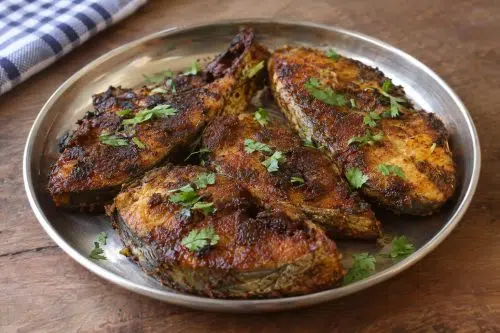
Vanjaram Meen Varuval is a Tamil-style seer fish fry built around a freshly ground wet masala rather than a ready-made spice powder. Vanjaram, known as seer fish in English, has firm flesh that holds up well to frying and takes the marinade without falling apart. The combination of tamarind, coconut, dry red chillies and saunf gives the coating a tangy, mildly sweet character that lifts it well above a plain chilli-and-turmeric fry. A 30 to 40 minute rest after applying the masala makes a visible difference to how the flavour sits on the fish once it hits the pan.
About the Recipe
The marinade here is a ground paste, not a dry rub. Grinding the red chillies together with coconut, saunf, sambar onions and tamarind produces a thick, slightly coarse paste that clings to the fish rather than sliding off in the oil. Turmeric powder and salt go in before the fish is coated.
The fish fries in 250 ml of oil at a depth that allows proper browning without fully submerging the pieces. Flipping carefully once each side is done keeps the crust intact.
Why You Will Love This Recipe
The marinade does most of the work. Once you have ground the paste and rubbed it on, the fish looks after itself in the pan. There is no batter, no egg wash, no bread crumbs.
The coconut in the paste browns as the fish fries and adds a slightly nutty edge to the crust. The tamarind keeps the coating from tasting flat. If you are used to a standard meen varuval made with chilli powder and turmeric alone, this version will feel noticeably more rounded without being complicated to put together.
Cooking Tips
The most common mistake is putting the fish into oil that is not hot enough. The paste contains coconut and tamarind, both of which will stick to the pan and tear the crust if the oil has not heated properly before the fish goes in.
Once the fish is in the pan, leave it alone. Do not move the pieces around. Wait until the underside is visibly golden before flipping. Overcrowding the pan lowers the oil temperature and leads to uneven browning, so fry in batches if needed.
Top Tips
- Grind the masala paste as finely as you can so it coats the fish evenly and does not leave large chunks that burn before the fish is cooked through.
- Marinate for the full 30 to 40 minutes. A shorter rest means the paste sits on the surface rather than flavouring the fish.
- Pat the fish pieces dry before applying the marinade. Excess moisture from washing will dilute the paste and cause splattering in the oil.
- Use sambar onions (small shallots) as specified. Larger onions have a higher water content and will make the paste looser than needed.
- Drain the fried fish on a wire rack rather than paper alone if you want the crust to stay crisp and not turn soggy on the underside.
- Adjust the number of dry red chillies to your heat preference. The recipe uses 10, which gives a reasonably spiced result for most palates.
Serving and Storing Suggestions
Vanjaram Meen Varuval is best eaten immediately after frying while the crust is still crisp. It works well as a starter on its own or as a side dish with steamed rice, rasam and a simple vegetable.
If you have leftovers, store them in an airtight container in the refrigerator for up to a day. Reheat briefly in a dry pan rather than a microwave to bring back some of the texture. Serve with lemon wedges and sliced onion on the side if you like.
Similar Recipes
- Meen Pollichathu
- Meen Peera Pattichathu
- Kerala Fish Curry
- Pondicherry Fish Curry
- Mangalore Fish Curry
Nutrient Benefits
Seer fish is a good source of protein and provides omega-3 fatty acids. It is relatively lean compared to red meat, making it a useful protein option for those who eat fish regularly. The coriander leaves and sambar onions contribute modest amounts of vitamins and minerals. Coconut adds some natural fats to the marinade, though the quantity per serving stays small after frying.
Vanjaram Meen Varuval (Seer Fish Fry)
Ingredients
- 500 g Seer Fish (Vanjaram Meen) cleaned, washed
- 10 Dry Red Chillies
- 1 tsp Saunf
- 4 tsp Coconut grated
- 4 Sambar Onions peeled
- as per taste Salt
- 1 tsp Turmeric Powder
- a small ball Tamarind
- a bunch Coriander Leaves chopped
- 250 ml Oil
Instructions
- Combine and grind together the red chillies, saunf, small onions, coconut and tamarind.
- Add salt and mix well.
- Then rub this all over the fish pieces and keep aside for 30 to 40 minutes.
- Heat oil in a deep frying pan.
- Fry the fish on both sides until golden brown.
- Remove and drain excess oil.
- Garnish with coriander leaves.
- Serve hot.
Sign up for our newsletter
Add Awesome Cuisine as a Preferred Source

Frequently Asked Questions
What is vanjaram fish called in English and in other Indian languages?
Vanjaram is the Tamil name for seer fish, which belongs to the mackerel family. It is sometimes called king fish or king mackerel in English. In Malayalam it is also referred to as vanjaram or ayakoora depending on the variety. The spotted variety is often called pulli vanjaram. It is a firm, meaty fish widely used in South Indian cooking.
Can I use a different fish if seer fish is not available?
Yes. The marinade works well with any firm-fleshed fish that holds up to shallow frying without breaking apart. King fish, surmai, pomfret or salmon steaks are reasonable alternatives. Avoid very delicate fish like tilapia fillets as they tend to break when flipped. The thickness of the slice matters more than the variety. Aim for pieces that are roughly the same size so they cook evenly.
Do I need to grind the masala very finely or is a coarser paste acceptable?
A reasonably fine paste gives a more even coating and reduces the risk of larger pieces of coconut or chilli burning in the oil before the fish is cooked through. A slightly coarse texture is fine and gives the crust some character, but very chunky pieces of dry chilli skin or coconut will char quickly. Add a small amount of water if needed to get the paste moving in the grinder.
How much oil do I actually need and can I use less?
The recipe calls for 250 ml of oil, which gives enough depth to fry the fish properly without fully submerging it. You can reduce the quantity slightly if your pan is smaller and the fish pieces are fewer, but using too little oil causes the paste to stick and burn on the pan surface before the fish cooks through. A generous amount of oil is what gives this varuval its properly fried, golden exterior.
What should I serve alongside vanjaram meen varuval?
The most straightforward pairing is steamed rice with rasam or a thin sambar. The tangy, spiced crust on the fish balances well against the light sourness of rasam. You can also serve it as a starter with sliced raw onion and a squeeze of lemon. For a fuller South Indian meal, add a simple vegetable stir-fry or a fish curry on the side if you are cooking for a group.
i will have to agree that you bring easy n delicious dishes.