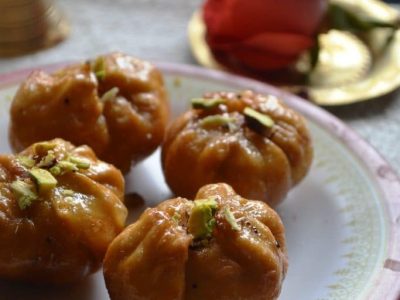
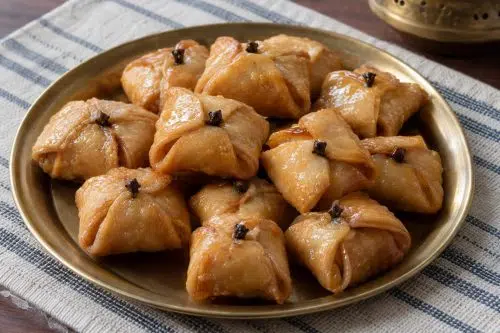
Lavang Lata is a traditional Indian sweet that turns up at festivals and special occasions across the country. The name comes from the clove, known as lavang, that is pressed into the top of each folded parcel to hold it shut before frying. The outer shell is a thin, crisp layer of maida, and inside sits a soft, fragrant filling of koa, coconut, cardamom and mixed dry fruits. Once fried, the parcels go straight into a warm single-string sugar syrup and are left to dry. The finished sweet has a lightly glazed exterior and a rich, mildly sweet filling. If you enjoy sweets like Lavang Latika or Maida Gujiya, the technique here will feel familiar.
About the Recipe
The dough is a stiff one. Ghee is rubbed in before water is added, which helps you roll the circles very thin without tearing. A thick outer layer will stay soft during frying rather than turn crisp, so rolling thin matters.
The filling uses sugarless koa, so all the sweetness comes from the powdered sugar and the syrup coating. That gives you some control over how sweet the finished piece is.
The sugar syrup needs to be at one-string consistency and kept warm while you dip. If it cools and thickens, it will coat the parcels unevenly. The clove does more than identify the sweet by name. It holds the folded parcel together during frying.
Why You Will Love This Recipe
The thin fried shell and the soft koa filling with cardamom, cashews, pista and raisins give each piece a good contrast in texture. The syrup dries to a light glaze rather than a sticky layer, so the sweets can be stacked and stored without clumping.
Because the filling uses sugarless koa, you can nudge the sweetness by adjusting the powdered sugar slightly to suit your taste.
These also work well as a make-ahead sweet. They actually improve after a few hours of resting, which makes them practical for festival preparation a day in advance.
Cooking Tips
The most common mistake is frying on too high a flame. The dough circles are thin and will colour quickly on the outside while the layers inside stay raw. Keep the flame low throughout.
A second issue is the sugar syrup setting before all the pieces are dipped. Place the syrup bowl over hot water as the recipe directs so it stays fluid and coats evenly.
Roll the dough as thin as you can without tearing. Thicker circles produce a chewy outer shell rather than a crisp one.
Top Tips
- Knead the dough until it is genuinely stiff, not just firm. A soft dough will be difficult to roll thin and the fried shell will not crisp up properly.
- Keep the rolled and filled parcels covered under a damp cloth while you prepare the rest. This stops the dough from drying out and cracking at the folds.
- Insert the clove firmly through all the folded layers, not just the top layer. This keeps the parcel sealed during frying.
- Fry only a few pieces at a time on a low flame. Overcrowding the kadai drops the temperature and the parcels will absorb more oil.
- Dip each fried piece in the syrup immediately while it is still hot from the oil. The syrup coats more evenly on a warm surface.
- Crumble the koa well before mixing the filling. Lumps in the filling can cause the thin dough to tear when folding.
Serving and Storing Suggestions
Arrange the dipped pieces in a single layer on a plate and leave them undisturbed for at least two to three hours until the syrup coating dries completely. Once dry, they can be stacked in an airtight container.
They keep well at room temperature for three to four days. Serve them as part of a festival sweet platter alongside other dry sweets. Refrigeration is not necessary unless the weather is very warm, in which case consume within two days of chilling.
Similar Recipes
Nutrient Benefits
Koa contributes protein and calcium from its milk solids base. Cashews, pista and chironji nuts add healthy fats and small amounts of iron and magnesium. Raisins bring natural sugars and trace potassium. Desiccated coconut contains dietary fibre. These are present in moderate amounts given the portion size, and the sweet is energy-dense overall because of the fried dough and sugar syrup.

Lavang Lata
Ingredients
- 2 cups (level) Maida
- 15 to 20 Cloves
- 1 1/2 tblsp Ghee
- Salt - a pinch
- Oil or ghee - for frying
- For sugar syrup:
- 1 cup (heaped) Sugar
- 1/2 cup Water
- 1/4 tsp Lemon juice
- For filling:
- 200 gms Sugarless koa
- 1 cup Desiccated coconut
- 1/4 tsp Cardamom powder
- 1/2 cup Powdered sugar
- 1 tblsp Finely chopped cashews
- Pista nuts - few
- 1 tblsp Raisins
- 1/2 tblsp Chironji nuts
Instructions
- Rub ghee well on a plate and then mix with flour, salt gently
- When it is mixed, sprinkle water and gradually knead into a stiff dough.
- Keep closed for half an hour.
- Mix the ingredients for filling together after crumbling Koa well.
- Prepare sugar syrup of one string consistency.
- Add lemon juice after removing from fire and keep it warm by placing on top of a bowl containing hot water.
- Prepare small balls from maida dough and roll out into very thin circles.
- Keep little stuffing in the centre.
- Fold both sides to the centre to cover filling.
- Then fold other two sides to centre overlapping each other to form a square.
- Insert one clove on top.
- Prepare all lavangalathas in the same manner and keep closed under a wet cloth.
- Heat ghee or oil in a heavy kadai till it becomes moderately hot.
- Reduce flame and deep fry in that, few at a time till crisp on both sides turning over gently. Cook only on low flame
- Dip it in the syrup and arrange on a plate.
- Serve after few hours when the syrup dries.
Sign up for our newsletter
Add Awesome Cuisine as a Preferred Source

Frequently Asked Questions
What is the clove used for in Lavang Lata?
The clove, called lavang, is pressed through the folded layers of the maida parcel to hold them together before and during frying. Without it, the folds can open up in the hot oil and the filling will spill out. It also gives the sweet its name. The clove is edible but has a strong flavour, so most people set it aside when eating.
How do I know when the sugar syrup has reached one-string consistency?
Take a small drop of syrup between your thumb and forefinger and pull them apart slowly. If a single thread forms and holds without breaking immediately, the syrup is ready. If no thread forms, cook it a little longer. If the thread is thick or the syrup feels very sticky and sets quickly on your fingers, it has gone past one string and will coat the sweets too heavily.
Can I use store-bought mawa instead of making koa at home?
Yes. Store-bought unsweetened mawa, also sold as khoya, works well here. The recipe calls for sugarless koa so that the sweetness of the filling is controlled through the powdered sugar alone. Make sure the mawa you buy is not the sweetened variety. Crumble it well before mixing with the other filling ingredients so there are no lumps.
Why do the fried parcels need to rest for a few hours before serving?
When the hot parcels come out of the syrup, the coating is still wet. Resting allows it to dry into a thin, firm glaze. If you eat them straight away, the surface is sticky and the texture is not quite right. After a few hours the glaze firms up, the outer shell stays crisp and the filling settles.
My dough is tearing when I roll it thin. What am I doing wrong?
This usually happens when the dough has not rested long enough or was not kneaded to a stiff enough consistency. The recipe asks for the dough to rest covered for half an hour, which relaxes it and makes rolling easier. Also check that the ghee was rubbed in thoroughly before water was added. If the dough is still tearing, let it rest for another ten minutes before trying again.