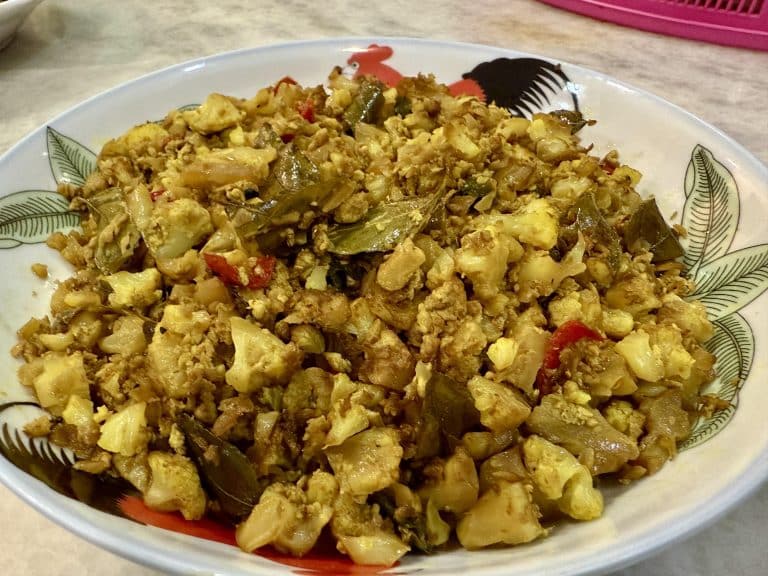

Cauliflower Tomato Curry is what I make when I want something warming but do not feel like spending an hour in the kitchen. I first had a version of this at a friend’s place in Bangalore, where her mother made it with fresh curry leaves from their terrace garden. The smell of those leaves hitting hot oil stayed with me.
Now I make this at least twice a month, especially during winter when cauliflower is cheap and tastes sweet rather than bitter. The tamarind is what sets this apart from other tomato based curries. It adds a sharpness that balances the coconut and keeps the dish from feeling too heavy. I like serving it with plain rice so the gravy soaks in properly.
About the Recipe
Everything you need for this curry is available at any decent grocery store, and you probably already have half of it. The whole process takes about 30 minutes, which includes the spice roasting and grinding. I make this when I have leftover cauliflower or when I need something filling but light enough to eat with just rice.
The tamarind extract can be store bought or made by soaking a small ball of tamarind in warm water and straining it. Either works fine. This is a good recipe to batch cook because it reheats well and actually tastes better the next day once the spices have had time to settle.
Why you will love this recipe
The fresh ground spice mix makes a noticeable difference compared to using store bought curry powder. You roast the seeds for just 30 seconds, grind them, and the aroma alone tells you it is worth the extra step. The tamarind and coconut combination gives you a tangy, creamy base that does not need cream or cashew paste to feel rich.
The cauliflower stays firm if you simmer it gently, so you get texture rather than mush. I also appreciate that this curry does not need a long list of aromatics or three types of onions. You use what you have, grind half of it into a paste, and fry the rest for sweetness. It is straightforward but still delivers on flavor.

Cooking Tips
Do not skip the dry roasting step for the whole spices. If you grind them raw, the curry will taste sharp and unfinished. Roast them just until they smell toasty, not until they darken or smoke. When you add the cauliflower, keep the flame low and let it simmer gently.
High heat will break it down into a mushy mess before it has a chance to absorb the gravy. If your tomato puree is very acidic, the curry might taste too sour even with the coconut. Add half a teaspoon of sugar to balance it out. Taste before you add salt because tamarind extract can be salty depending on the brand.
Top Tips
- Roast the whole spices on medium heat and remove them as soon as they start smelling fragrant, usually within 30 seconds.
- Use a small grinder or mortar and pestle to grind the spices fresh rather than using pre ground powder.
- If you do not have tamarind extract, substitute with one tablespoon of lime juice added at the end.
- Add the cauliflower only after the gravy has come to a boil, then reduce the heat immediately to prevent overcooking.
- This curry thickens as it sits, so add a splash of water when reheating leftovers.
- Fresh curry leaves make a big difference, but if you only have dried ones, use half the amount.
Serving and Storing Suggestions
This recipe serves three to four people as a main dish with rice or two people if you are very hungry. Prep time is about 10 minutes, and cooking takes another 20 minutes. Serve it hot with steamed rice, jeera rice, or even plain roti if you prefer. The curry stores well in the fridge for up to three days in an airtight container.
Reheat it gently on the stovetop with a splash of water because it thickens overnight. You can also freeze it for up to a month, though the cauliflower may soften slightly after thawing.
Similar Recipes
- Aloo Gobi
- Tomato Rasam
- Mixed Vegetable Sambar
- Cabbage Poriyal
- Chana Masala
Nutrient Benefits
Cauliflower is low in calories but high in fiber, which helps with digestion and keeps you full longer. It also contains vitamin C and several B vitamins that support immunity and energy levels. Tomatoes add lycopene, an antioxidant that is better absorbed when cooked with a little fat like the oil in this recipe. Tamarind provides a small amount of iron and has been used traditionally to aid digestion.
Coconut adds healthy fats that help your body absorb the fat soluble vitamins in the vegetables. The whole spices, especially cumin and coriander, have anti inflammatory properties and support gut health.

Cauliflower Tomato Curry
Ingredients
- 250 gms Cauliflower (cleaned, washed, chopped)
- 250 gms Tomatoes (pureed)
- 1 Onion (sliced)
- 1 inch Ginger (sliced)
- 1 to 2 Green Chillies (chopped)
- 1 to 2 clove Garlic (chopped)
- 3 tsp Oil
- 1/4 tsp Turmeric Powder
- 1 tsp Mustard Seeds
- Curry Leaves (few)
- 50 ml Tamarind Extract
- 125 ml Water (or Vegetable Stock)
- 2 tbsp Coconut (desiccated)
- Coriander Leaves (few)
- Salt as per taste
Grind together:
- 1/2 tsp Coriander Seeds
- 1/2 tsp Fennel Seeds
- 1/2 tsp Cumin Seeds
- Kashmiri Dry Red Chilli (small)
Instructions
- Dry roast the coriander seeds, fennel seeds, red chilli and cumin seeds for 30 seconds.
- Grind them to a fine powder.
- Keep aside until required.
- Grind the half of the onions, ginger, 1/2 green chilli and garlic to a fine paste.
- Heat oil in a large pan.
- Add the remaining onions, ground onion paste and stir well.
- Saute for 5 to 8 minutes or until golden.
- Add the ground masala powder, turmeric powder, mustard seeds and curry leaves.
- Stir-fry for 2 minutes.
- Add the tomato puree, tamarind extract, water and coconut.
- Bring to a boil.
- Add the chopped cauliflower and reduce flame to low.
- Simmer for 10 minutes.
- When the cauliflower is cooked and tender, remove from flame.
- Garnish with coriander leaves.
- Serve hot with cooked rice.
Sign up for our newsletter
Add Awesome Cuisine as a Preferred Source

Frequently Asked Questions
My cauliflower turned mushy even though I followed the timing. What went wrong?
You likely had the heat too high during the simmering step. Once you add the cauliflower, the flame should be low enough that the gravy barely bubbles. Also, if your cauliflower pieces were very small or thin, they will cook faster than 10 minutes. Check for doneness at the eight minute mark and remove from heat as soon as a fork goes through easily.
Can I use coconut milk instead of desiccated coconut?
Yes, but add it at the very end after the cauliflower is cooked, not when you add the tomato puree. Use about 50 ml of coconut milk and skip the desiccated coconut entirely. If you add it earlier, the curry may split or become too thin.
The curry tastes too sour. How do I fix it?
Add half a teaspoon of sugar or jaggery and stir it in while the curry is still on the heat. Taste again and add a little more if needed. Sometimes tamarind brands vary in sourness, so adjust the quantity next time or use less extract and add lime juice at the end instead.
Can I make the spice powder in advance and store it?
You can, but it will lose some of its punch after a week. Store it in an airtight container in a cool, dark place and use it within 10 days for the best flavor. Grinding spices fresh each time gives you a brighter, more aromatic curry.
How do I know when the onion paste is cooked enough?
It should turn golden and smell sweet, not raw or sharp. This usually takes five to eight minutes on medium heat. If you rush it, the curry will have a bitter, uncooked onion taste. Stir frequently so it does not stick or burn at the edges.